Palace of Culture in Voronezh
Pilot for a new life of typical Soviet cultural buildings
The Palace of Culture in Voronezh was the first realized project within Identity in Typical—an ongoing research initiative exploring new futures for Soviet cultural buildings. We worked with a typical 1978 structure that remained in use but had become functionally outdated. Rather than pursuing a conventional restoration, the project focused on spatial clarity, public openness, and low-cost reactivation. By combining architectural reuse with an identity-driven strategy, the project became a model for rethinking thousands of comparable buildings across the post-Soviet region.
Location: Voronezh, Russia
Program: Sociocultural center
Surface: 5,584 m²
Design period: 2018-2020
Status: Completed
Building history
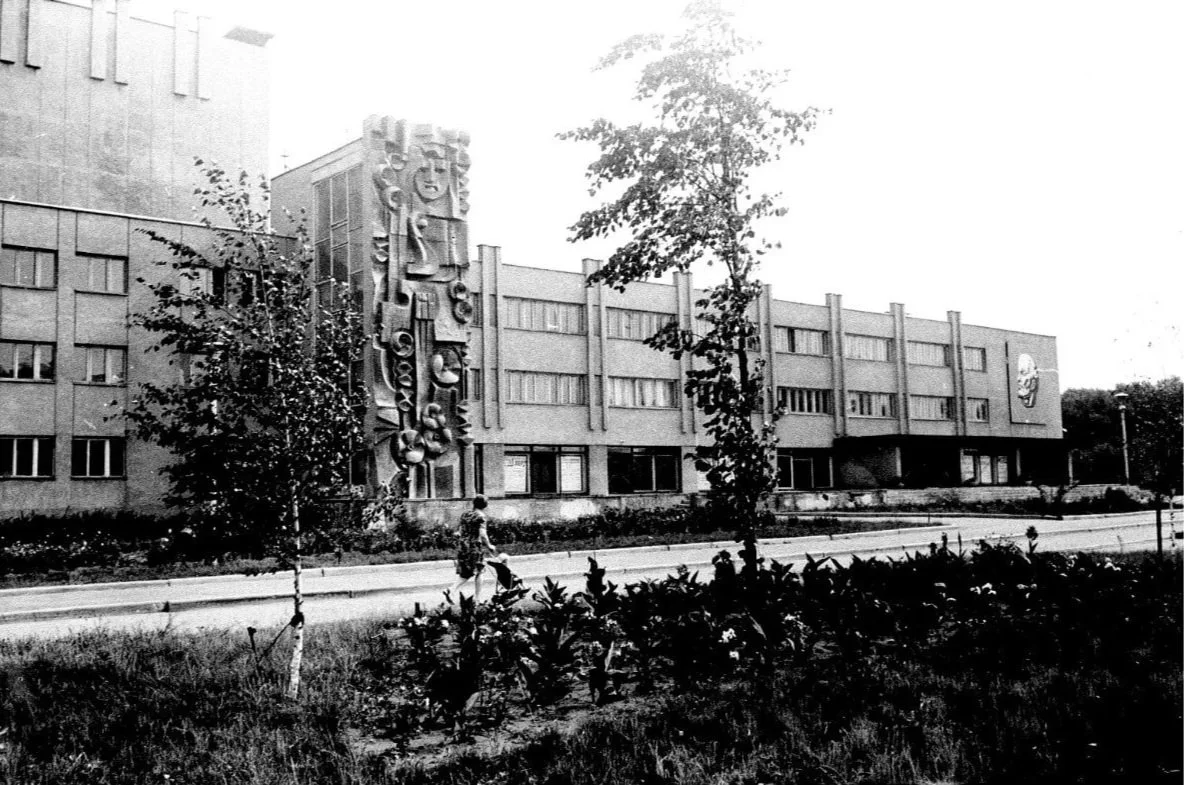
Built through joint funding from four factories, the Palace was based on the standard design 2С-06-9/70. Its program included an auditorium, studios, club rooms, and offices.
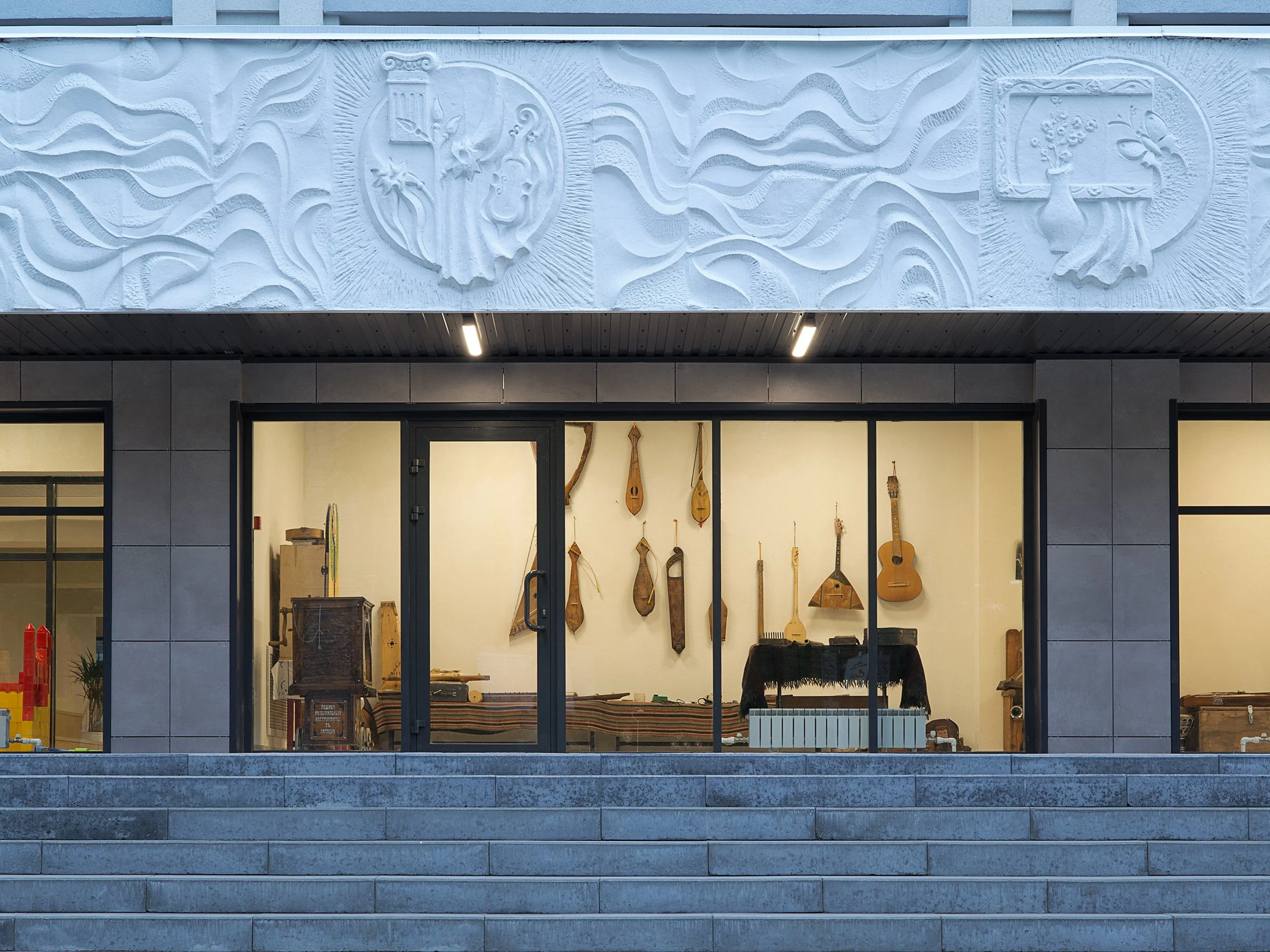
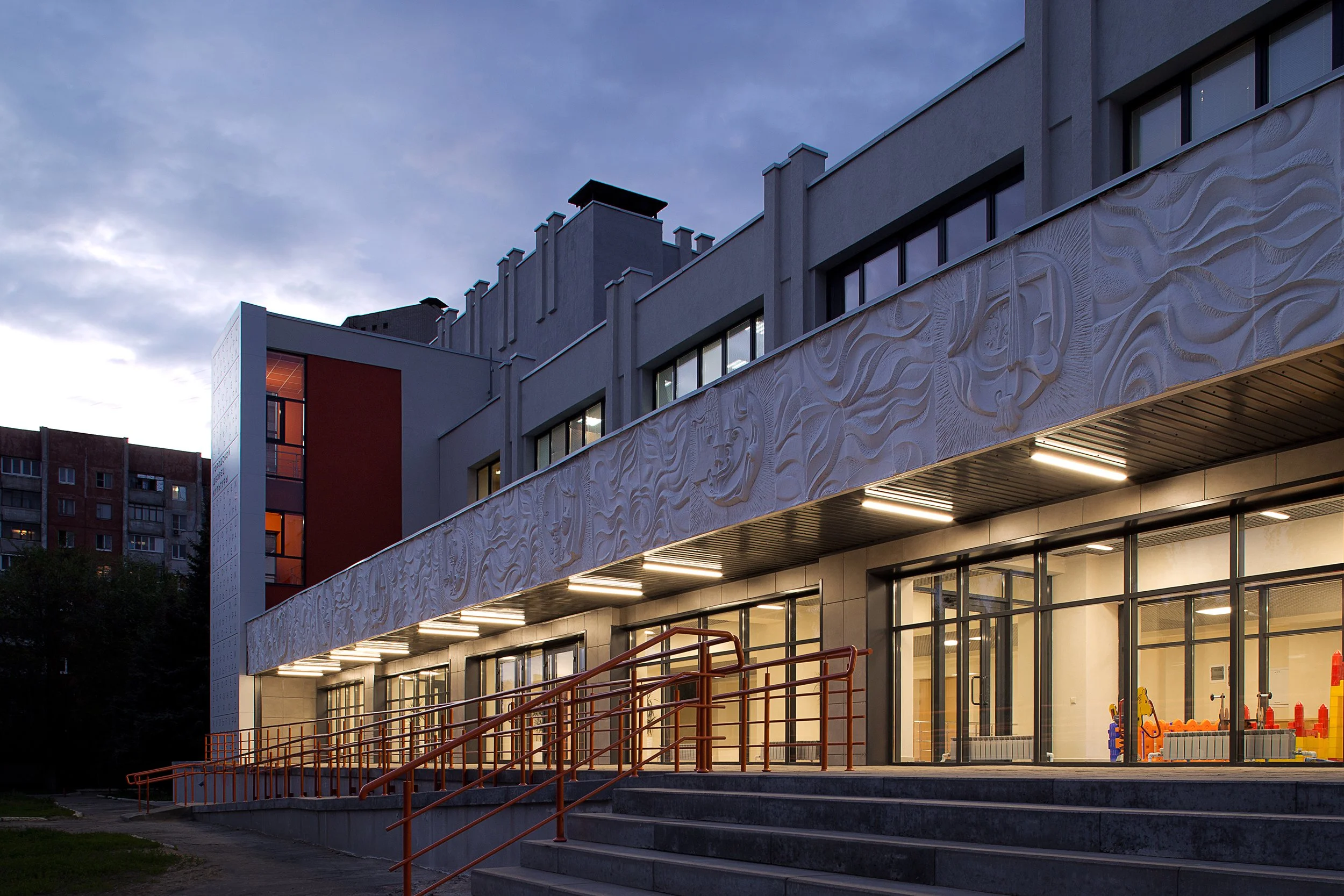
Although standardized, the building incorporated expressive details—gypsum reliefs, terrazzo surfaces, and clean modernist proportions. Its role declined after the 1990s, yet the structure remained largely intact and adaptable.
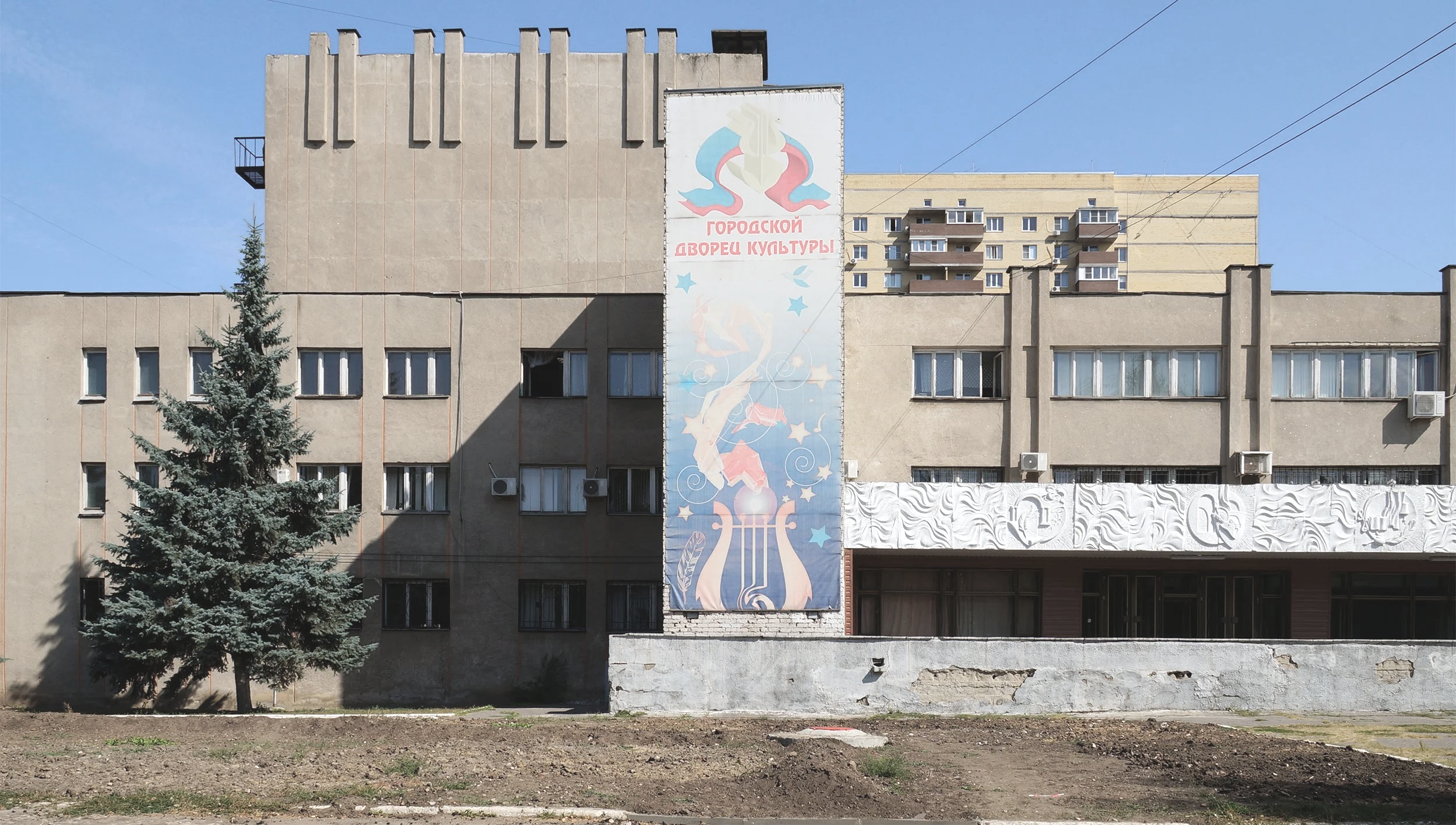
Pre-renovation state
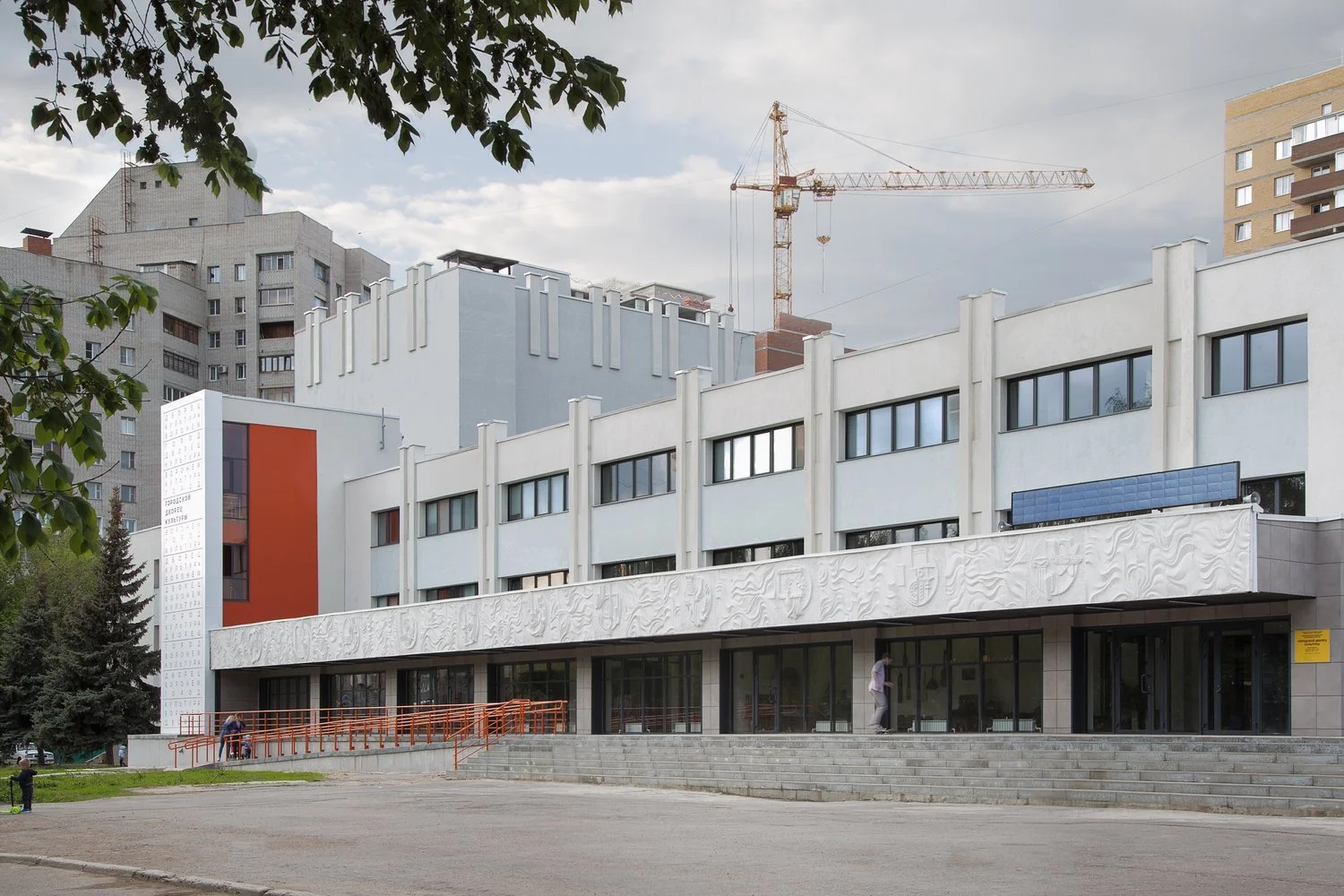
By 2018, interior partitions blocked daylight and circulation, and many windows had been sealed. Finishes were damaged, wayfinding was unclear, and the main façade had become visually cluttered.
The auditorium was still in use but technically outdated. Despite this deterioration, the structural system and original spatial logic remained readable and reusable — forming the basis for a low-intervention strategy.
Landscape and public realm
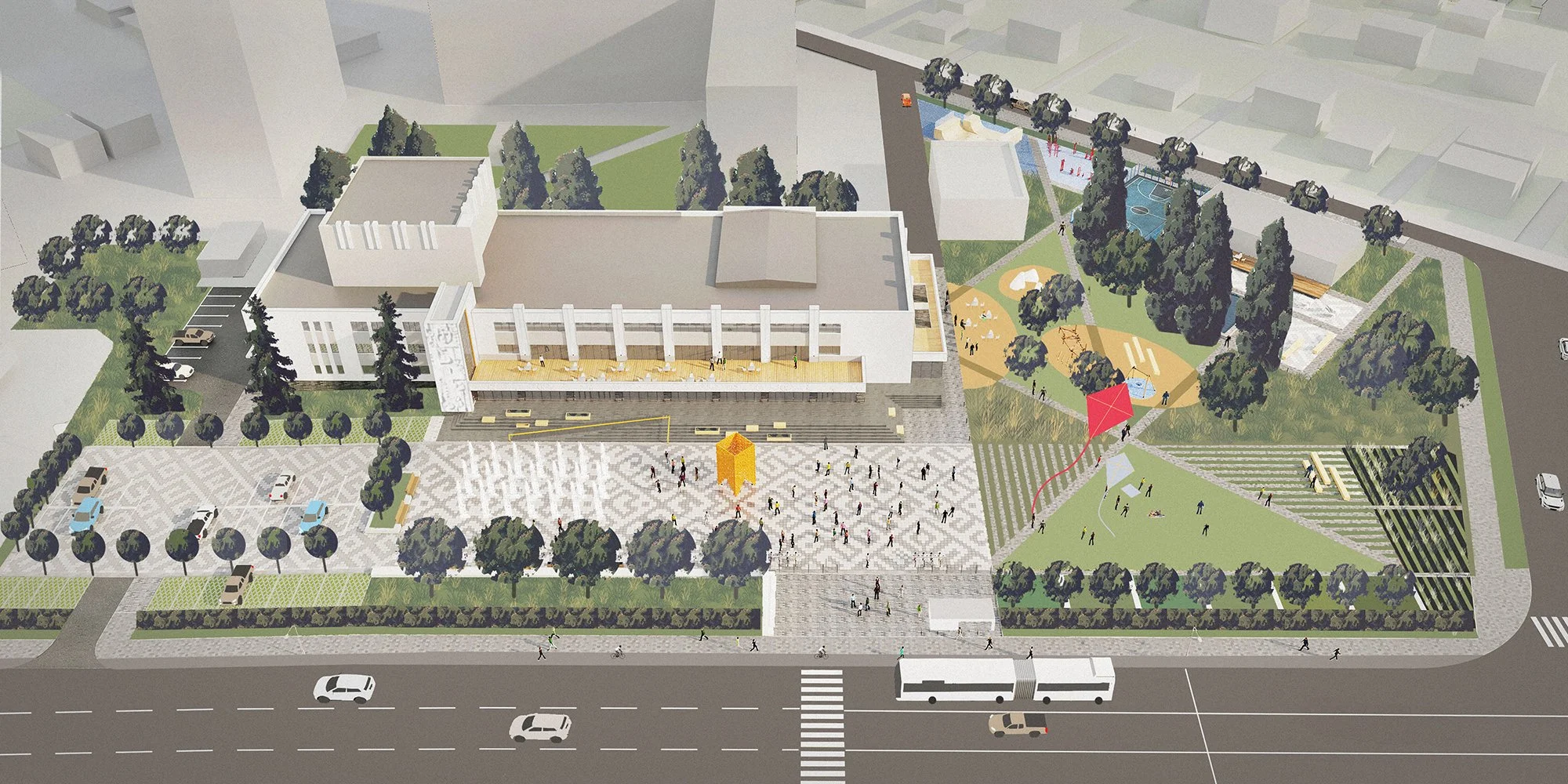
A multifunctional plaza in front supports events and informal use, with steps that double as a stage. Behind, a park introduces a meadow, playground, and active zones for everyday recreation.
Paths, lighting, and street furniture were added with restraint. Together, the landscape and building form a continuous civic environment, open for daily use.
Exterior and identity
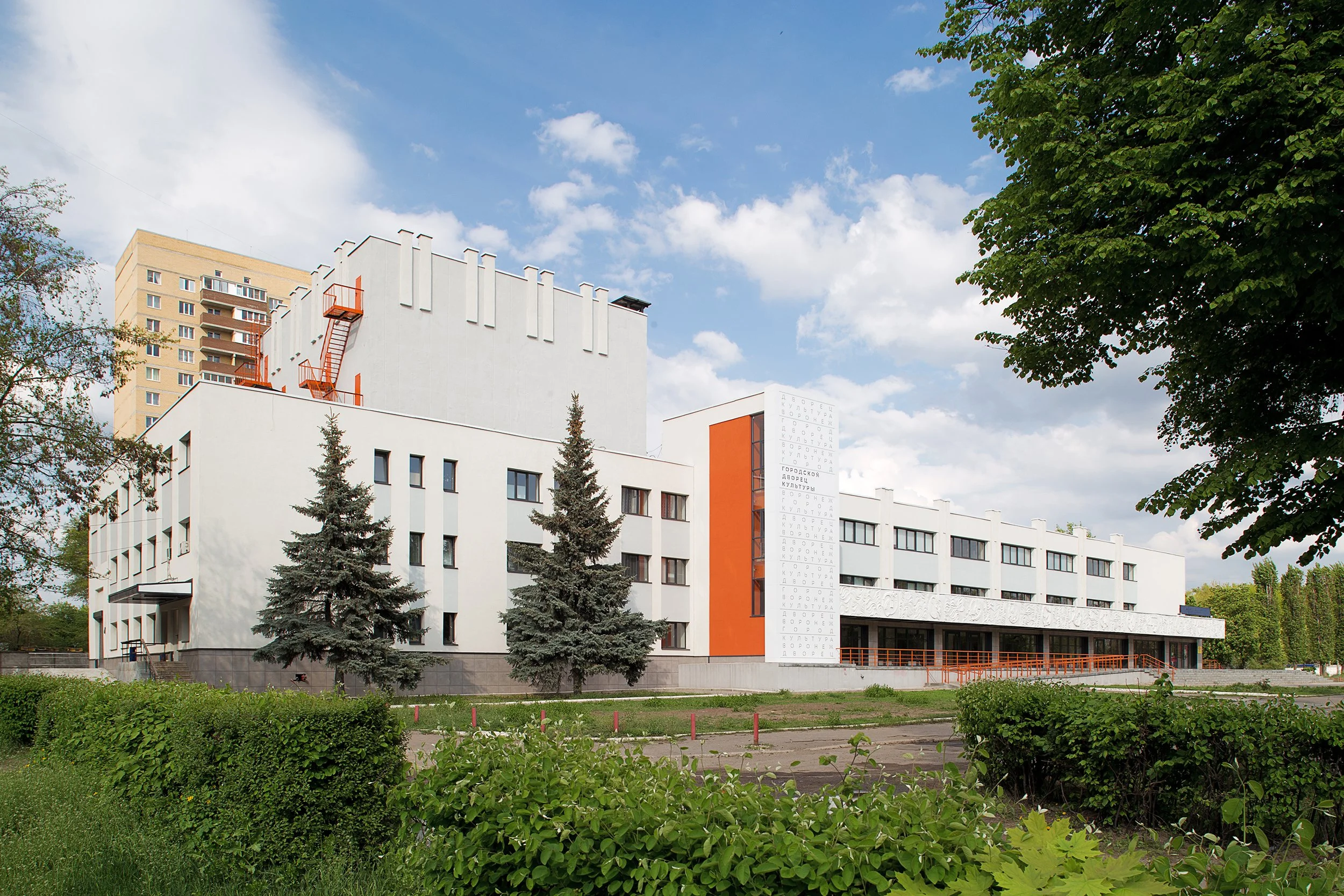
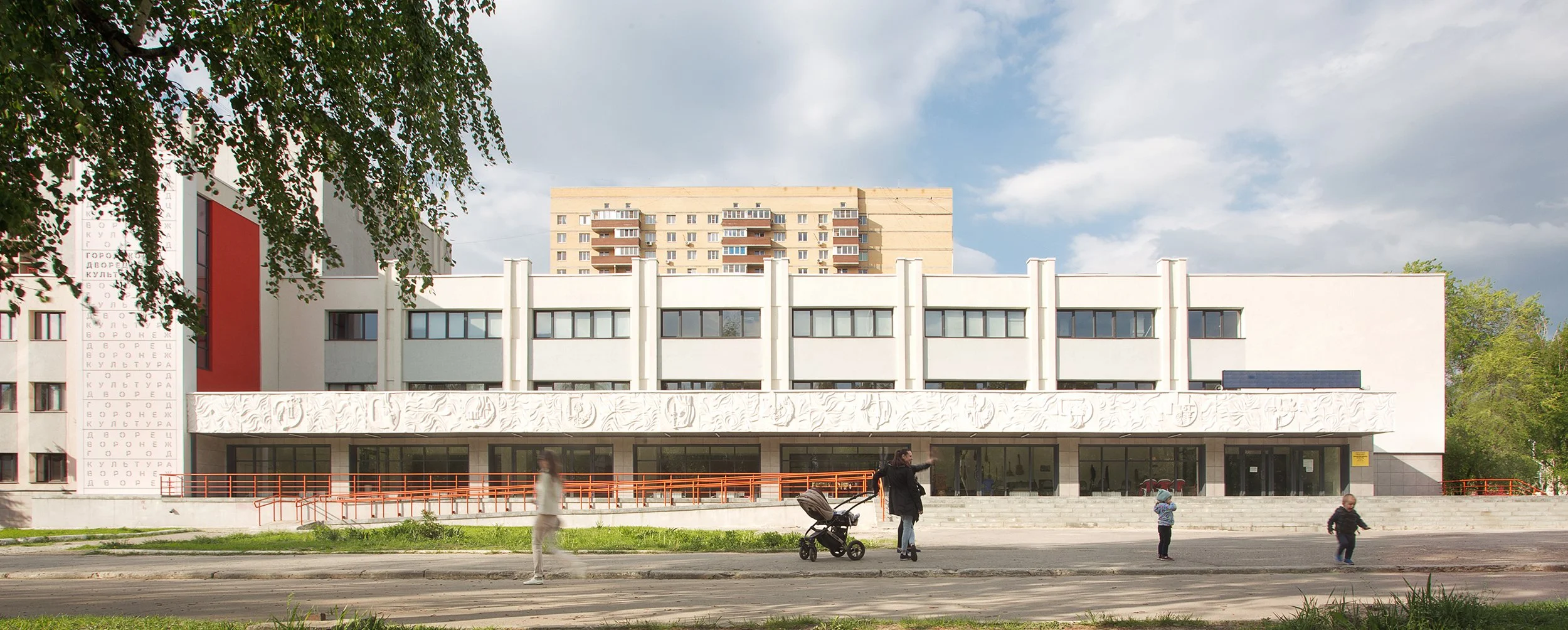
Glazing was reopened and visual clutter removed to restore the building’s presence. A new aluminum panel on the stair tower replaced a missing relief with the words “Palace / Culture / Voronezh.”
No changes were made to the massing. Through minimal but targeted interventions, the building regained its legibility and civic expression.
Spatial concept
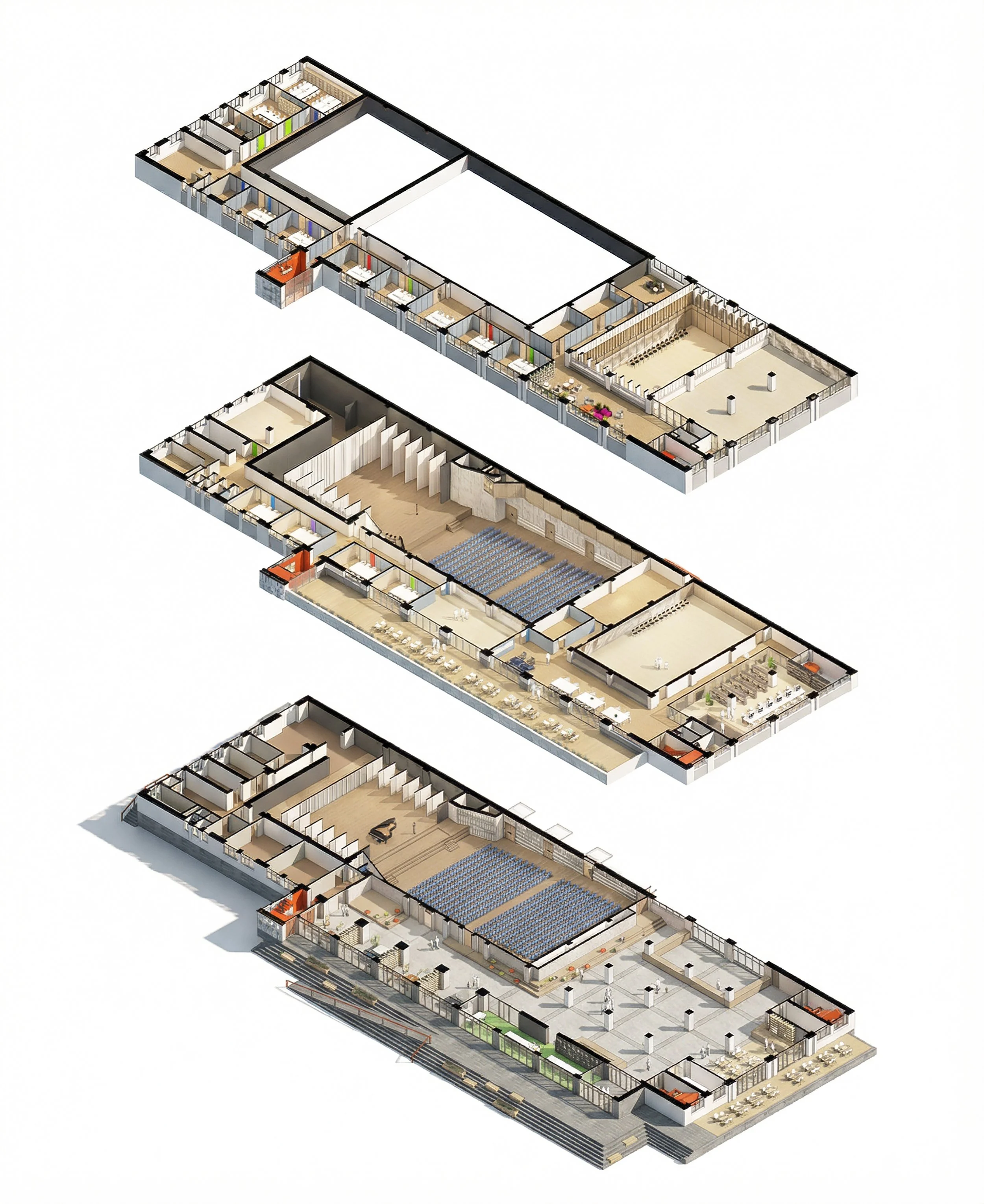
The renovation reorganized the building without structural changes. The ground floor became a continuous public axis linking the entrance, foyer, café, and park.
Upper levels were clarified: the second floor for creative functions, the third for offices. Programmatic hierarchy and circulation were restored through reconfiguration and selective removal rather than new construction.
Interior transformation
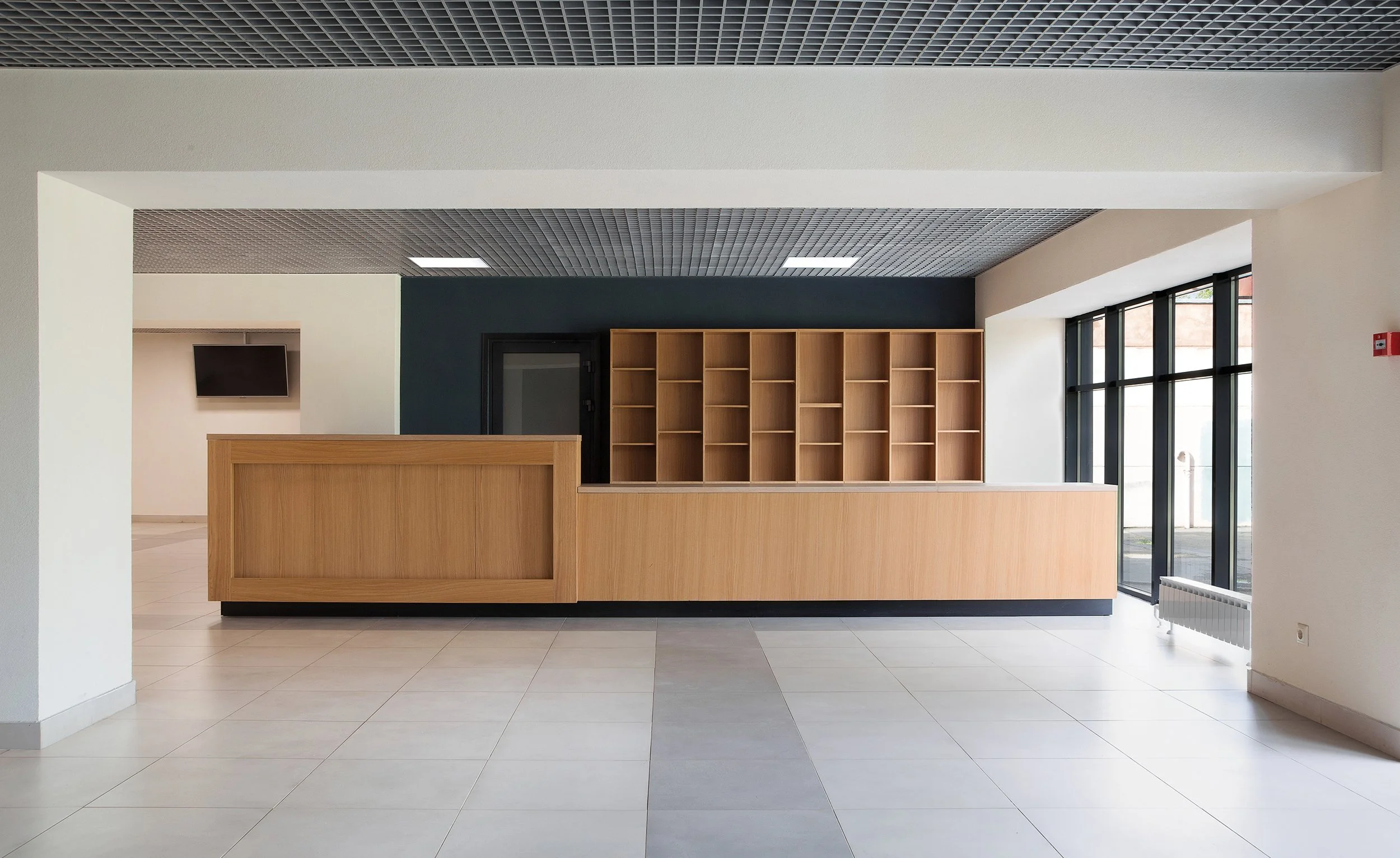
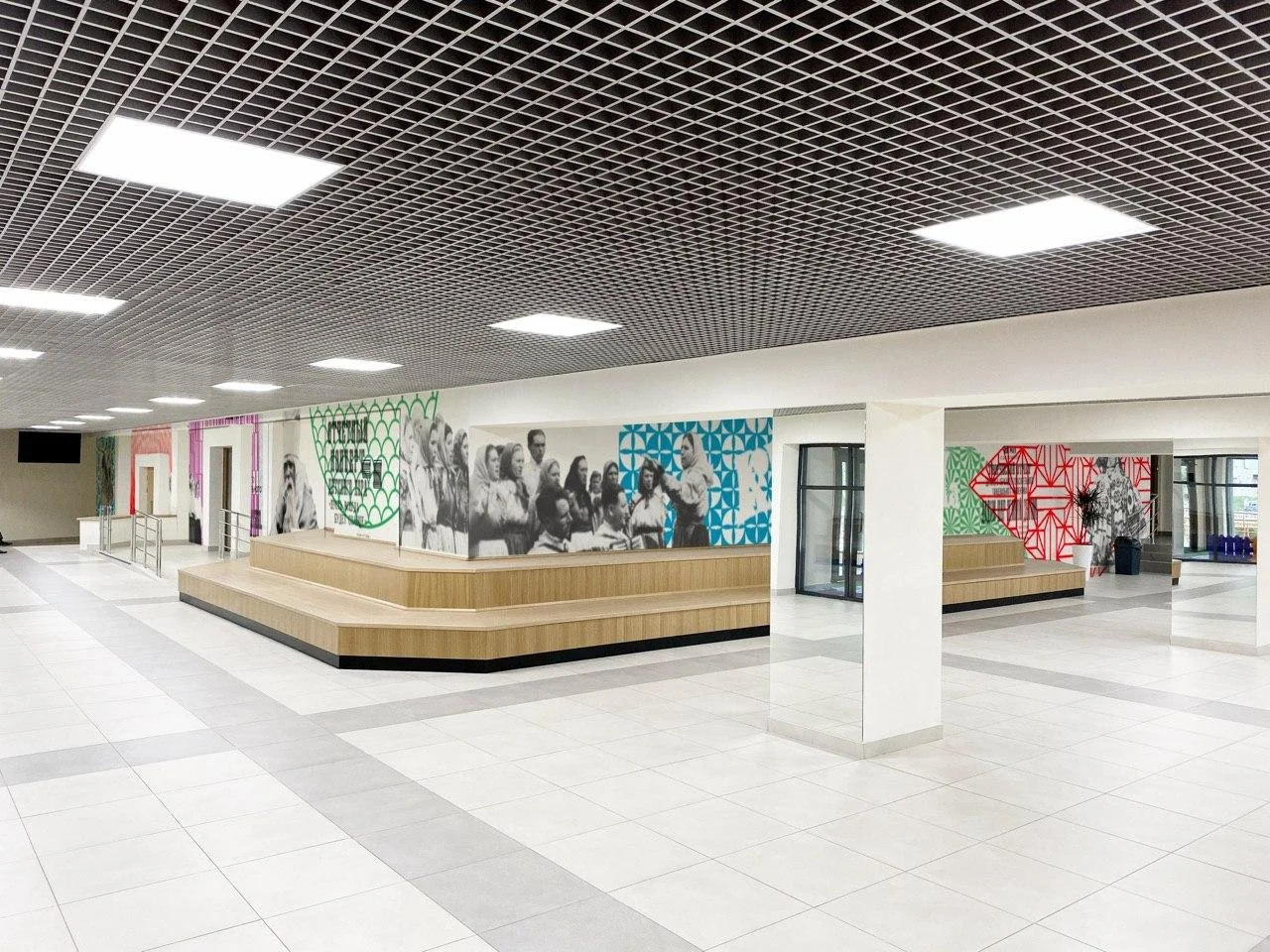
The foyer was opened and unified with neutral finishes and flexible furniture. A café now activates the park-facing side.
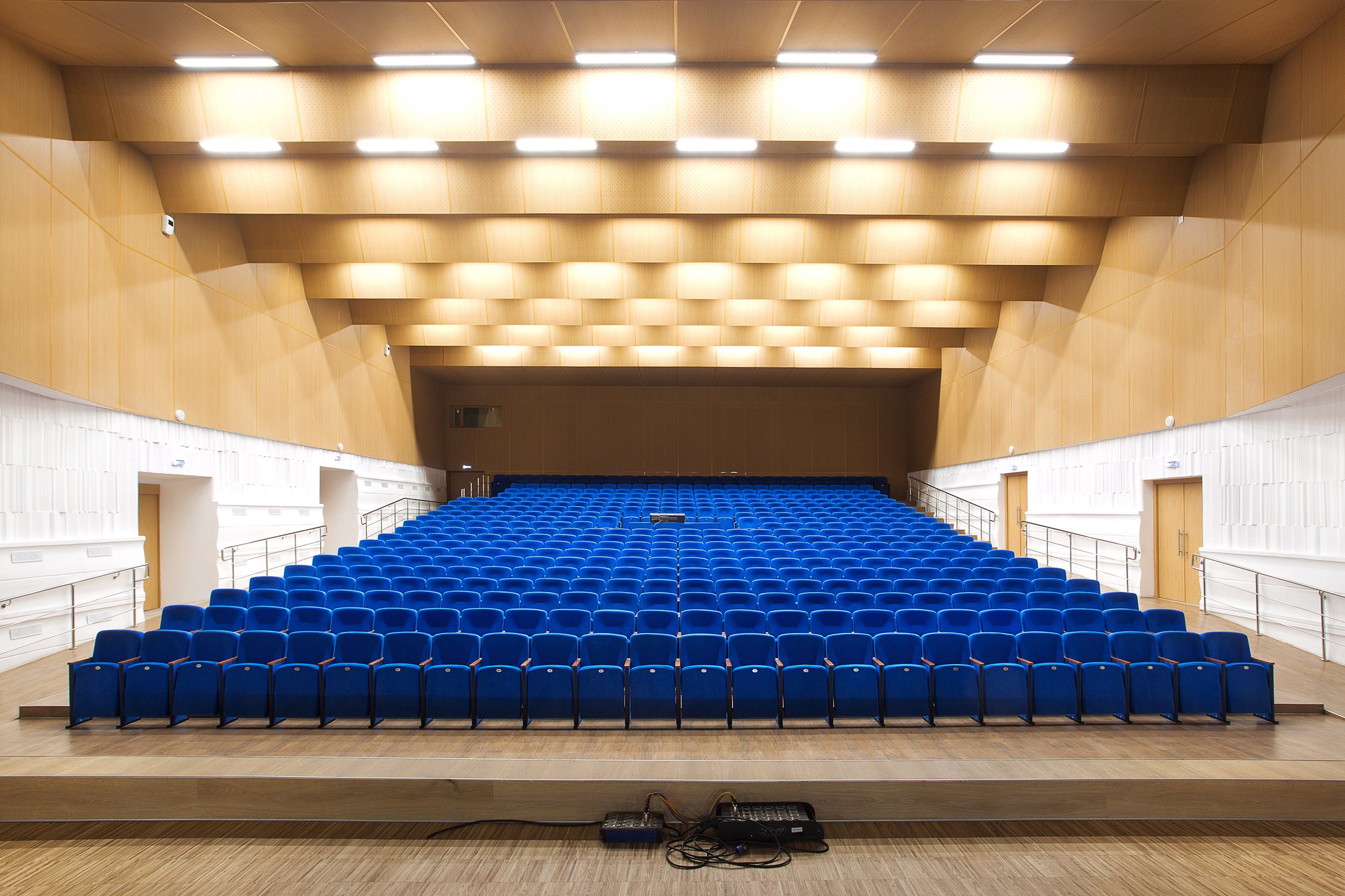
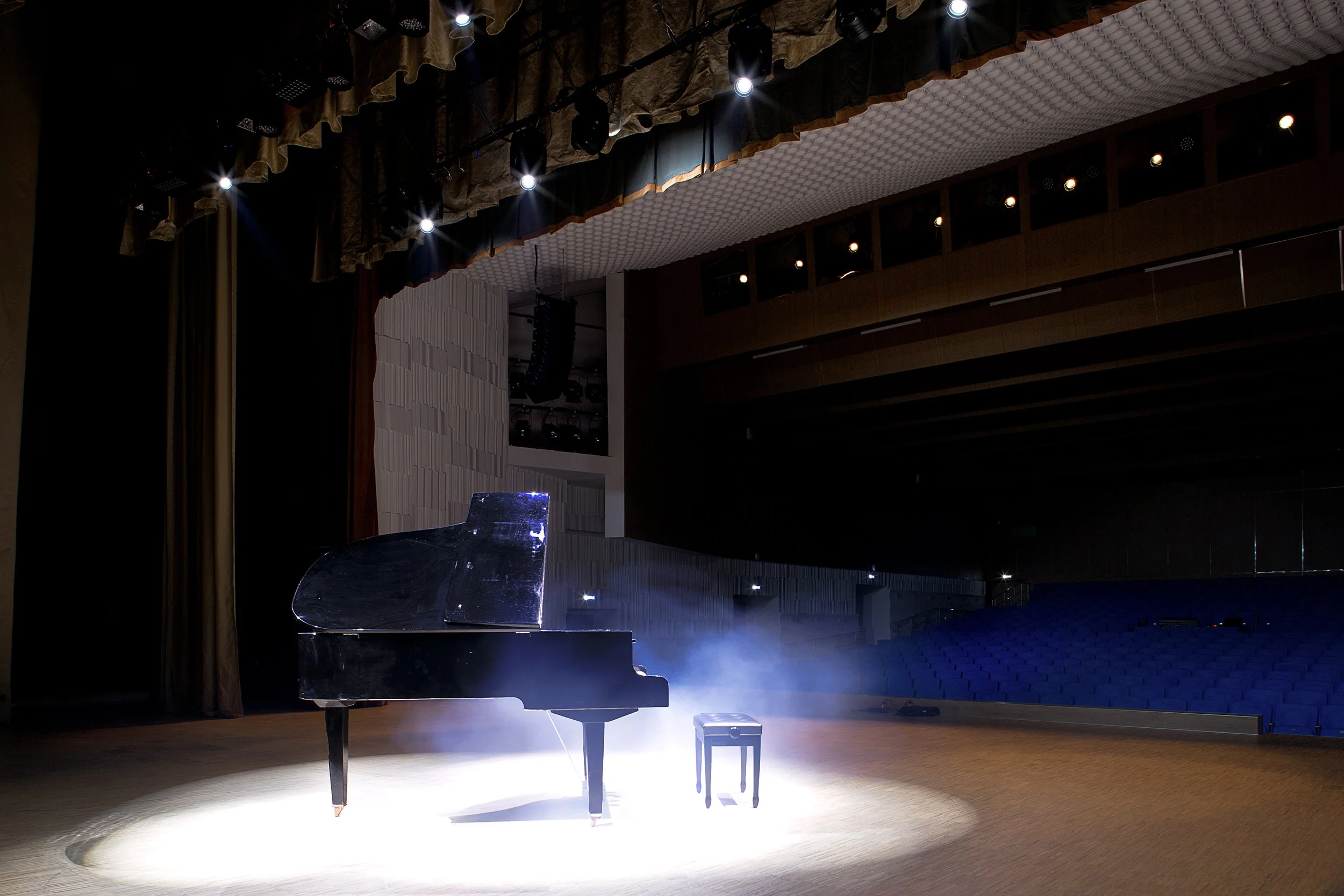
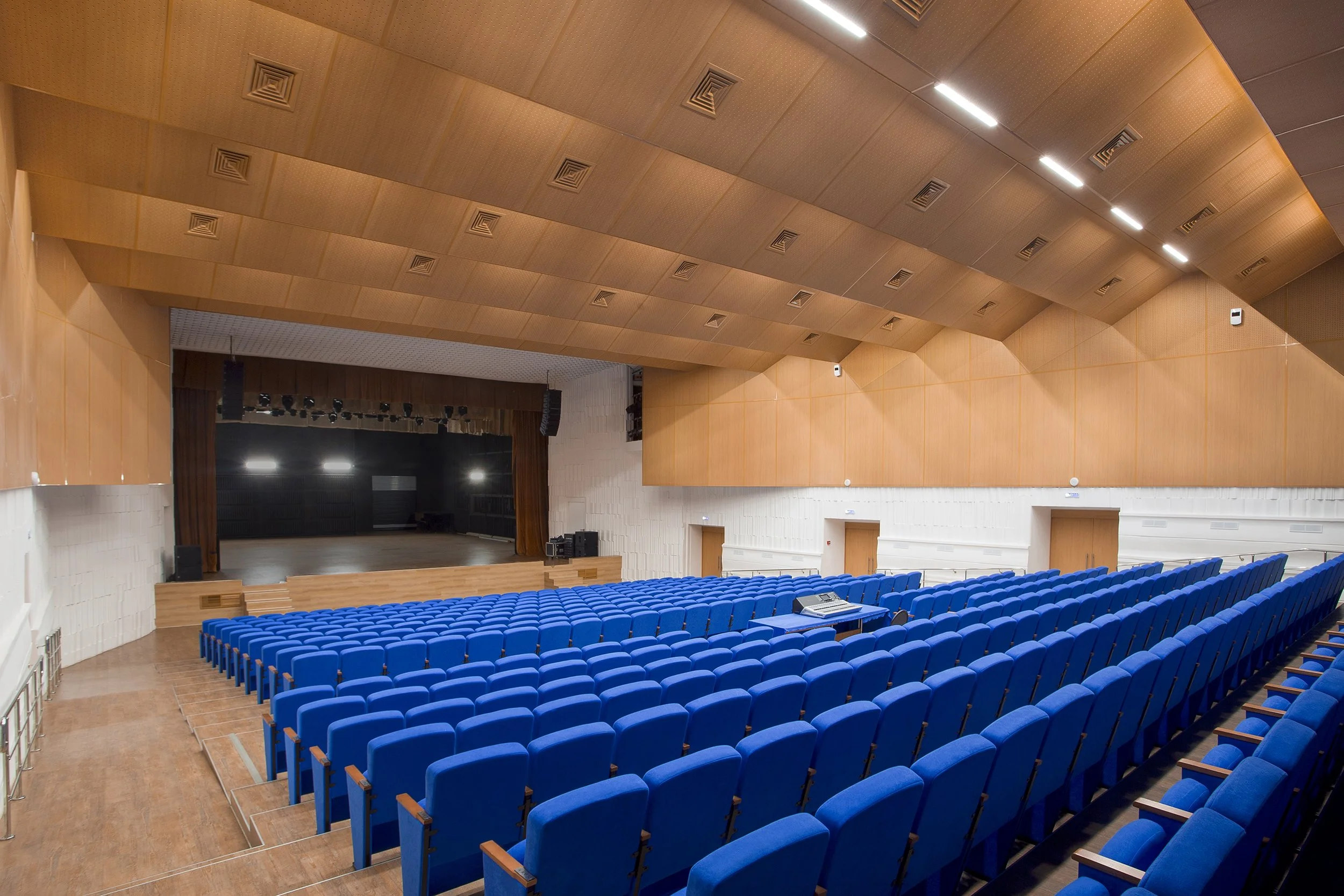
In the auditorium, plaster was restored and acoustics upgraded using new wood panels and lighting. Materials were chosen to echo the original building’s texture while improving comfort and usability.
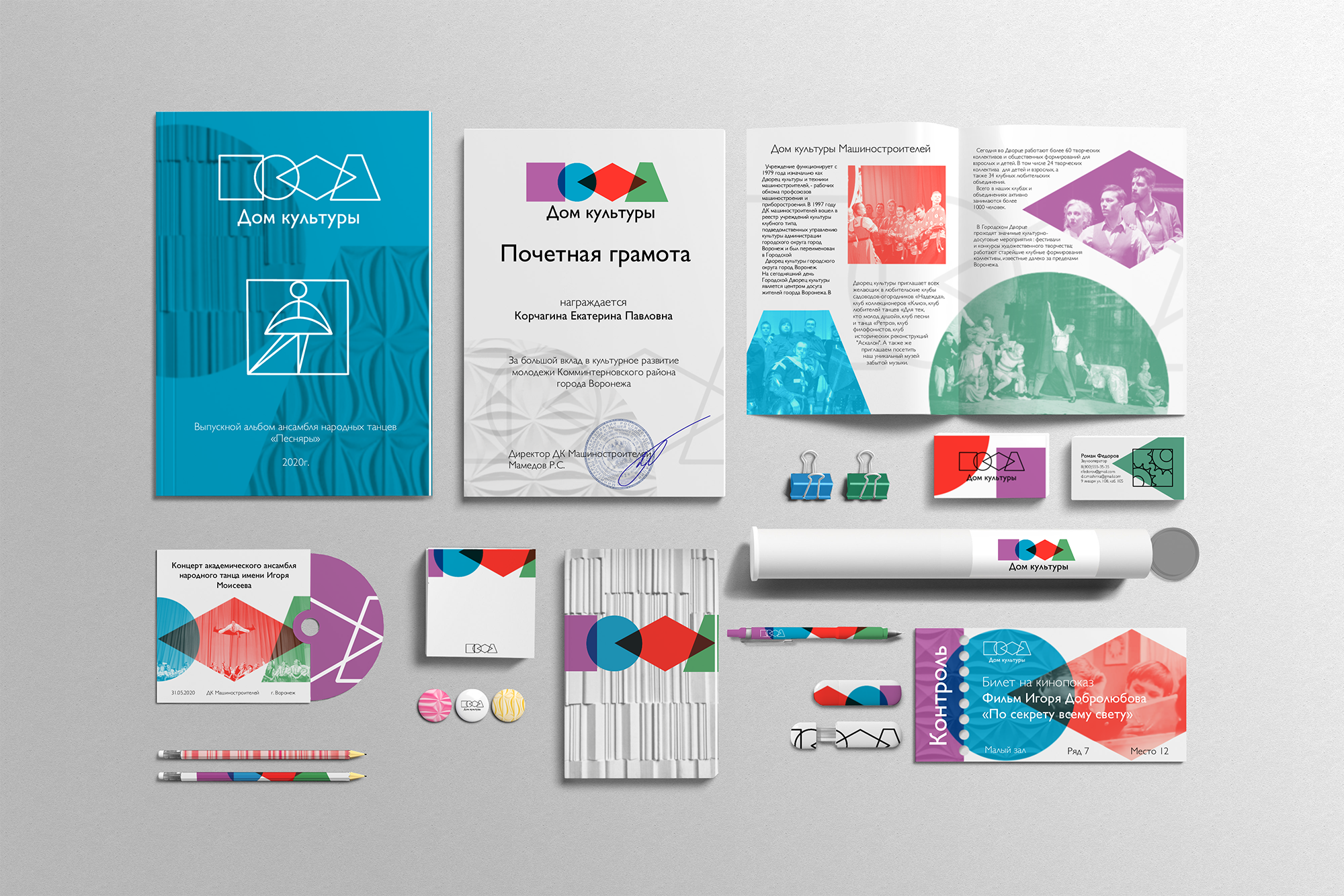
Branding and AR Layer
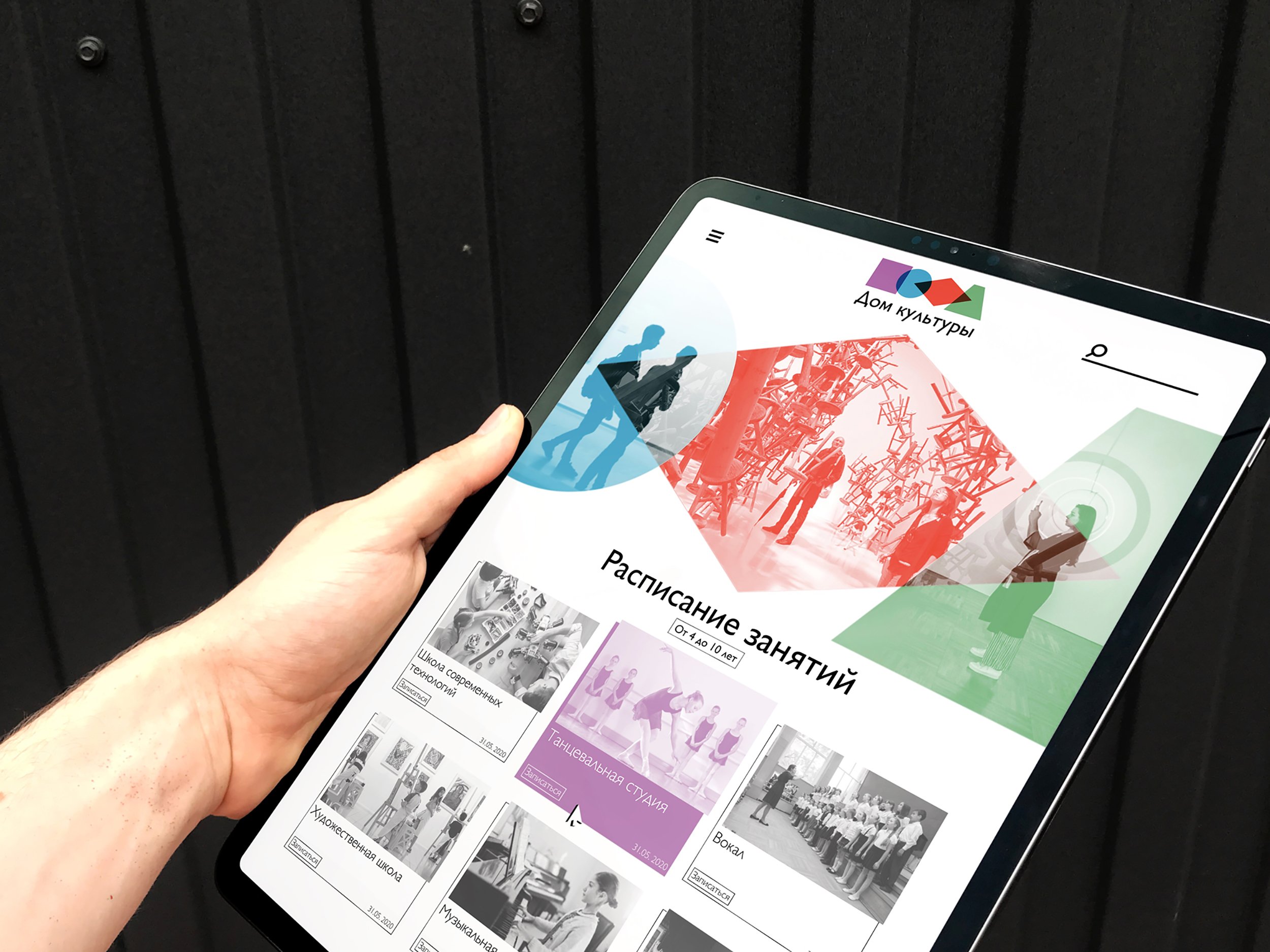
Artist and designer Yan Posadsky created a new identity from the contours of the four founding factories’ logos. This abstracted form guided all signage, navigation, and visual communication.
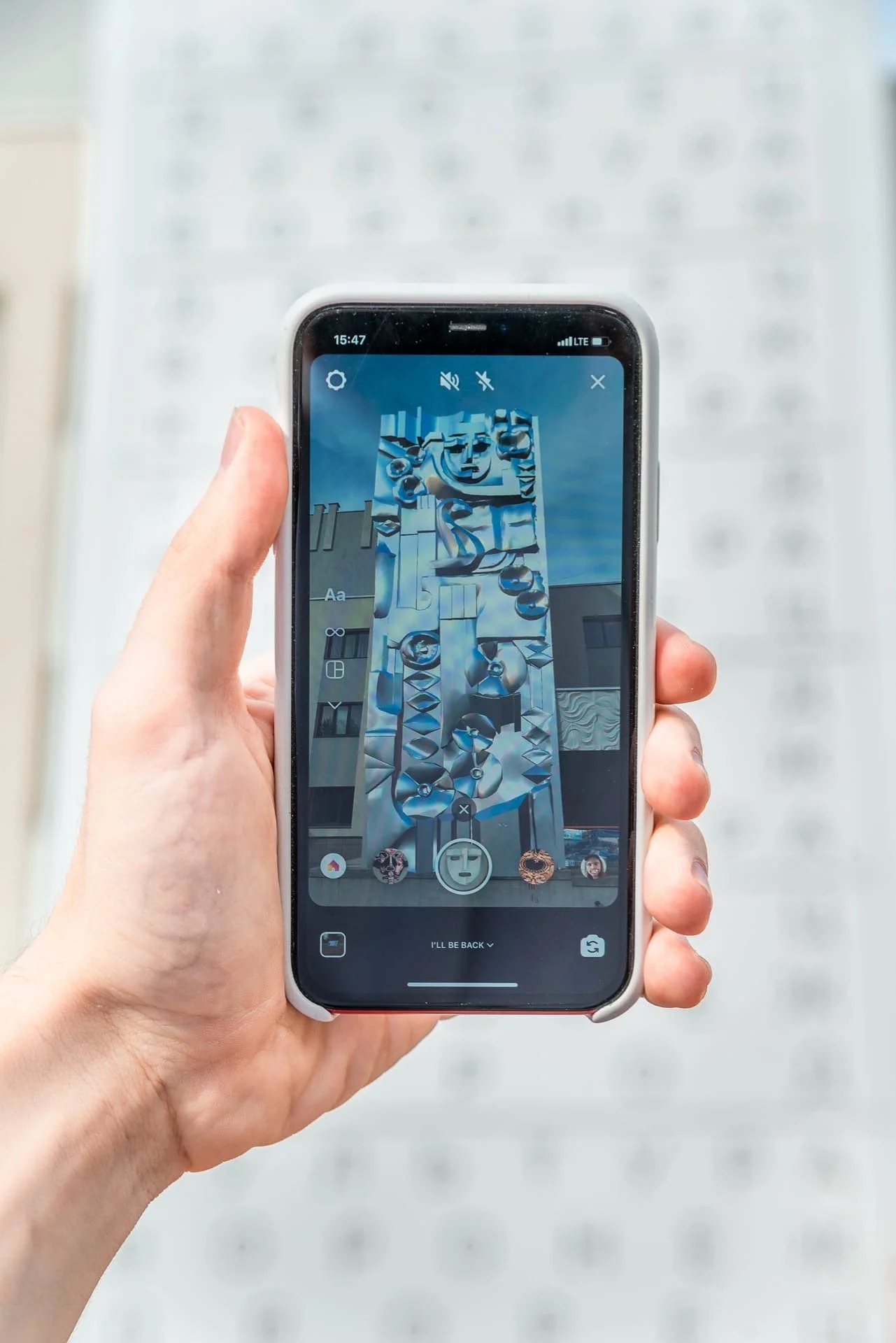
An AR Instagram filter overlays the missing Soviet relief onto the façade. Inside, murals and directional graphics connect movement with memory.