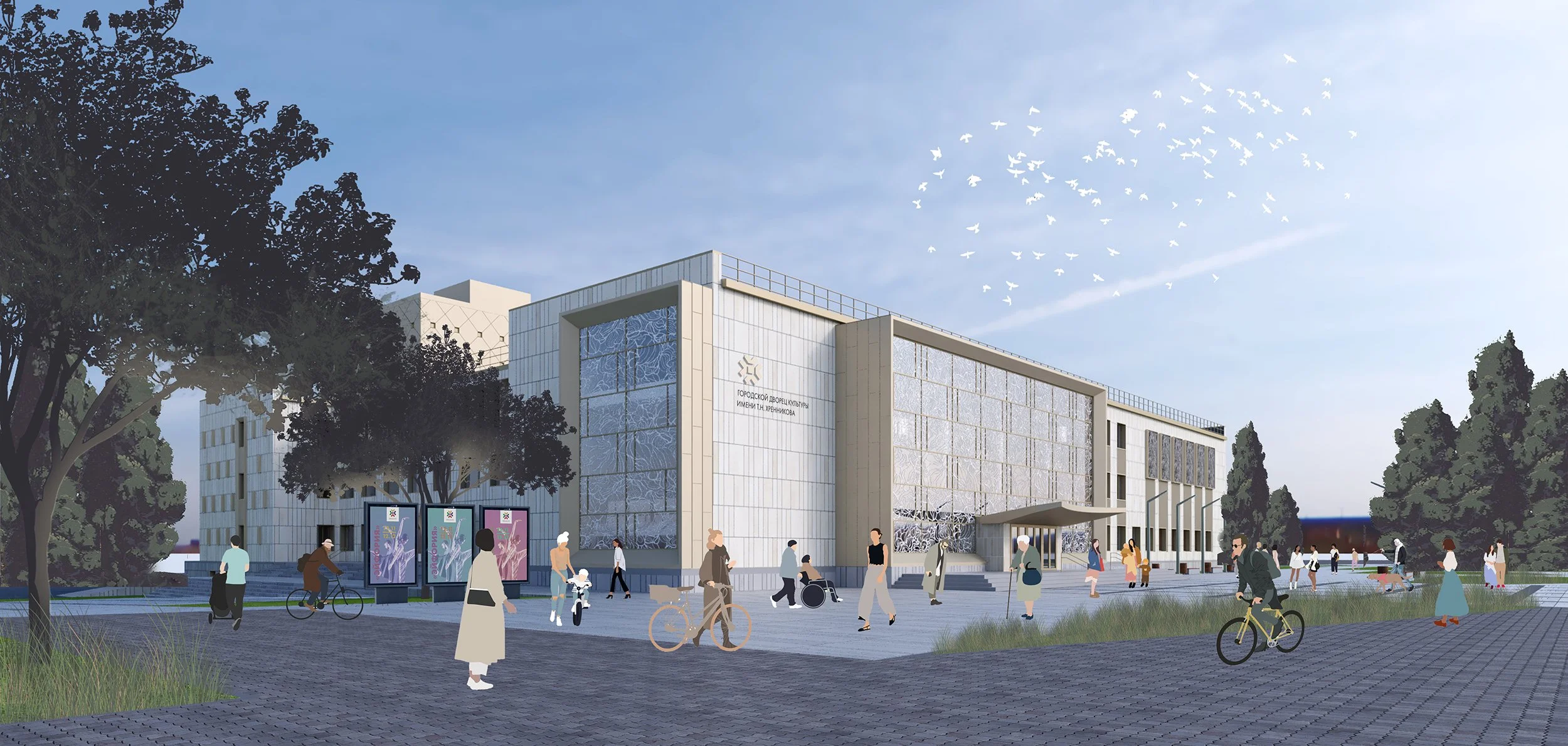
Palace of Culture in Yelets
Modernizing Soviet heritage through local identity
This renewal and transformation concept for the Palace of Culture in Yelets builds on the Identity in Typical project. After decades of intensive use, the building was declared unsafe, closed, and scheduled for demolition. Instead of erasure, the proposal introduced a low-cost transformation that reconnects the Palace to the city through multifunctional spaces, flexible programming, and identity-driven design — giving the building new life as a cultural hotspot.
Location: Yelets, Russia
Program: Sociocultural center
Surface: 7,296 m² total / 2,650 m² footprint
Design period: 2021
Status: Concept design
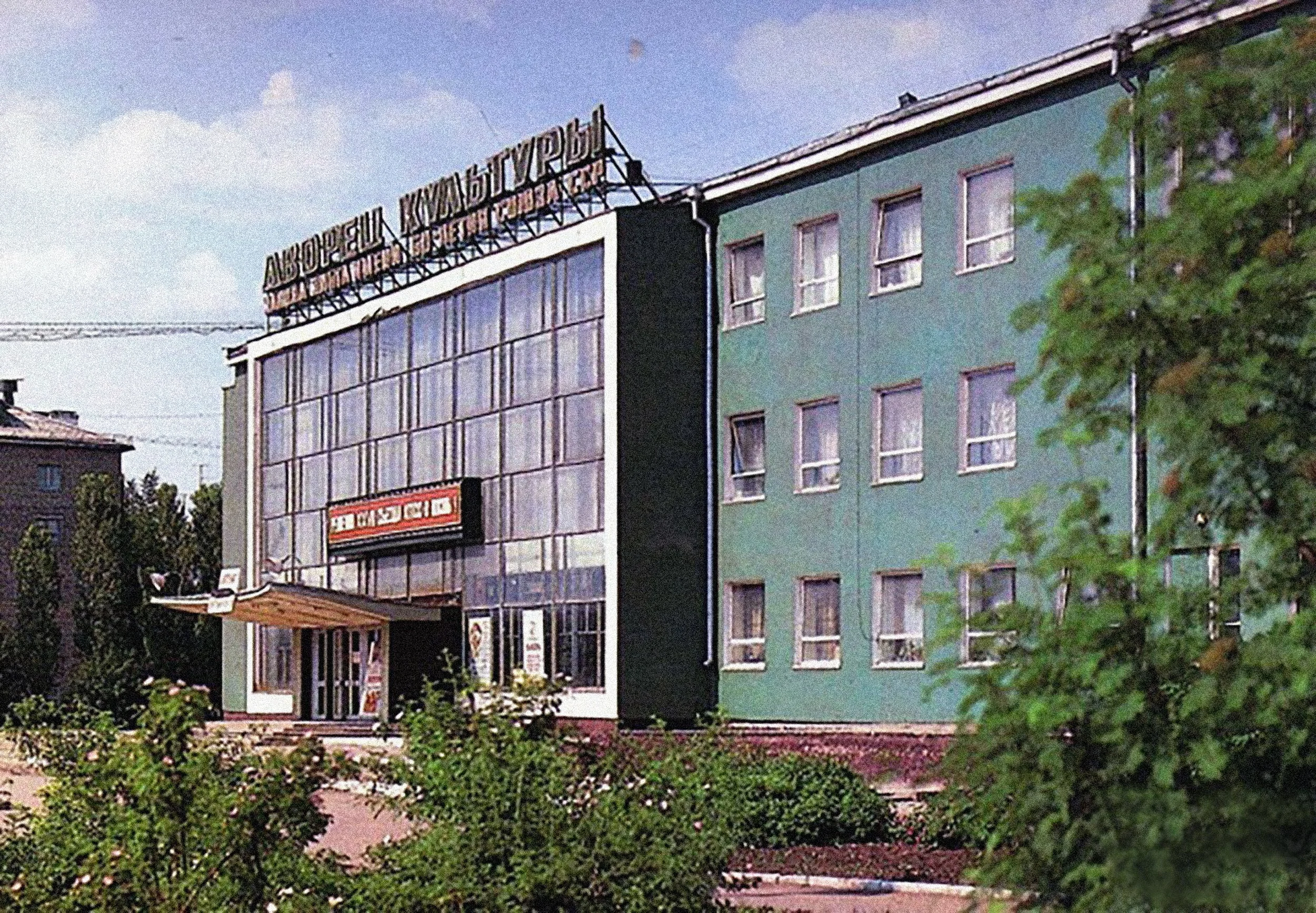
Building history
The Palace was built in 1975 for the Elta factory, based on standard design 169-129 for 800 seats by Project Institute No. 5. With its H-shaped plan, reinforced-concrete frame, 600-seat auditorium, small hall, and studios, it exemplified a late-Soviet approach to cultural infrastructure. For decades it served as the city’s cultural hub, but without a major renovation it gradually fell behind contemporary needs.
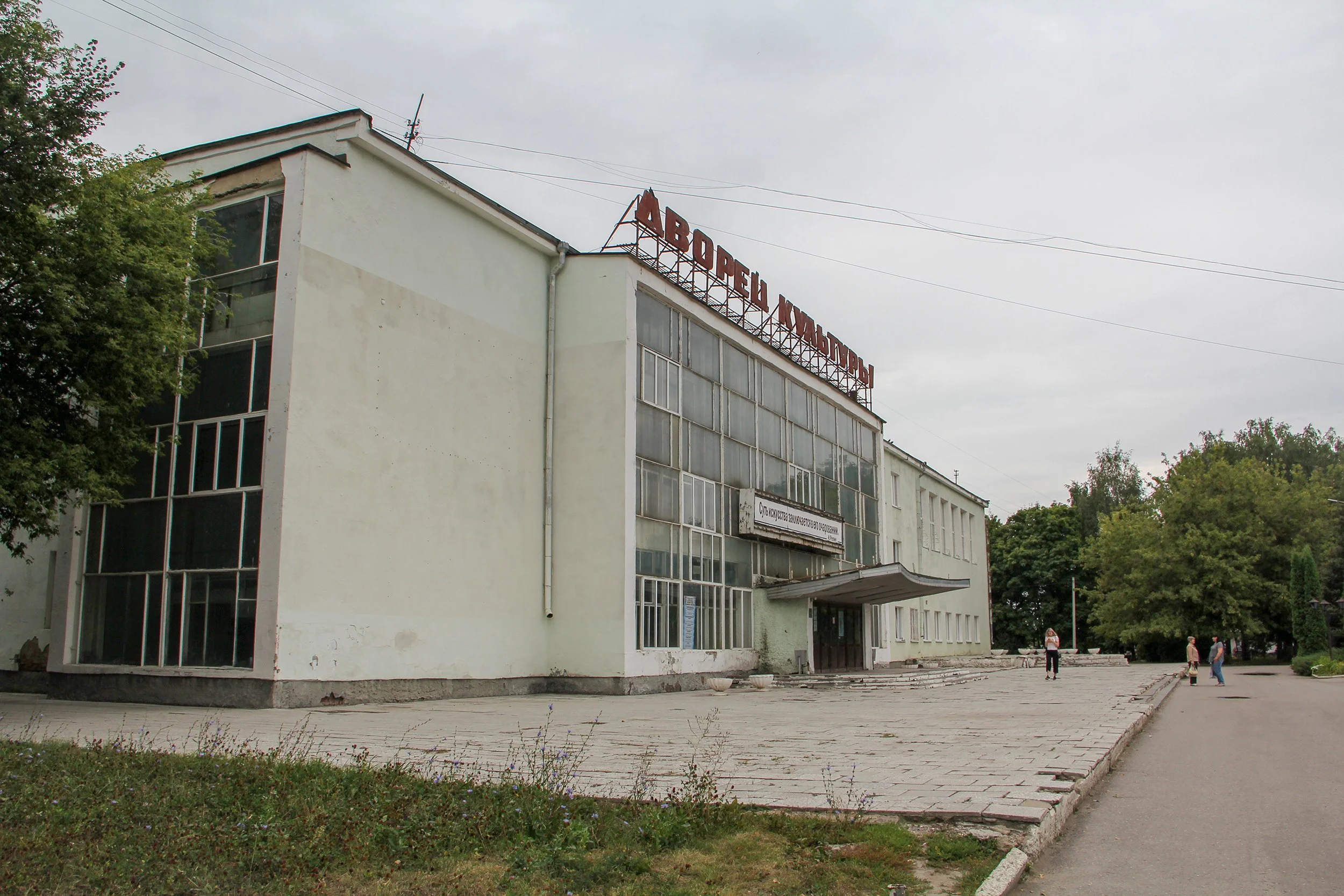
Pre-renovation state
By 2020, the Palace had been closed due to its emergency condition. Although authorities planned to demolish it, surveys showed that the structural system remained sound and adaptable. Inside, the spaces were outdated and largely monofunctional, serving mainly children and elderly groups, while substantial areas remained underused.
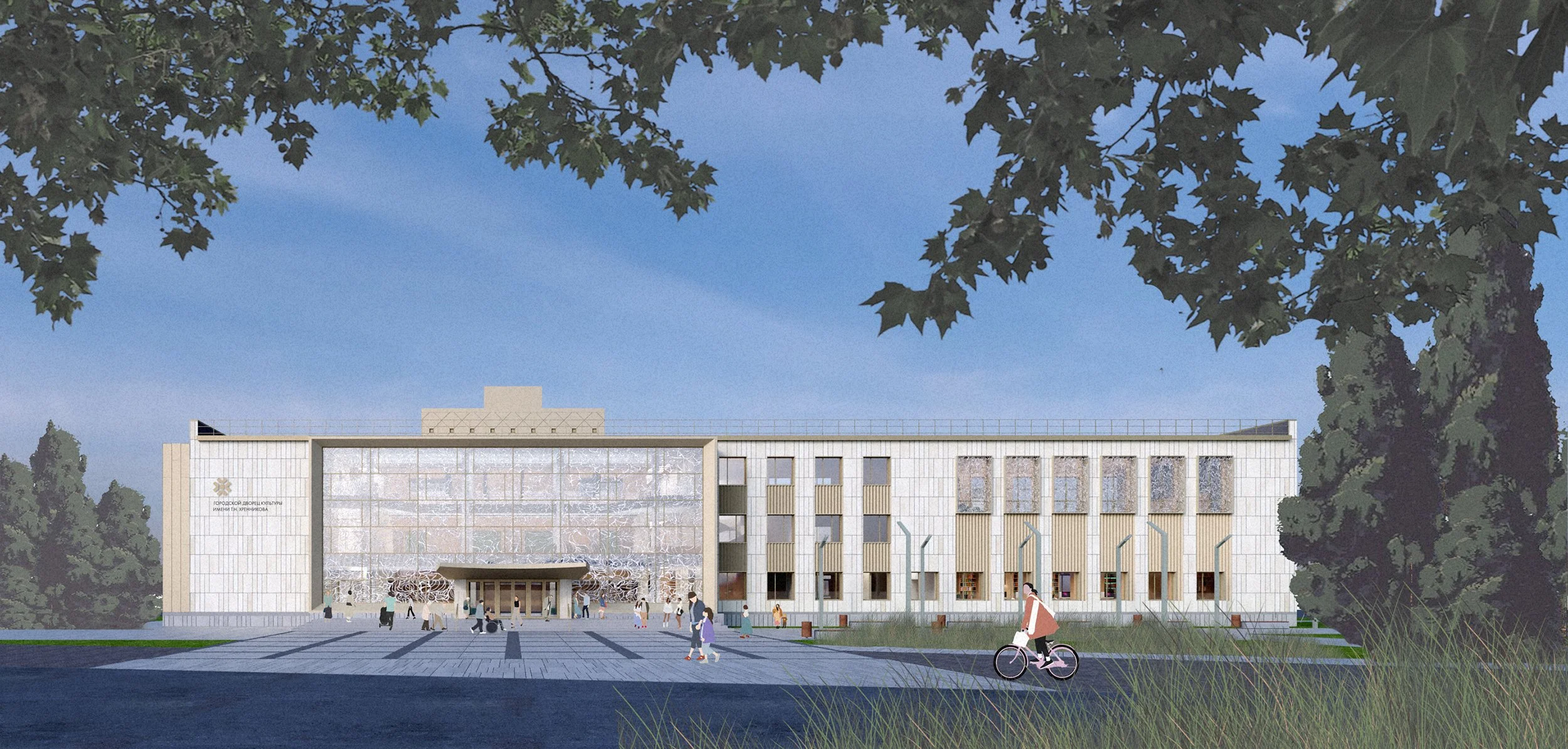
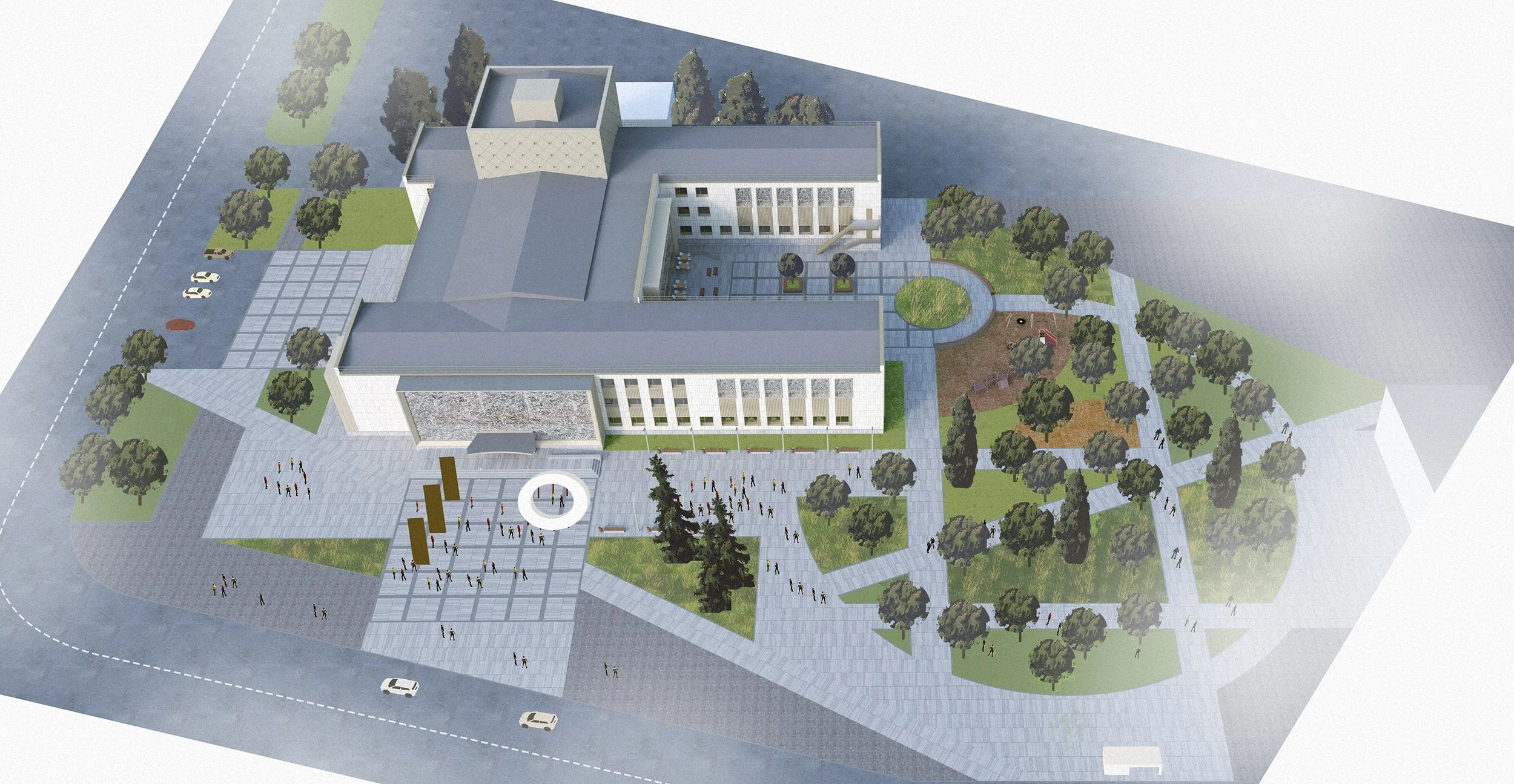
Landscape and public realm
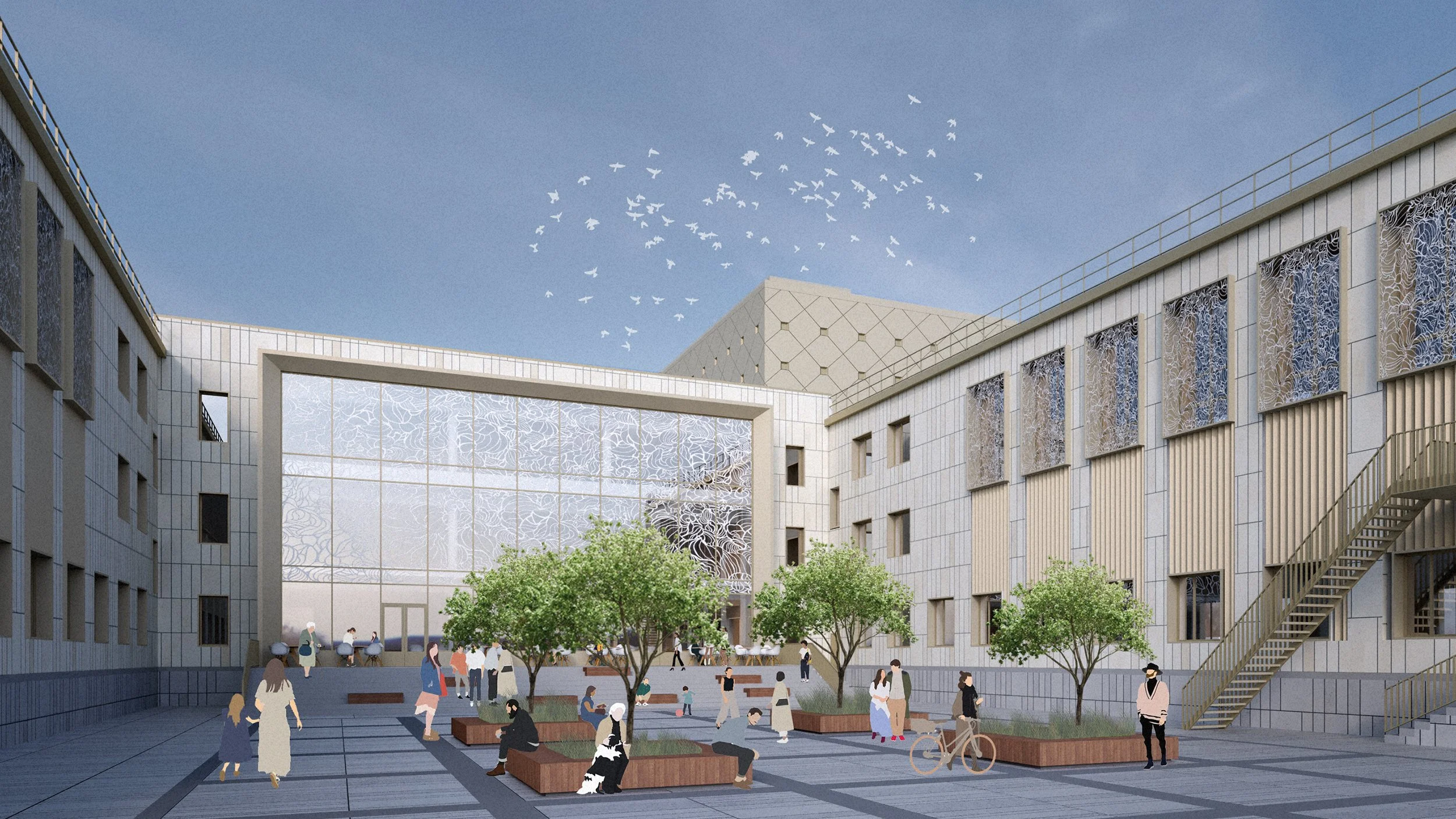
The square in front of the Palace was reimagined as an open civic forum for everyday use and public events. New landscaping, street furniture, and lighting improve accessibility and turn the grounds into an active public space. The courtyard, animated by a café and gift shop, becomes a sheltered community zone, strengthening the Palace’s connection to its neighbourhood.
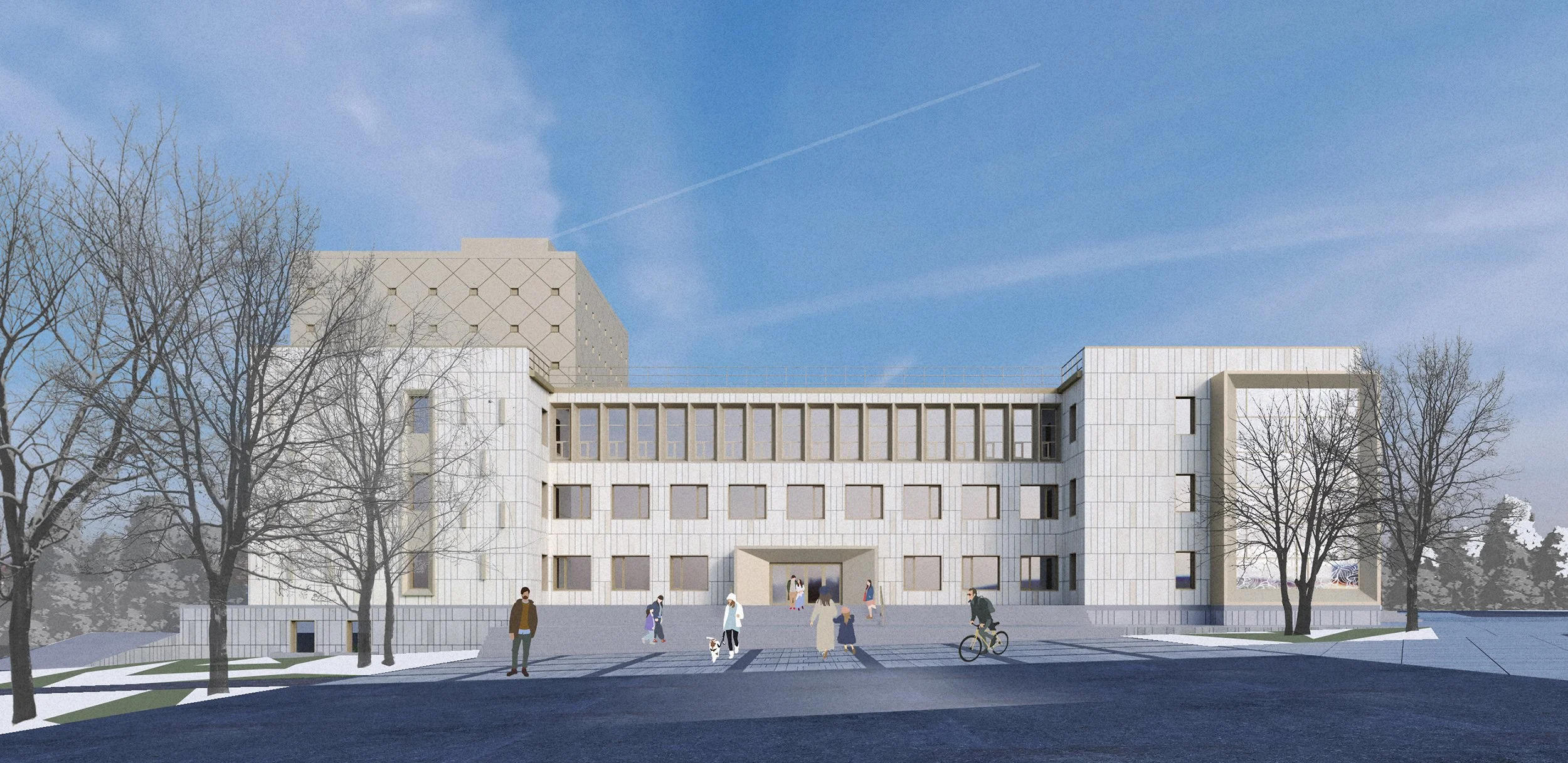
Exterior and identity
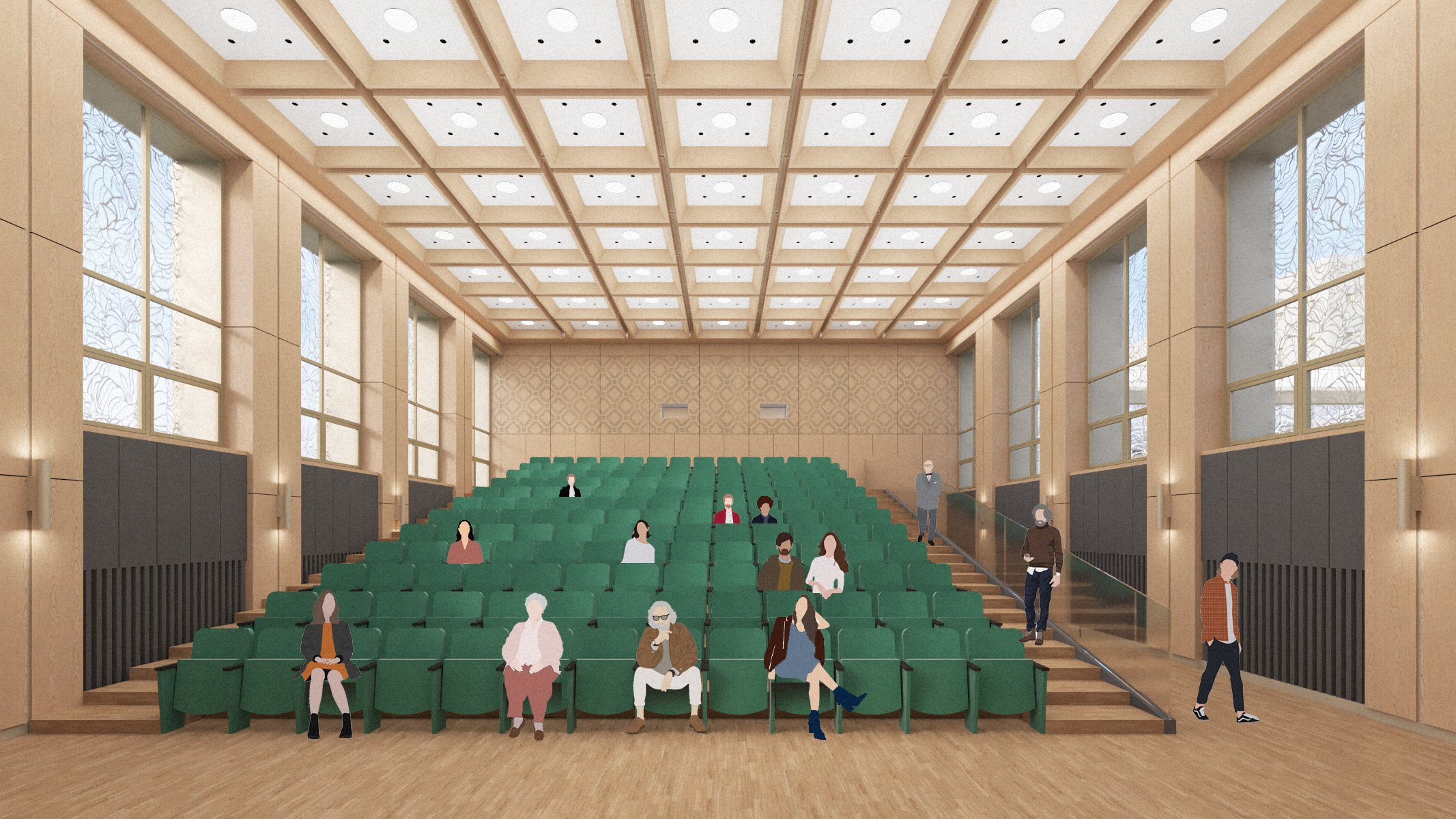
The renovation balanced preservation with local interpretation. The façades were renewed using natural stone quarried near Yelets, combined with anodized aluminum elements. Glazing incorporates patterns inspired by the city’s lace-making traditions — a subtle yet distinctive link to regional heritage.
Spatial concept
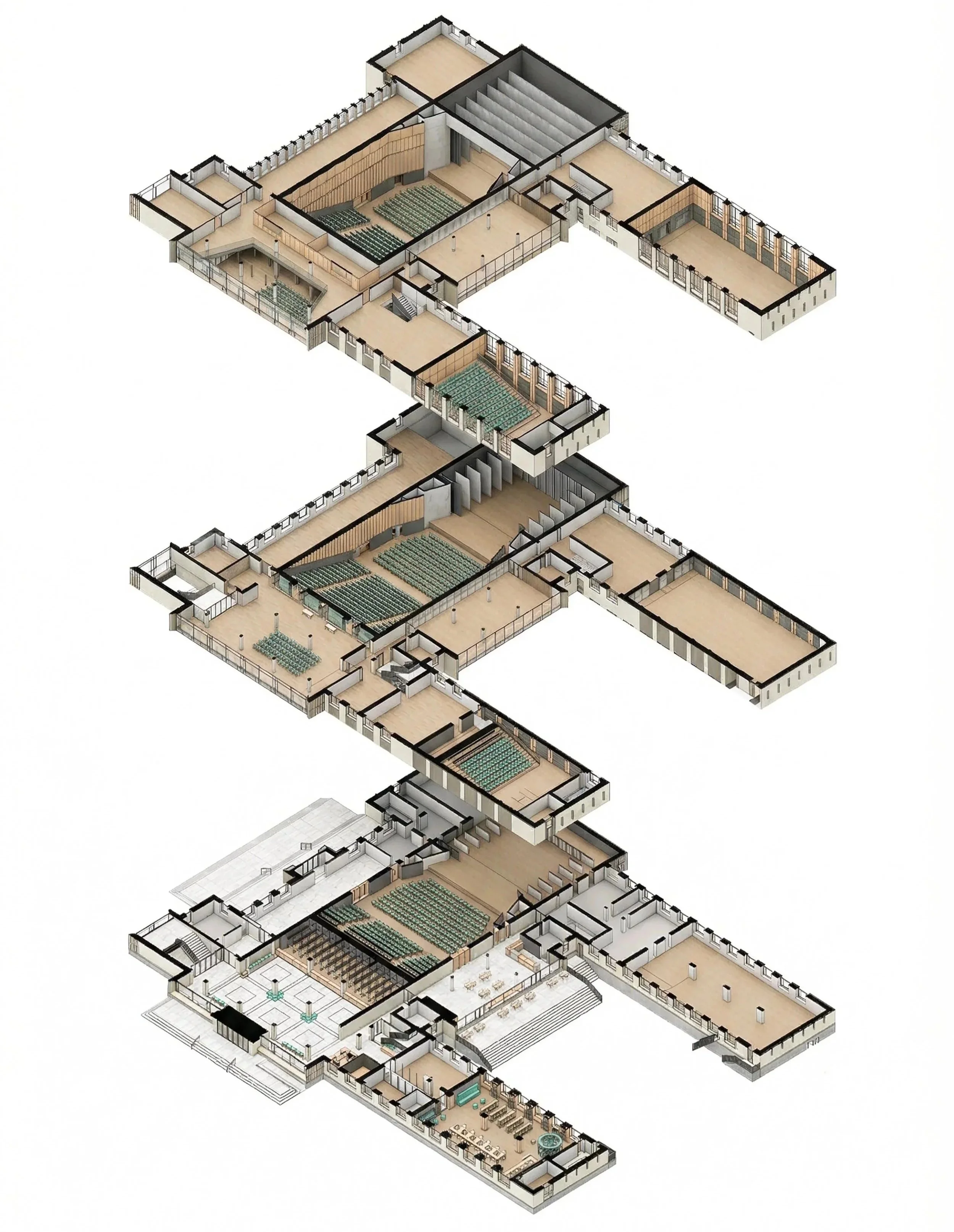
The design reorganizes the existing volumes into a multifunctional civic cluster.
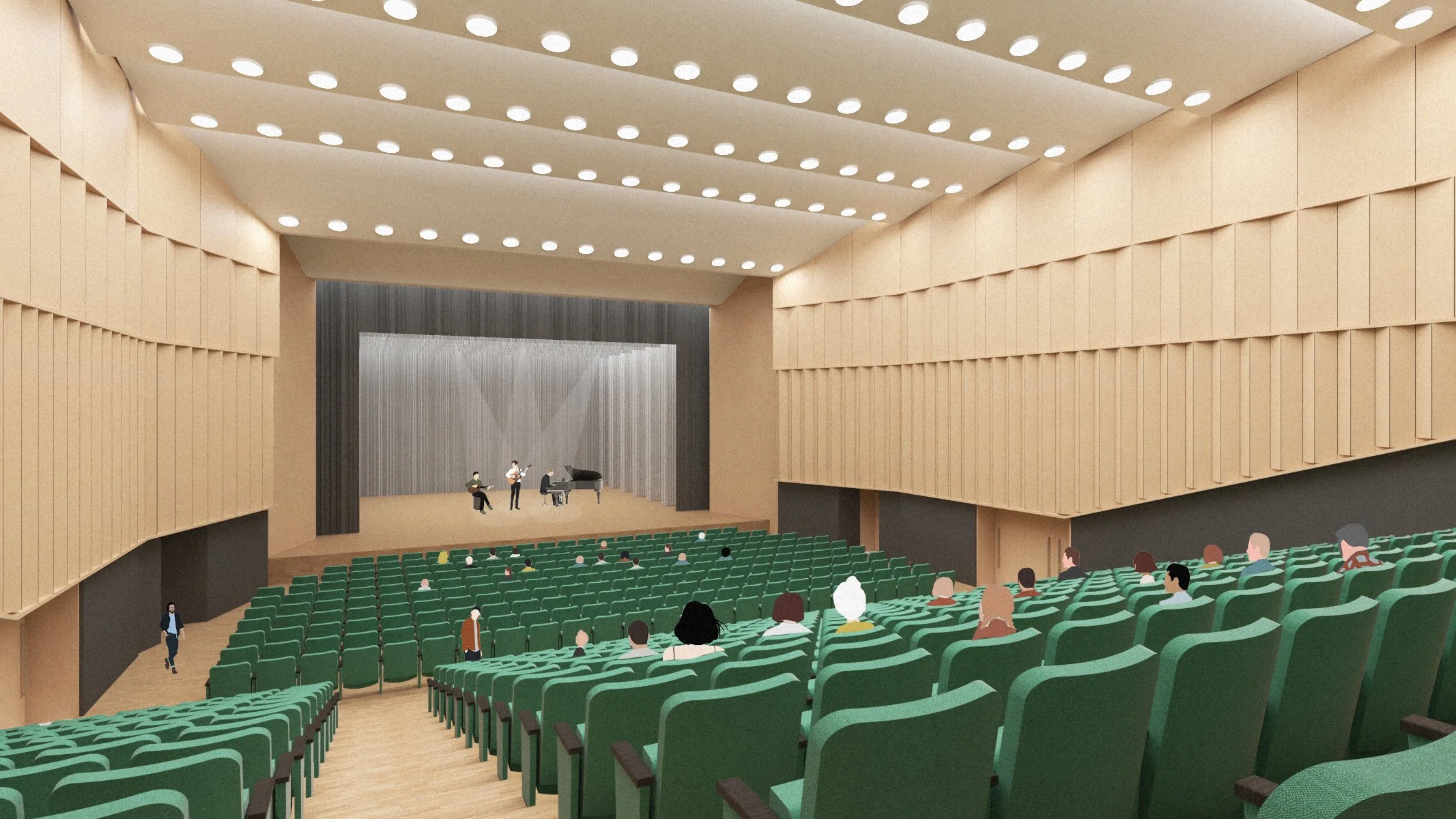
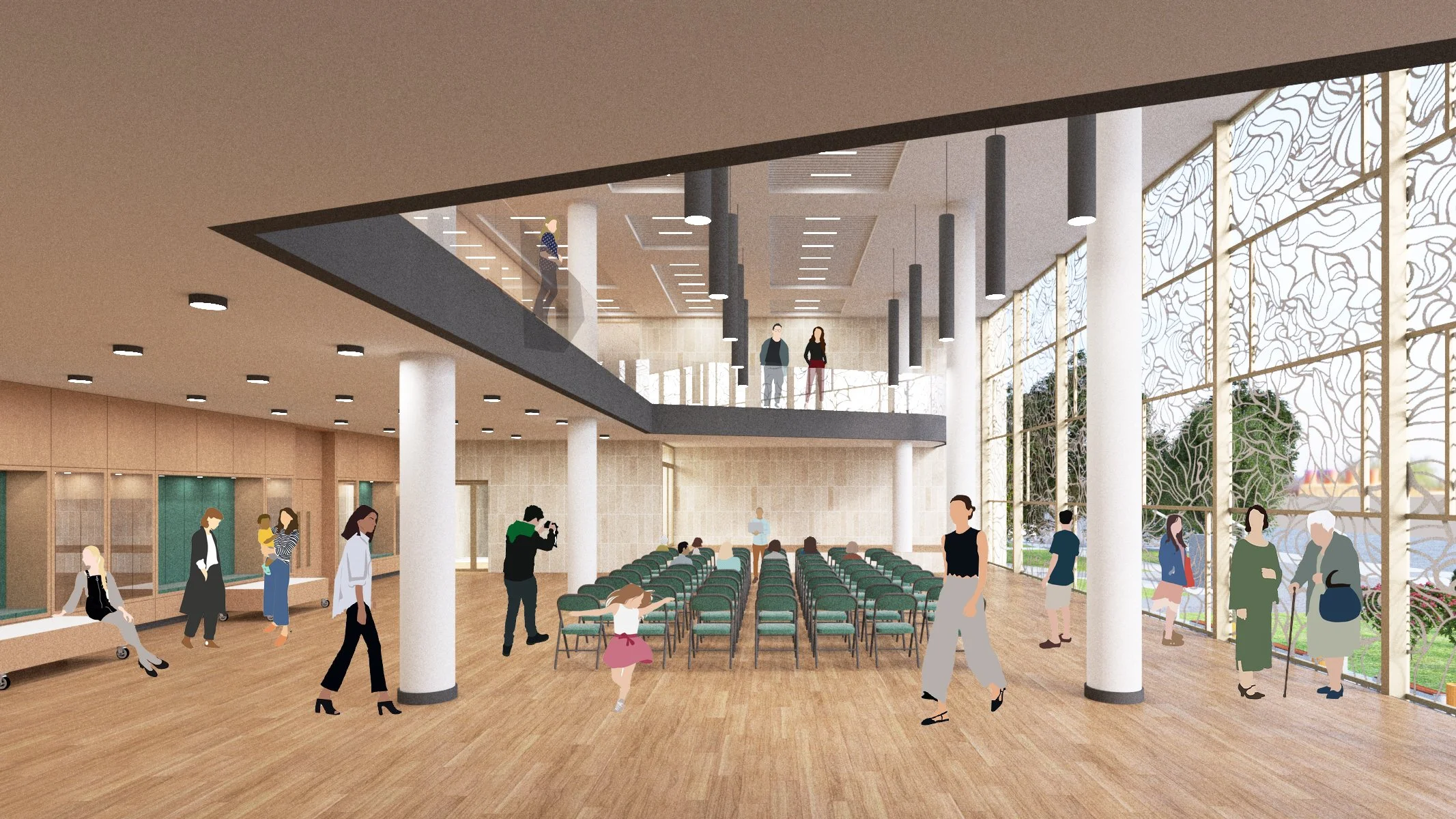
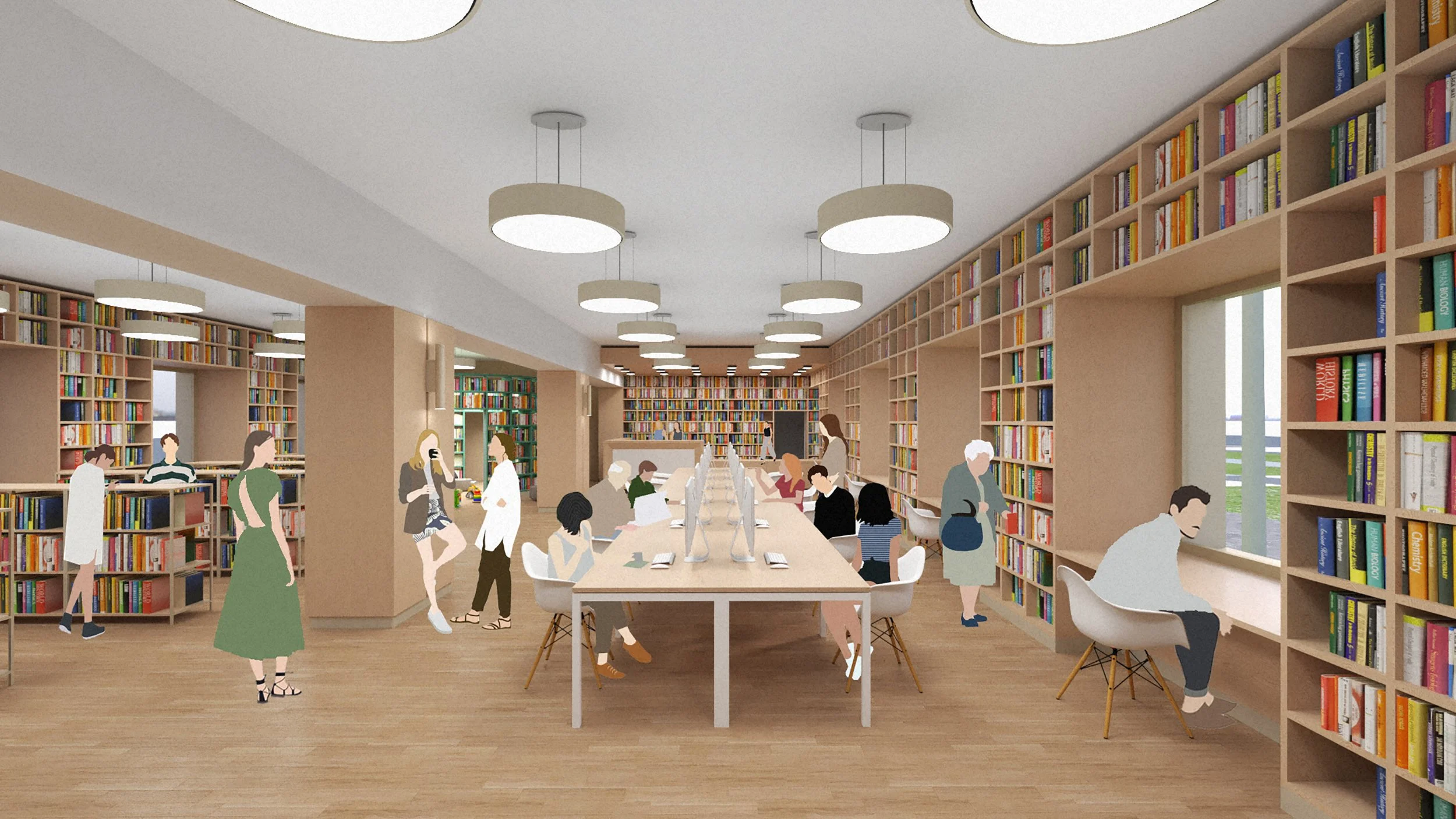
Ground floor: foyer, 623-seat auditorium, exhibition space, library–coworking, café with terrace, and a transformable dance hall.
Upper floors: small auditorium, rehearsal studios, music school, and offices.
Basement: creative workshops and a fitness center.
Flexible layouts and modular furniture allow foyers and the library to host exhibitions, lectures, and workshops, extending activity across age groups and throughout the day.
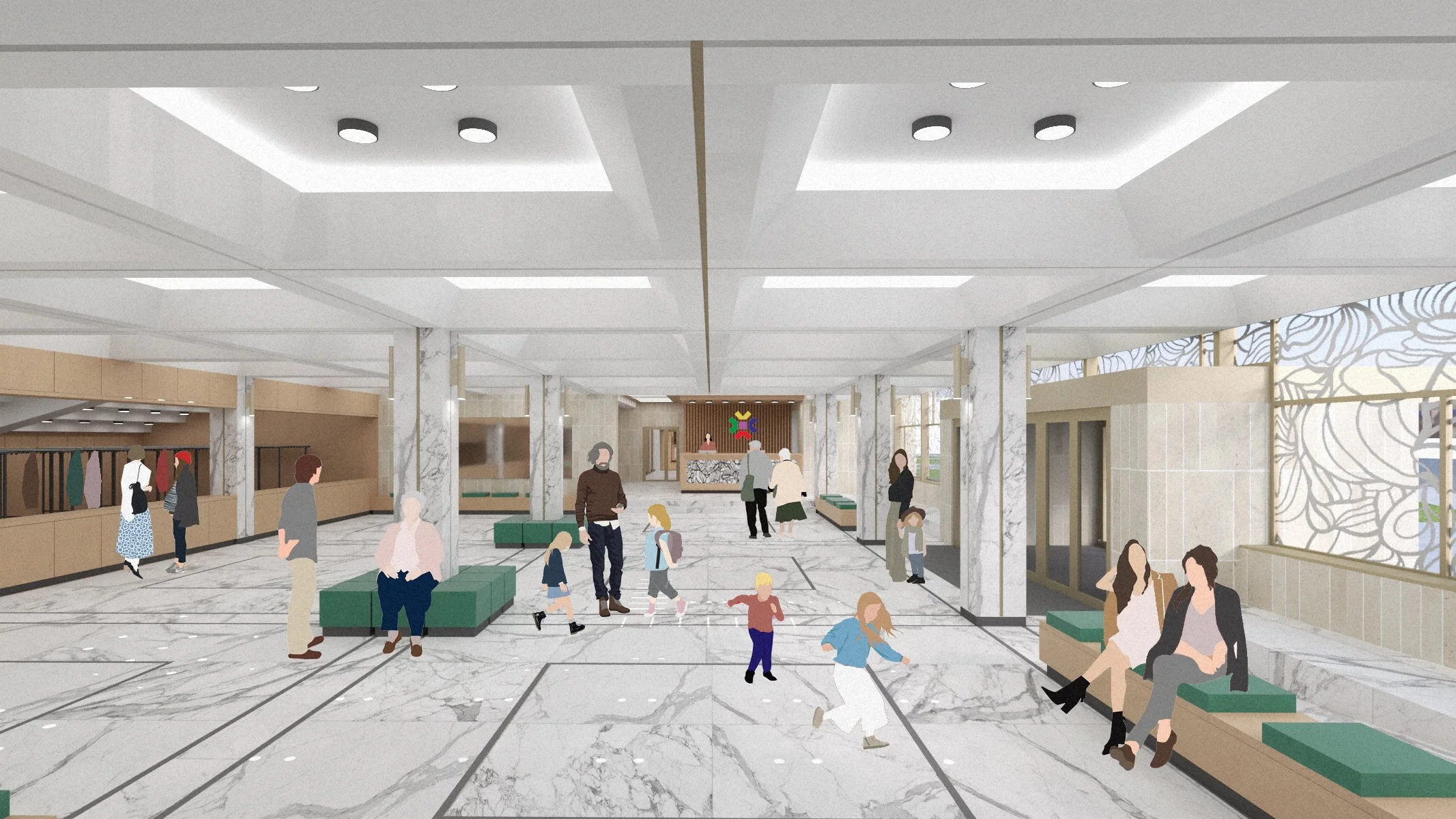
Interior transformation
Original interiors were modest, with little expression beyond their functional purpose. The renovation reinforces the building’s 1970s modernist language while introducing materials consistent with the exterior: the same local stone used on the façades now defines foyers and circulation areas, bringing continuity indoors.
The 623-seat auditorium was upgraded with acoustic wall panels, timber finishes, and new lighting to improve comfort and technical performance, while preserving its spatial clarity. The smaller hall and rehearsal spaces were also reconfigured and improved, expanding the building’s cultural capacity.