ZOYA CULTURAL CENTER
From memorial museum to multifunctional center
The transformation of the former Zoya Kosmodemyanskaya Museum reimagines a historical site of remembrance as a vibrant cultural center. While preserving its symbolic legacy, the project introduces new modes of participation — education, workshops, exhibitions, and dialogue — aimed at a broader, younger audience. The design supports flexible year-round programming, turning the building into a living platform where memory drives cultural renewal.
Location: Petrishchevo, Russia
Program: cultural and community center
Surface: 315 m2
Design period: 2021
Stage: feasibility study, concept design
Existing condition
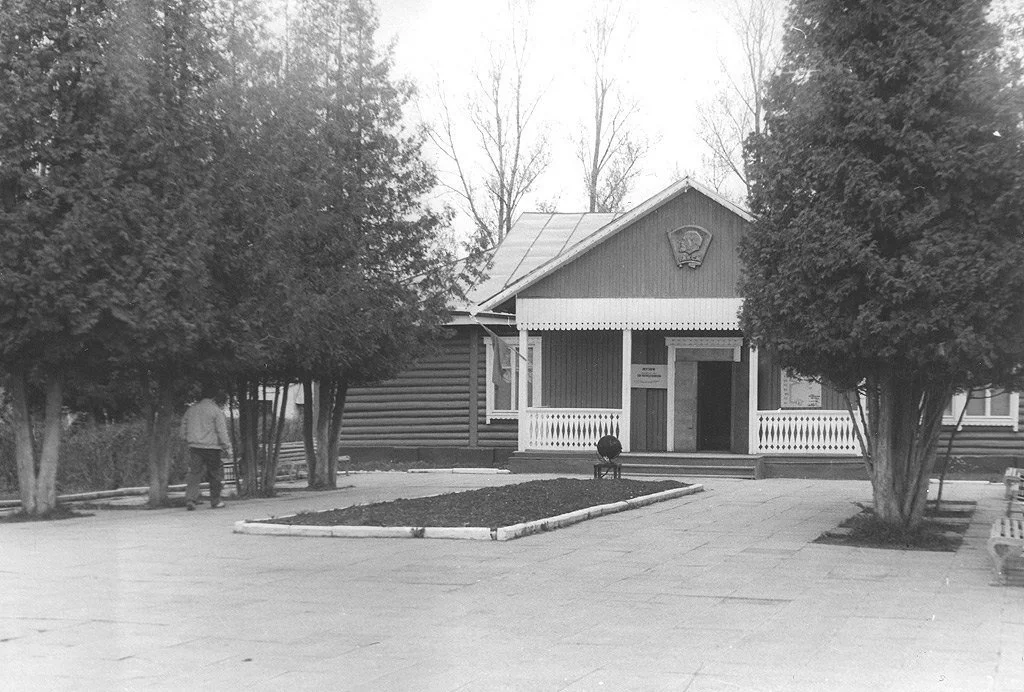
The original timber building, constructed in the Soviet postwar era, served as the first museum commemorating Zoya Kosmodemyanskaya. Its external character — log-style façades, a pitched roof, and modest scale — remains emotionally powerful and immediately recognizable. Internally, however, the plan was organized around a corridor lined with small, near-identical rooms, with little hierarchy, daylight, or basic infrastructure. Sanitary facilities were located outside. This spatial configuration limited the building’s use to static exhibition. The project respects this legacy while addressing its constraints.
Internal transformation
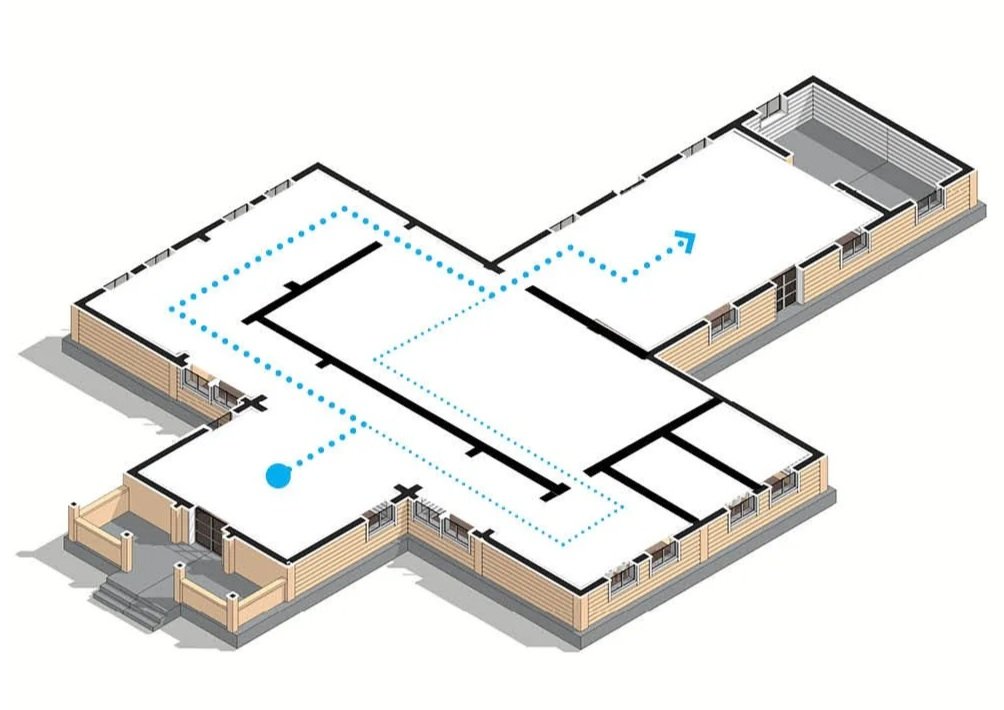
Original circulation
At the start of the project much of the interior functioned as circulation space. Rooms were arranged in an enfilade sequence, forcing visitors to pass through one space to reach the next.
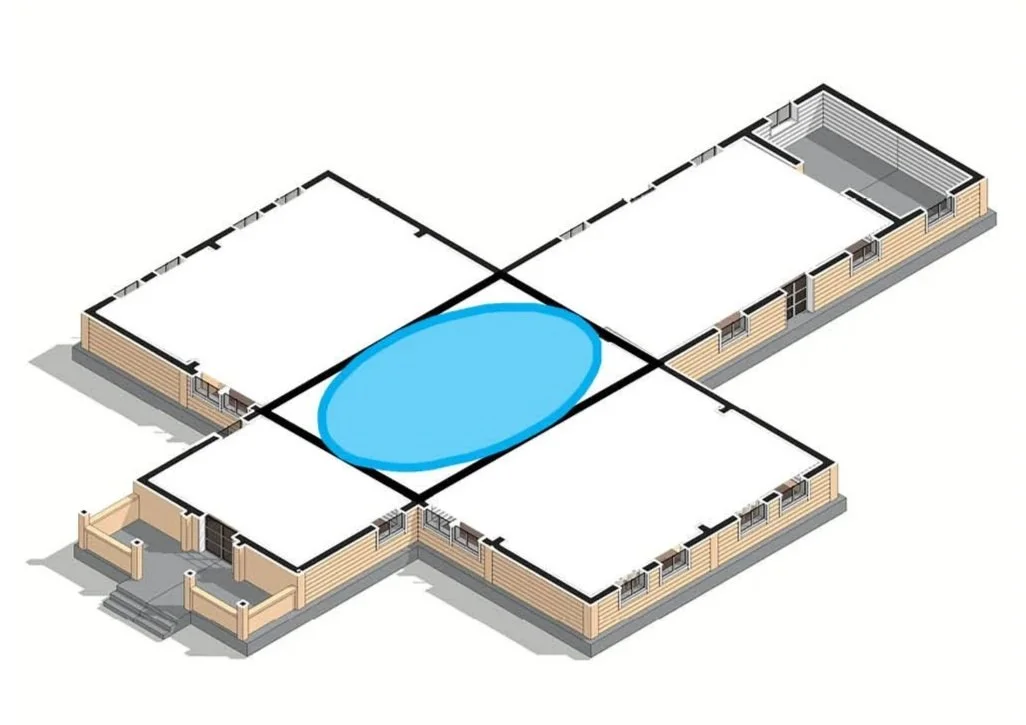
Central Memory Hall
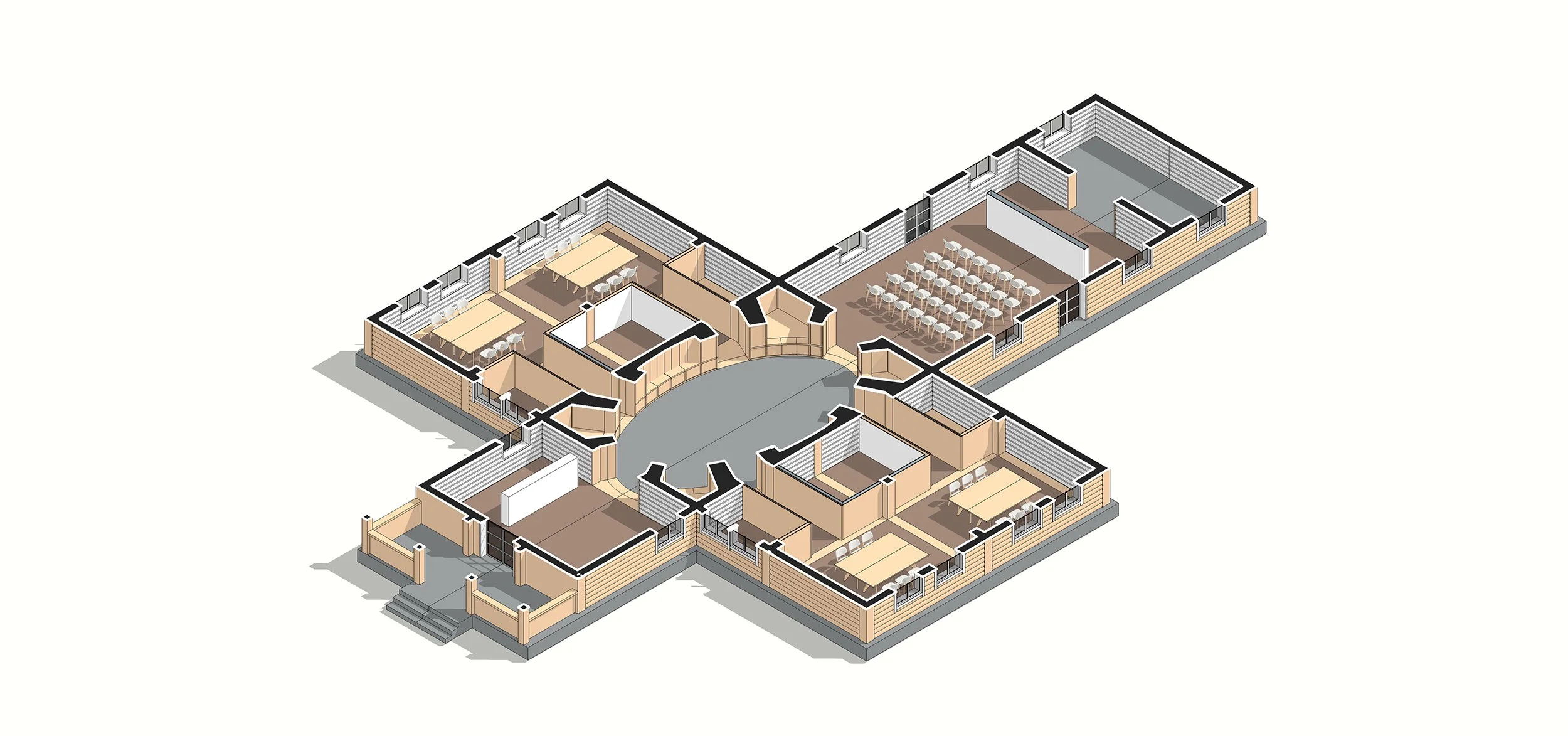
In our proposal, the intersection of volumes becomes an impressive central space that serves as a “memory chapel” while also providing access to all program areas, enabling flexible, multi-purpose use.
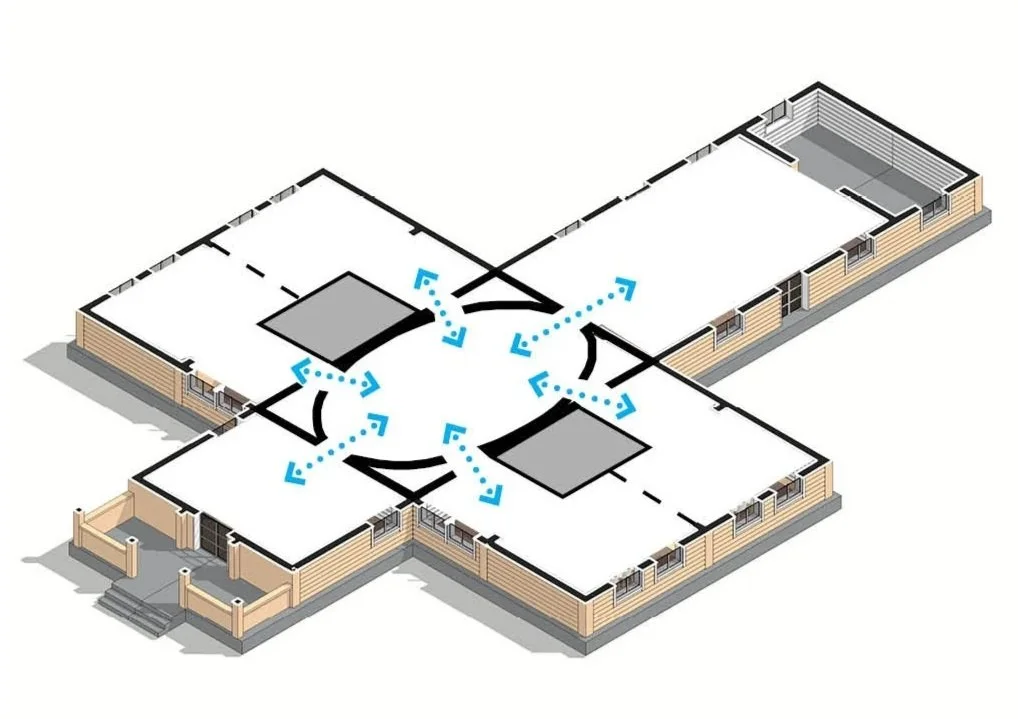
Centralized access
By introducing a central hall, access to all spaces becomes clearer, while the “chapel” itself—shaped by natural light from the extended roof volume—becomes a core element of the building’s identity.
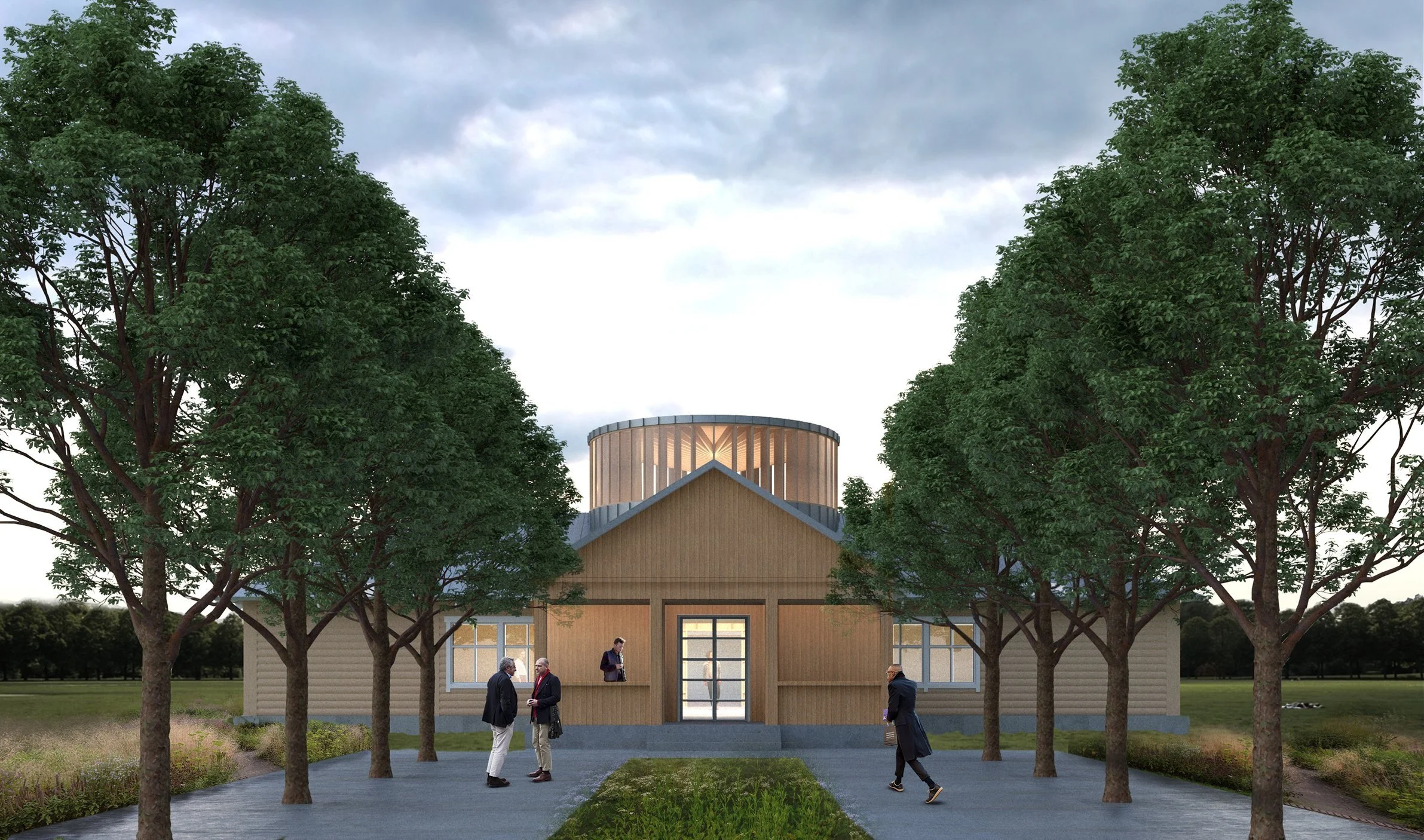
Identity
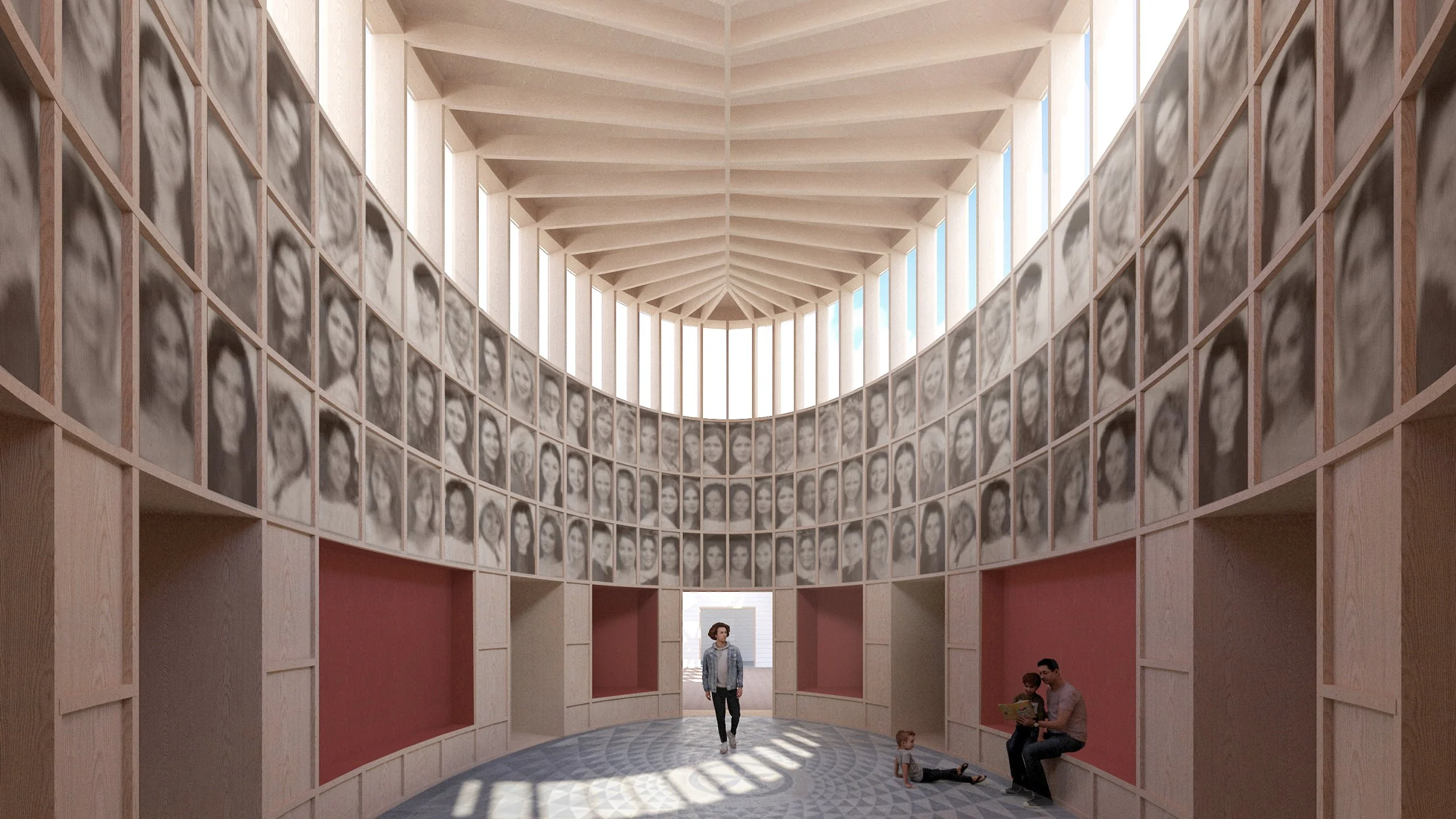
Rather than freezing the building in a historical image, the project treats identity as active and evolving. The new design supports a shift from passive remembrance to participatory experience. The circular central hall, defined by a portrait wall, transforms individual memory into collective reflection. This approach aligns with the mission of IDENTITY.IN: to work with existing places not only as architectural objects, but as cultural carriers of identity. Through continuity, contrast, and openness, the project allows the past to inform the future in meaningful ways.
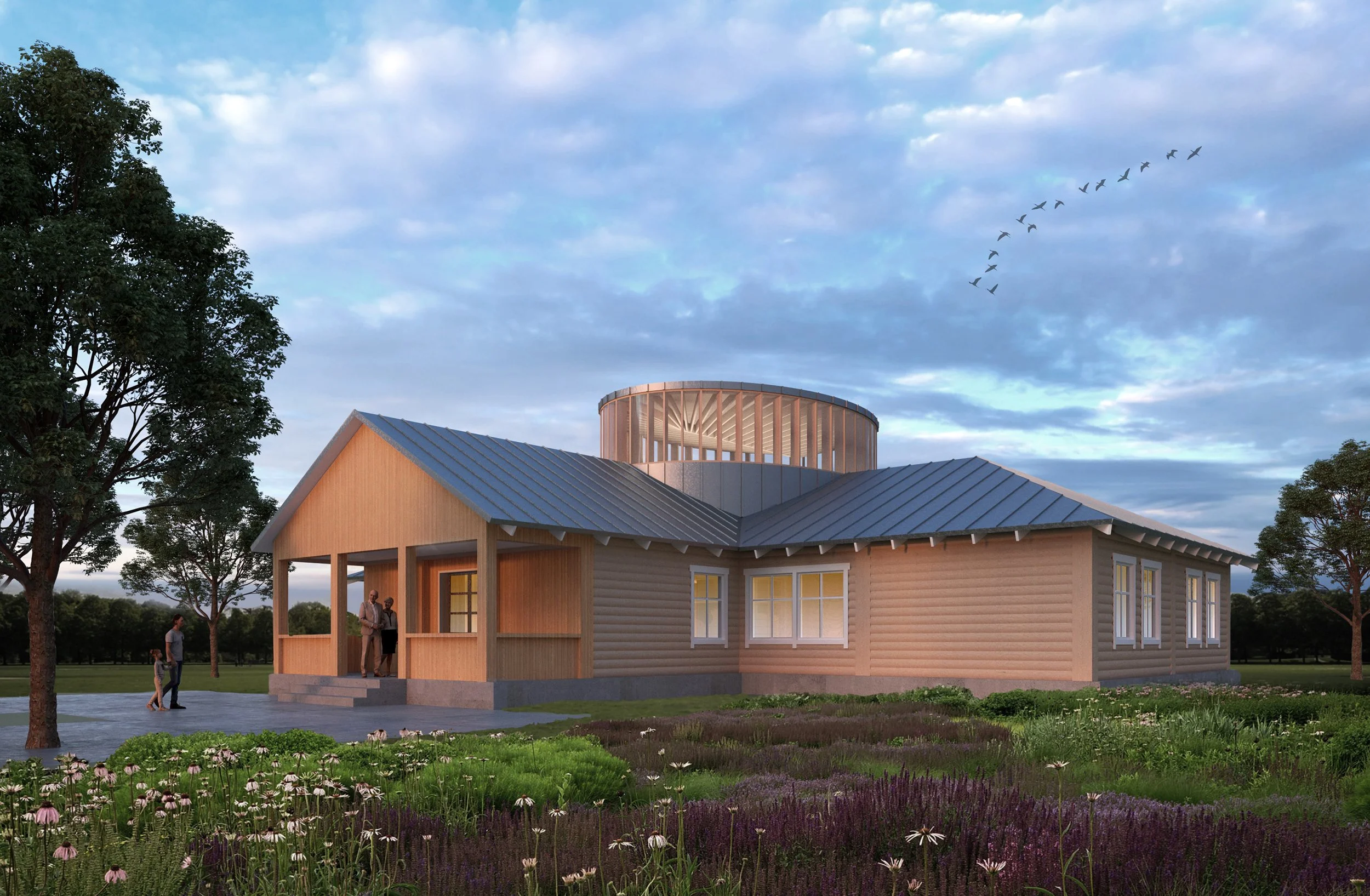
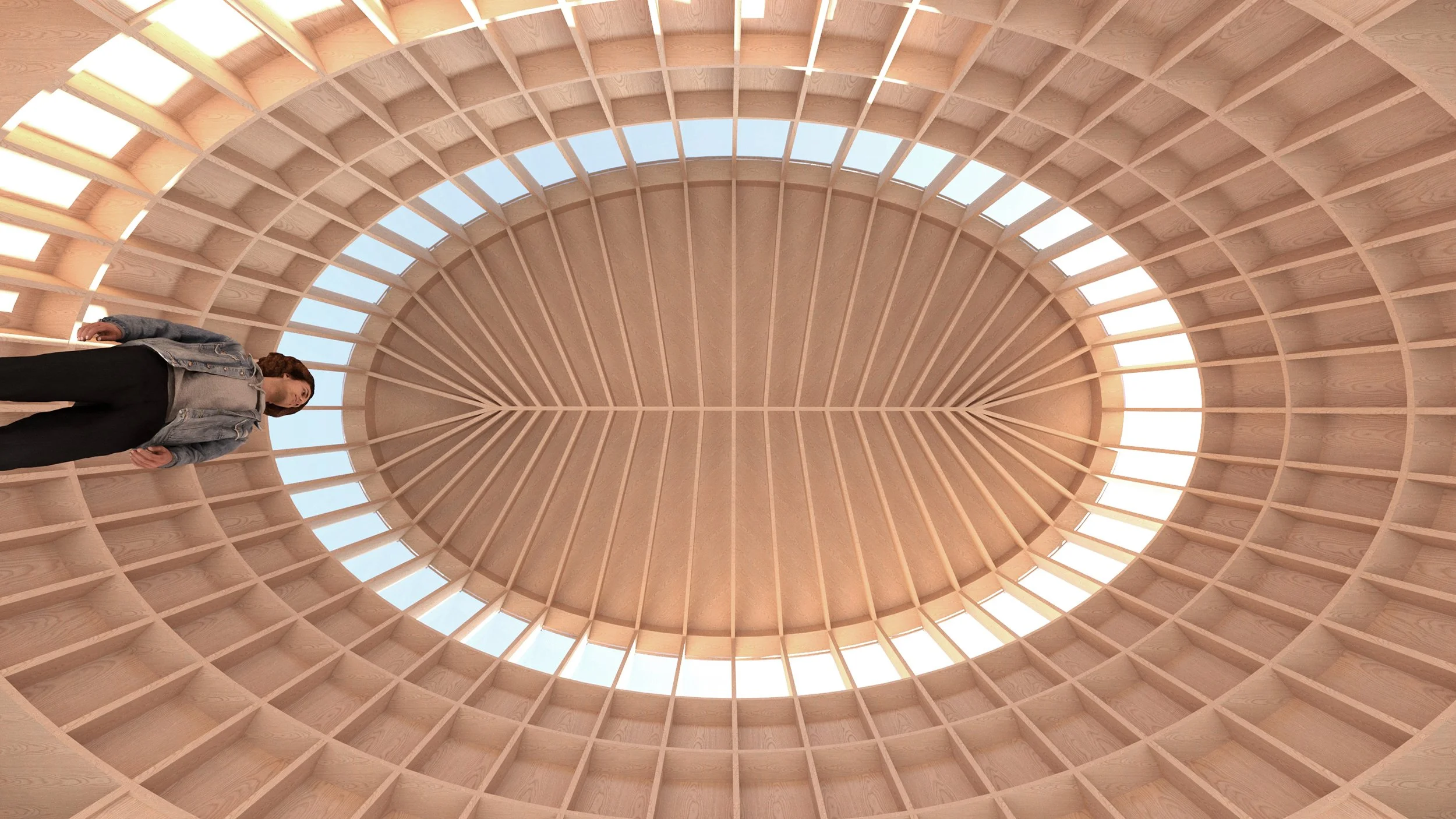
The original wooden shell is carefully preserved and restored. Its proportions and materials remain intact, maintaining a strong presence within the rural landscape. A translucent circular rooflight above the new central hall becomes the only visible addition — quiet yet confident — signalling transformation from within. This restrained intervention preserves the original silhouette while introducing a new spatial quality inside.
Spatial transformation
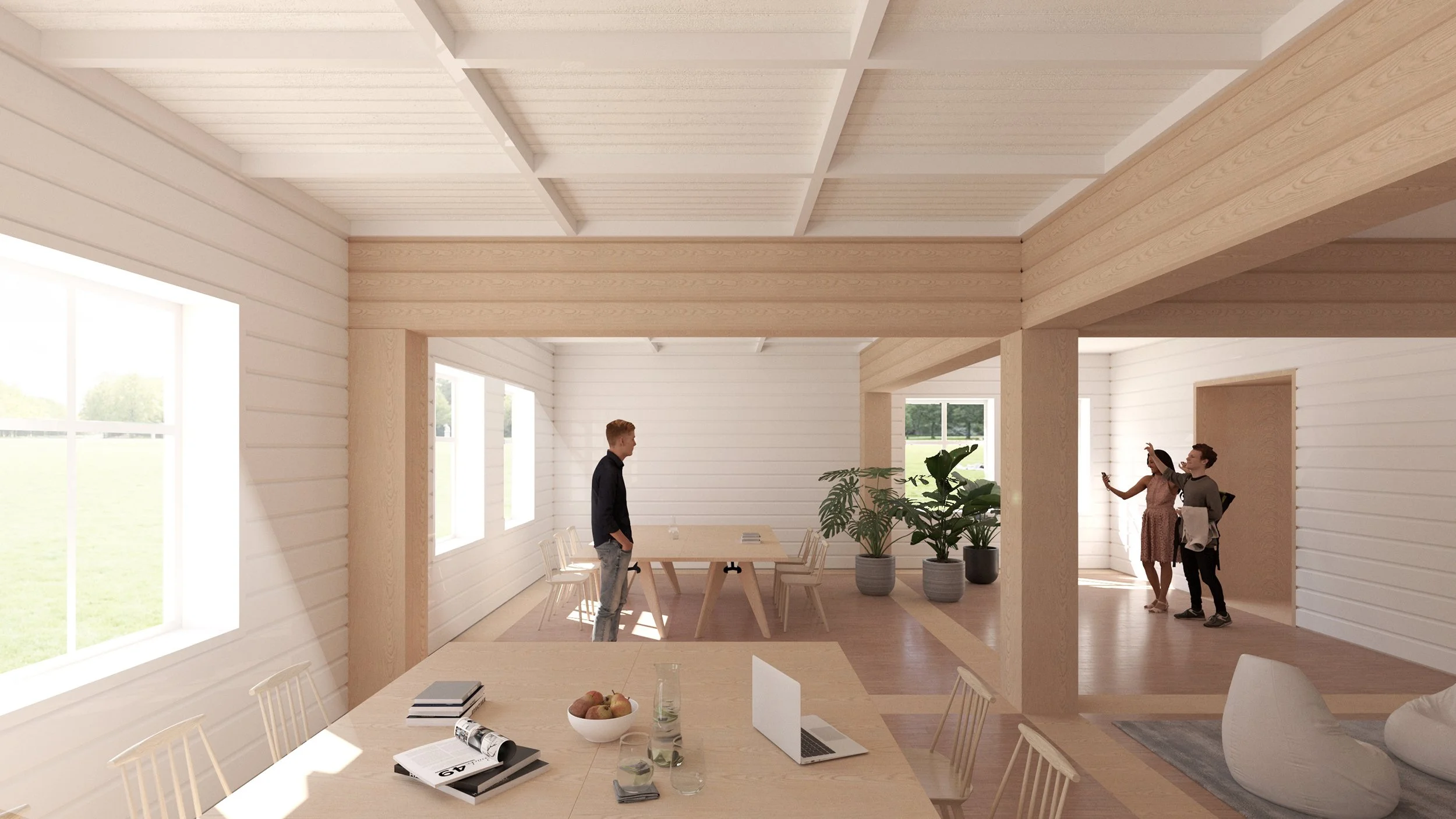
The architectural concept introduces a clear, open spatial system that replaces the rigid corridor-based layout of the original building. At the center of the plan, a radial organization defines five programmatic zones, each designed to host different activities — exhibitions, lectures, workshops, and educational events. This layout supports multiple simultaneous uses and enables intuitive navigation throughout the building. Flexibility is embedded in the spatial structure, ensuring the cultural center remains adaptable to evolving needs over time.
Central hall
At the core of the building is a double-height oval space, serving as a place of gathering, reflection, and orientation. Naturally lit from above, its radial timber structure creates a calm, immersive atmosphere. A surrounding portrait wall forms a collective memorial, turning the space into the emotional and symbolic heart of the center.
Educational spaces
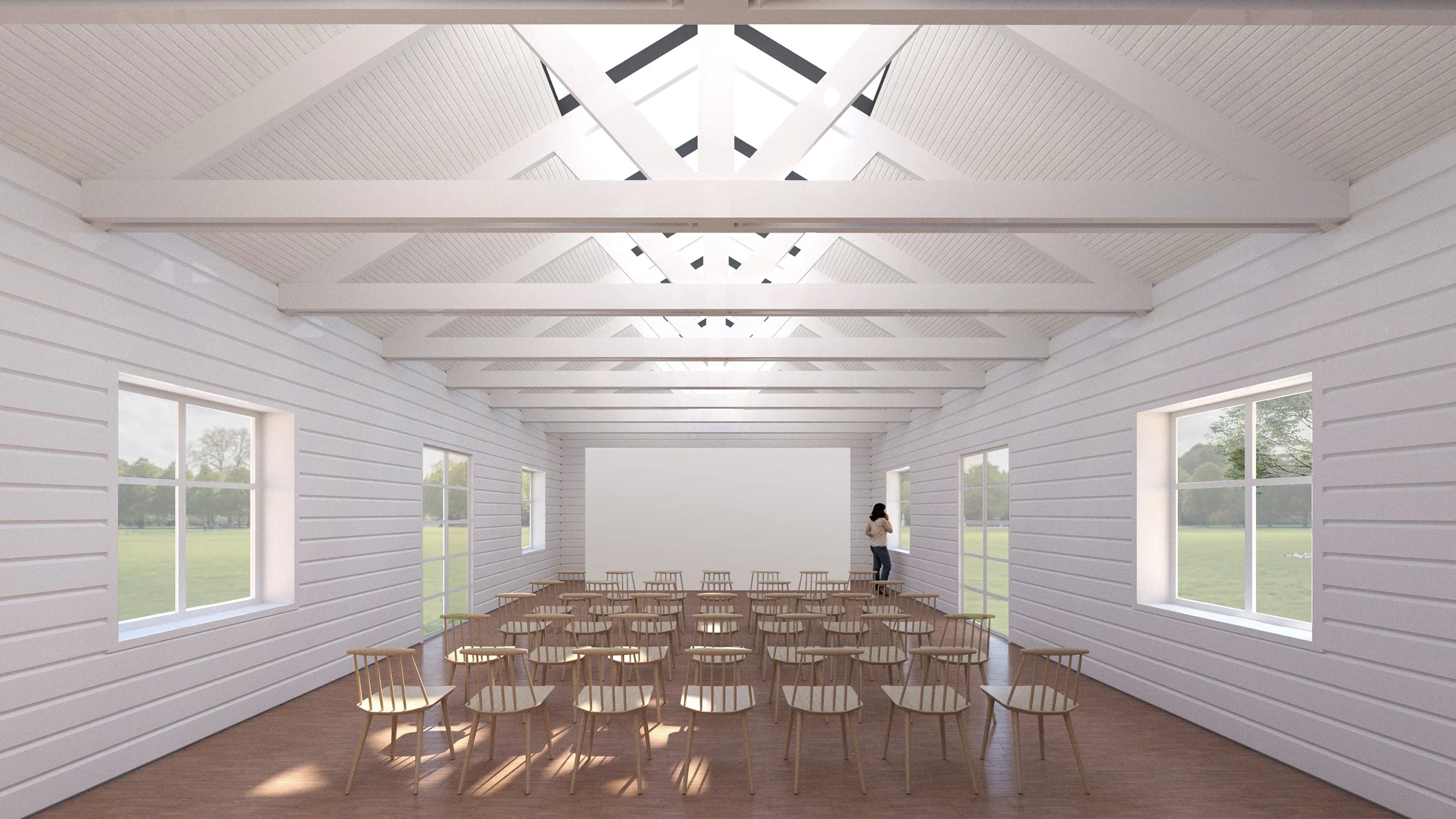
Extending from the central space, five single-height rooms support diverse programs — workshops, talks, and exhibitions. Their domestic scale, warm materials, and natural daylight create a welcoming, adaptable setting for everyday cultural activity. Together, these rooms form a practical framework around the central hall.