House of Peoples' Friendship
The largest cultural center in Yakutia
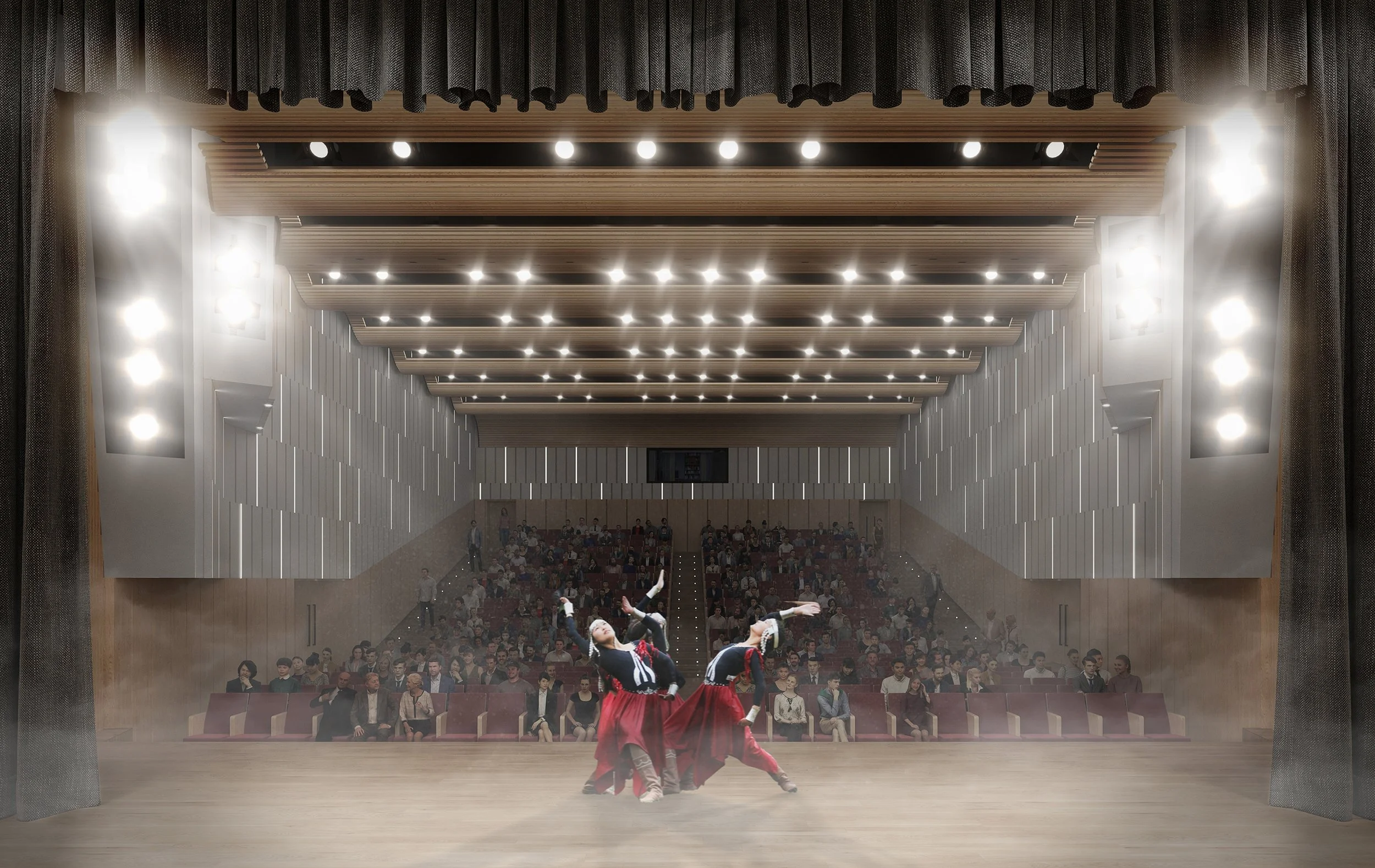
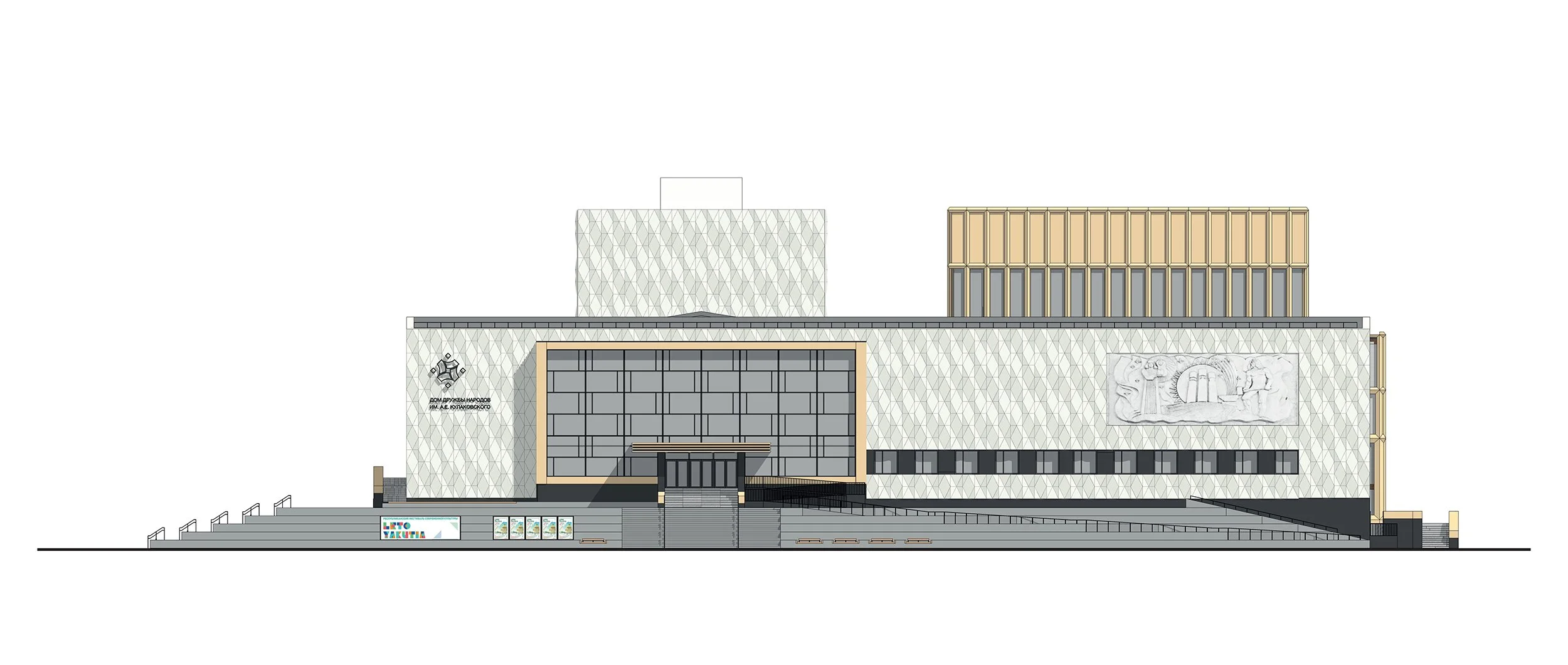
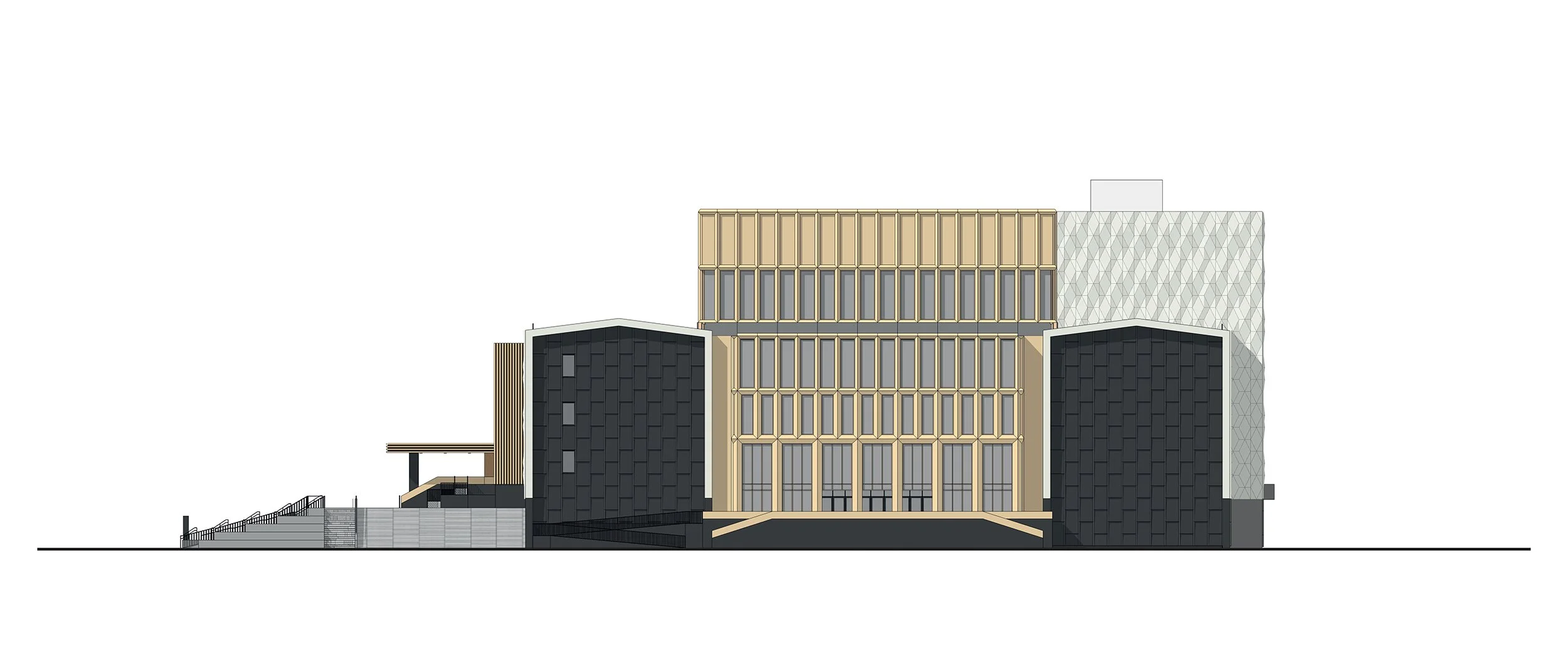
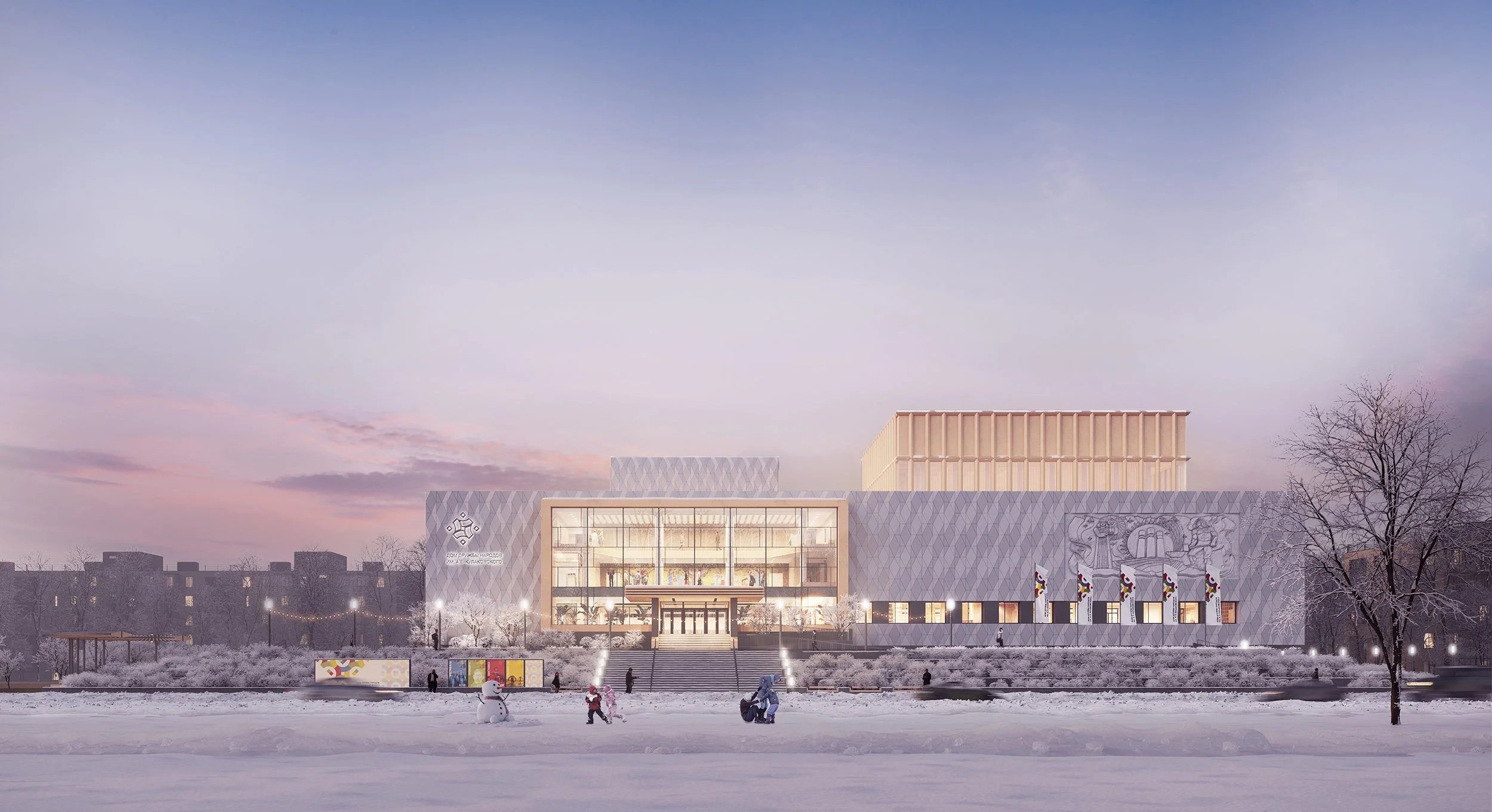
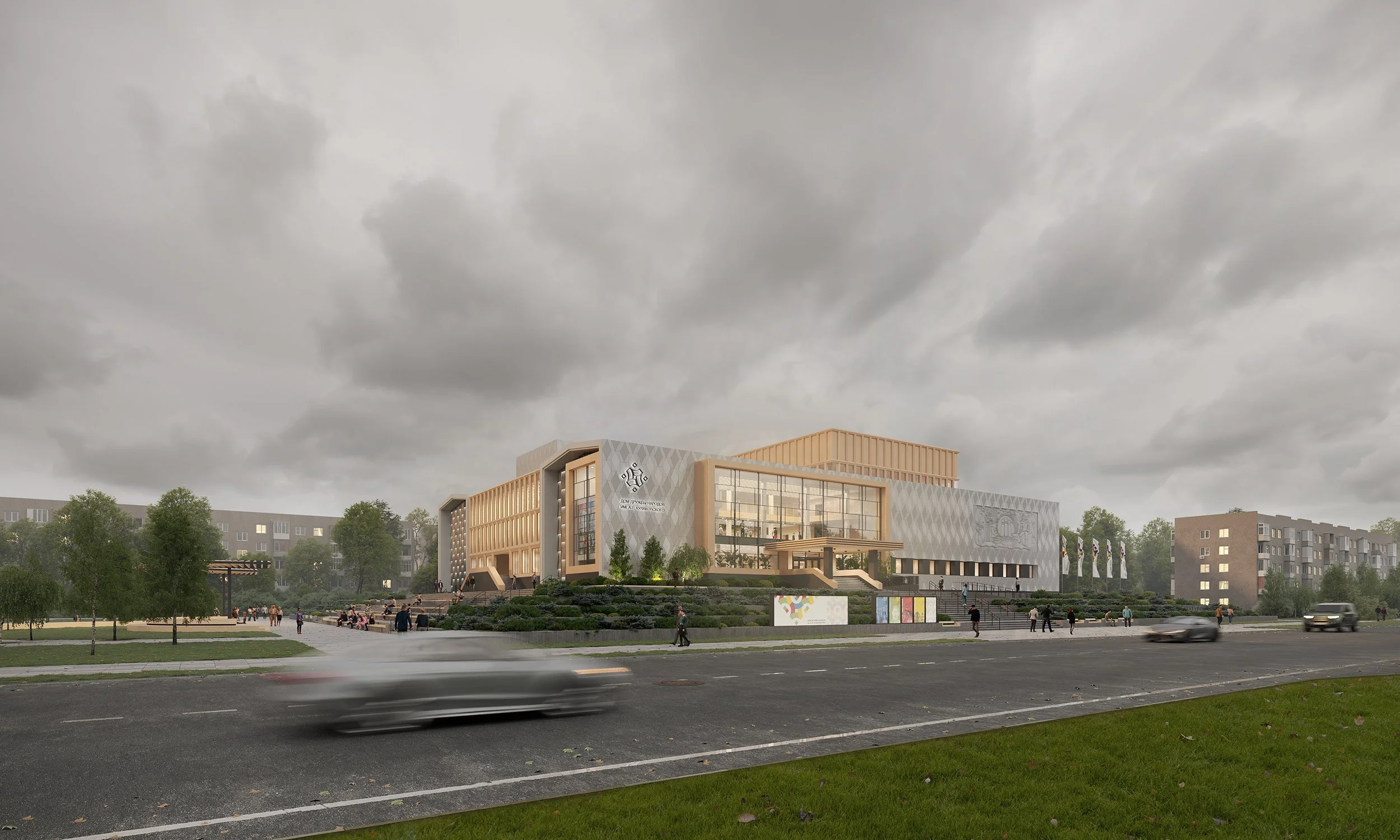
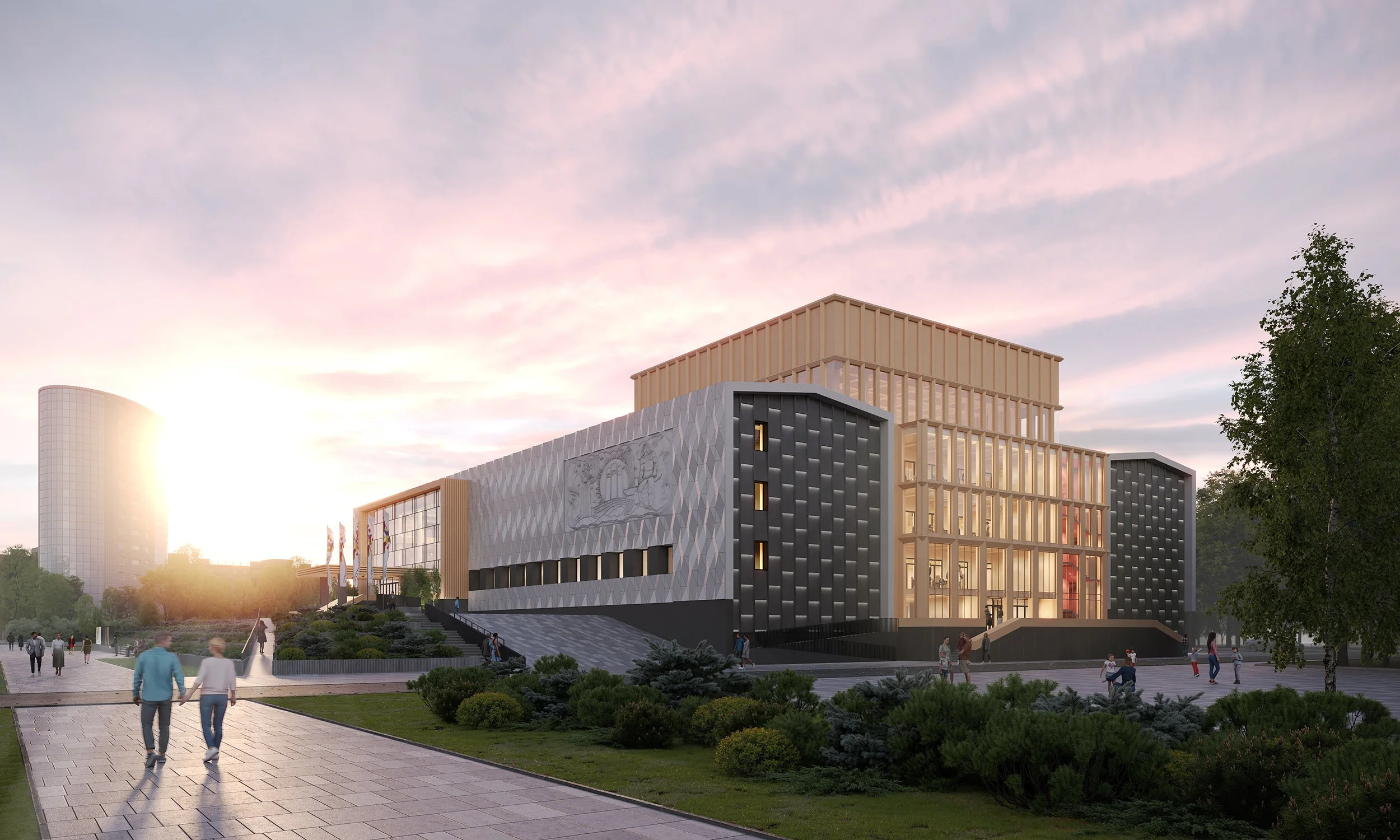
The House of Peoples’ Friendship is Yakutia’s largest cultural venue, uniting the artistic traditions of the republic’s many nationalities. In 2021, the building embarked on a major transformation to expand its space, renew its functions, and reshape its identity for a new generation. The concept focuses on linking the building’s appearance to local identity, creating distinctive architecture within a standardized envelope. The building is activated by enclosing the existing courtyard to form a multifunctional atrium—a single, precise gesture that introduces a new civic core while preserving the iconic silhouette of the original structure.
Location: Yakutsk, Saha republic, Russia
Program: cultural center
Surface: 8 678 m2
Design period: 2021
Stage: hackathon, tender, concept design
Collaborators: Baza-14
Building history
Cultural centers have always played a vital role in everyday life in northern regions, where harsh climates make it difficult to spend time outdoors for more than half the year. One such region is the Republic of Sakha (Yakutia) and its capital, Yakutsk—a city built on permafrost and known for one of the world’s most extreme seasonal temperature ranges, reaching up to 100°C between winter and summer.
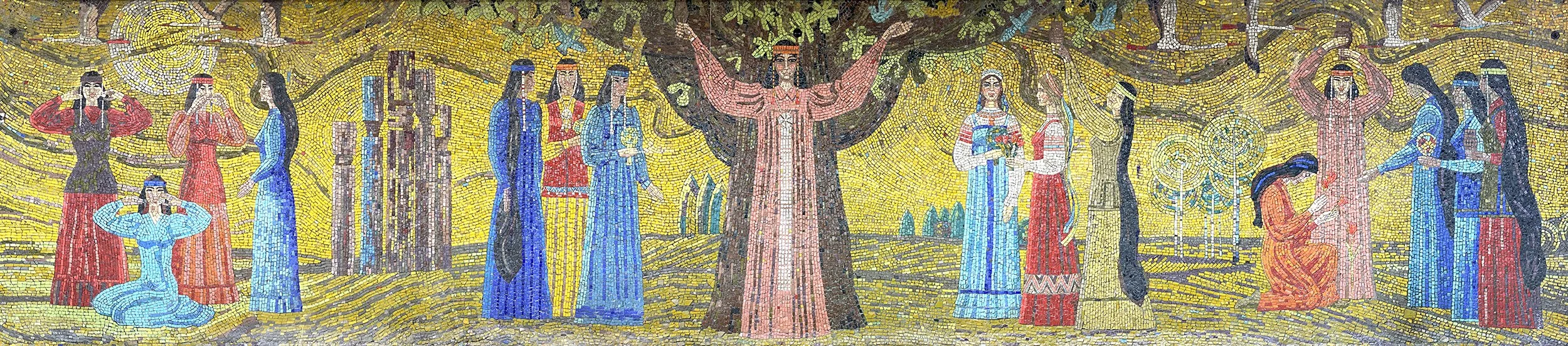
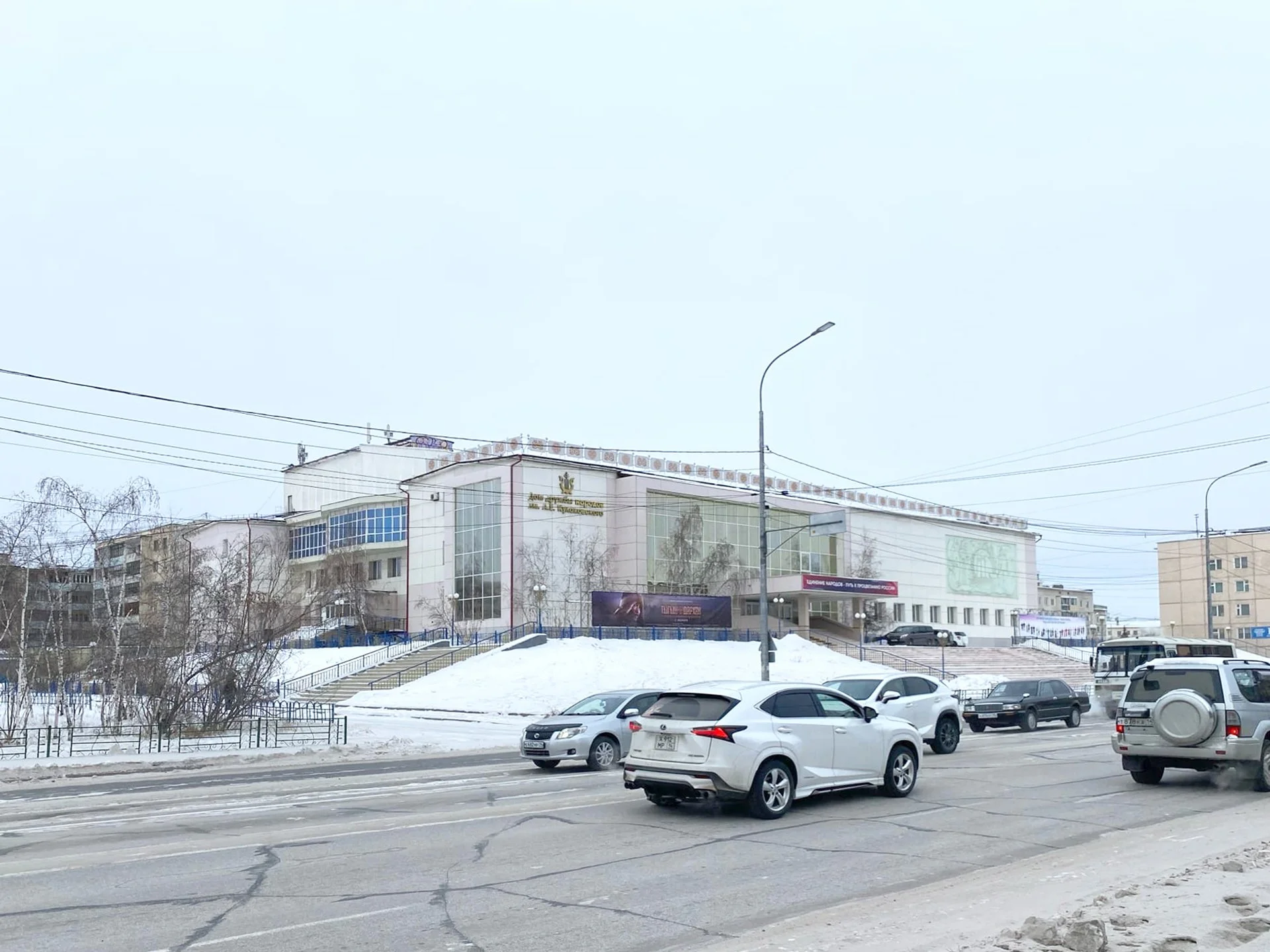
The House of Peoples’ Friendship was built in 1980 based on the Soviet standard project 169-129. The design was adapted by local architect Dmitry Savinov for permafrost conditions by elevating the building on a raised earth platform. Establishing a link to local identity was central to this adaptation, resulting in a series of decorative elements developed in collaboration with local artists.
In the 2000s, the building was renovated and much of its modernist character was lost. The facades were clad in large-format porcelain stoneware tiles of low visual quality, which also covered parts of the original facade artworks.
Despite aging infrastructure, the building has remained a symbol of unity, leading to its selection for modernization under the New Life of Houses of Culture initiative.
Location and lanscape
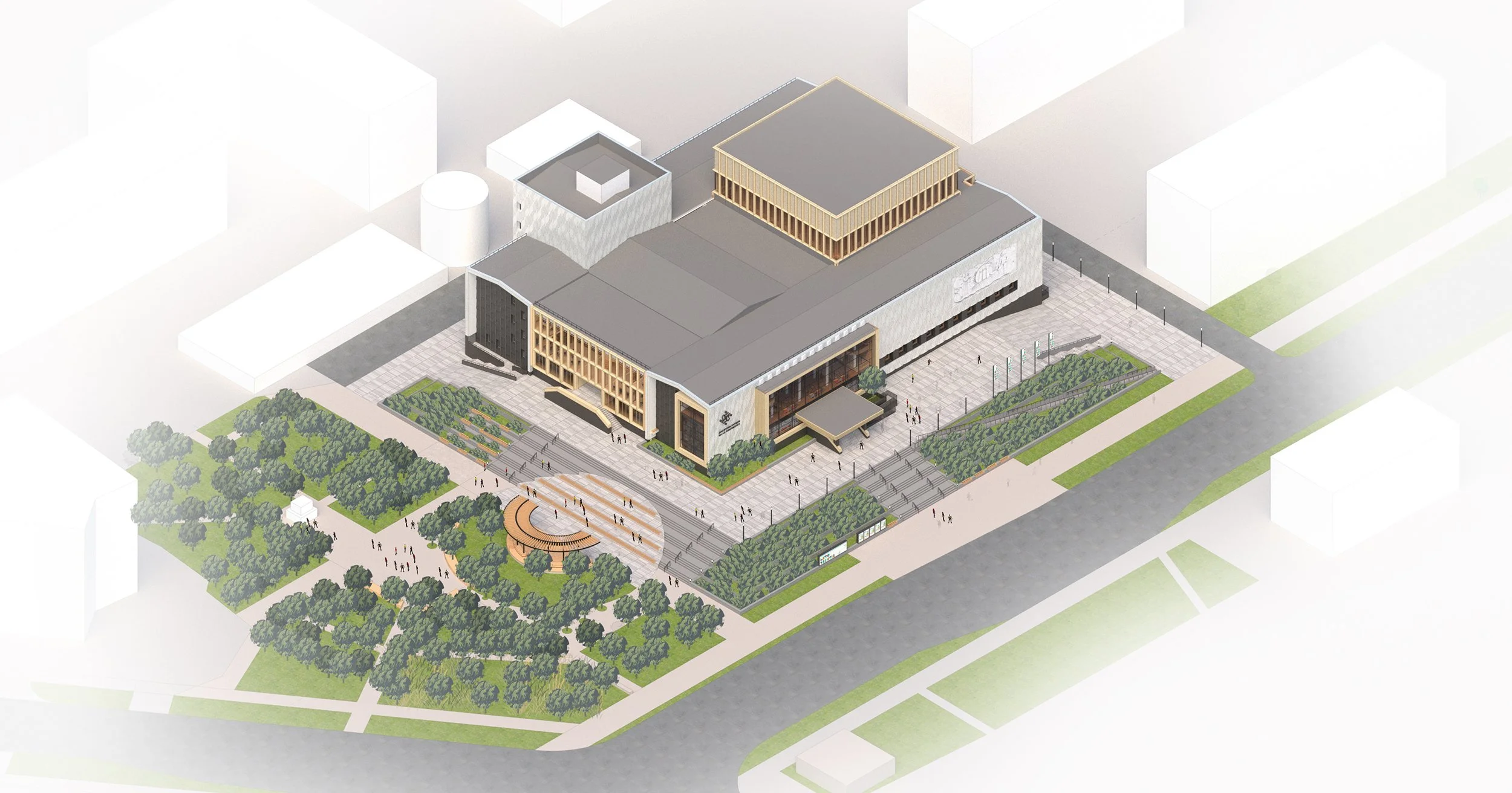
Situated on a raised site in central Yakutsk, the building overlooks the Lena River and surrounding parkland. Its elevated position enhances visibility and connects it to both the urban and natural landscape, making it a key public landmark of the city.
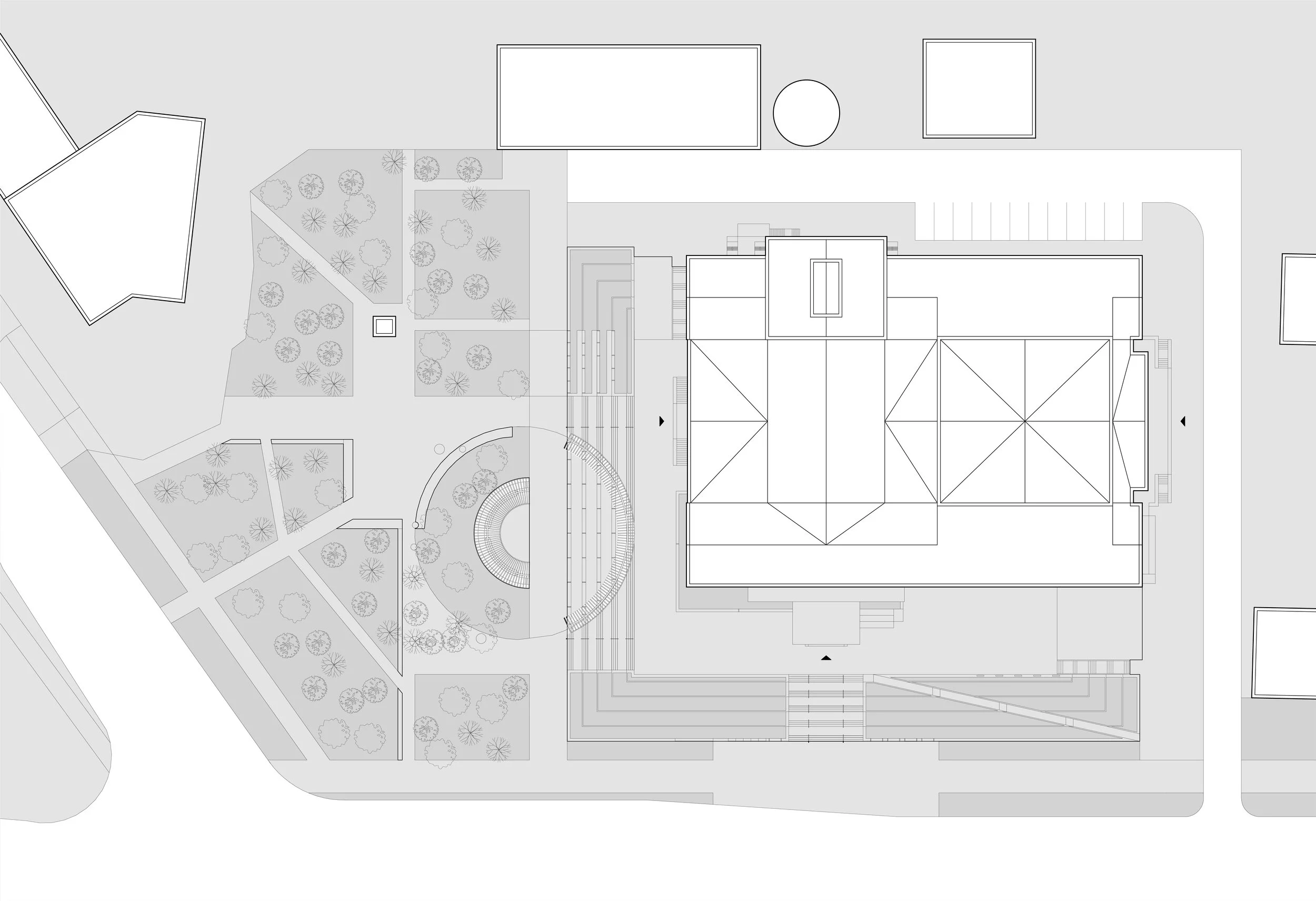
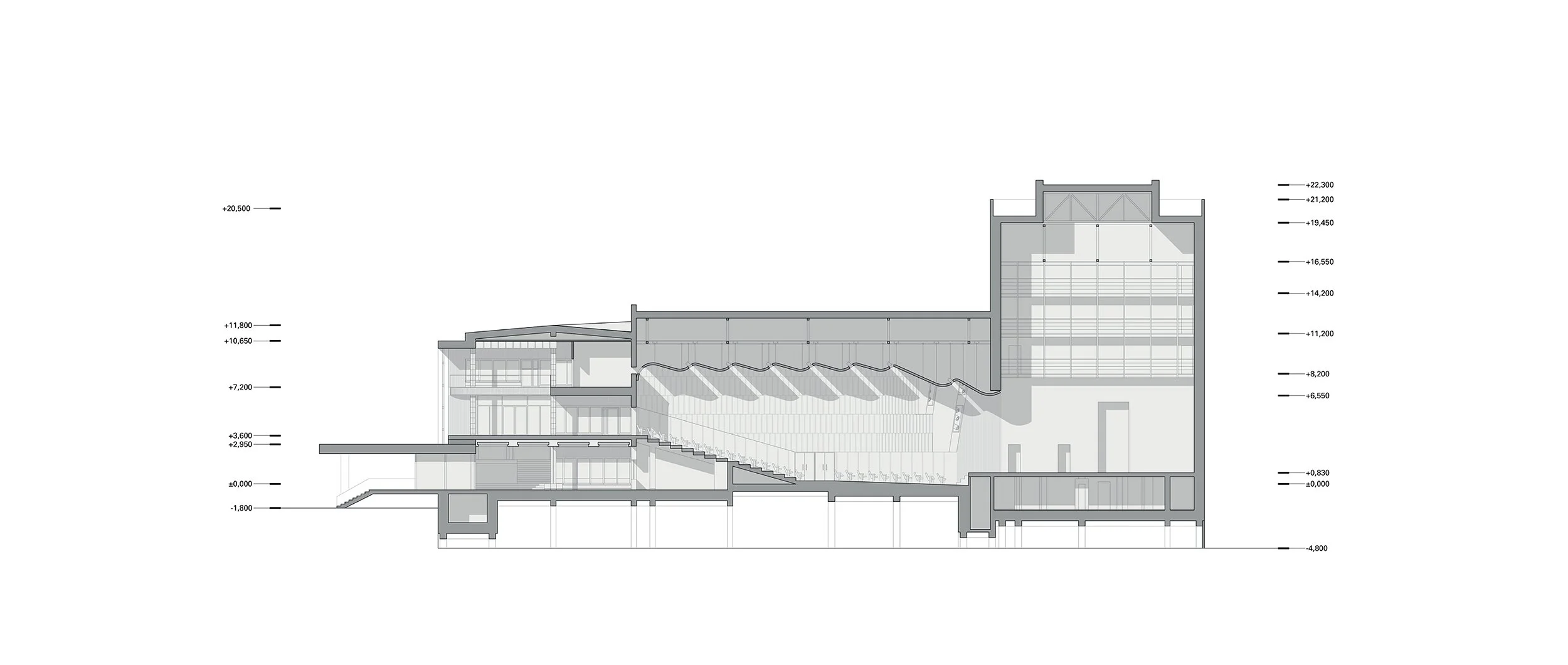
One of the project’s key objectives is to strengthen the building’s connection to surrounding public spaces and improve accessibility for people with limited mobility. The slope of the earthen embankment on which the building sits becomes more functional through the integration of a ramp, allowing more people to reach the entrance. The south facade, oriented toward the park, is activated by consolidating the administrative functions into a single block on this side, making an additional entrance here relevant. The slope facing the park is further activated by integrated seating steps and a stage platform opposite, enabling outdoor public events during the summer.
Spatial сoncept
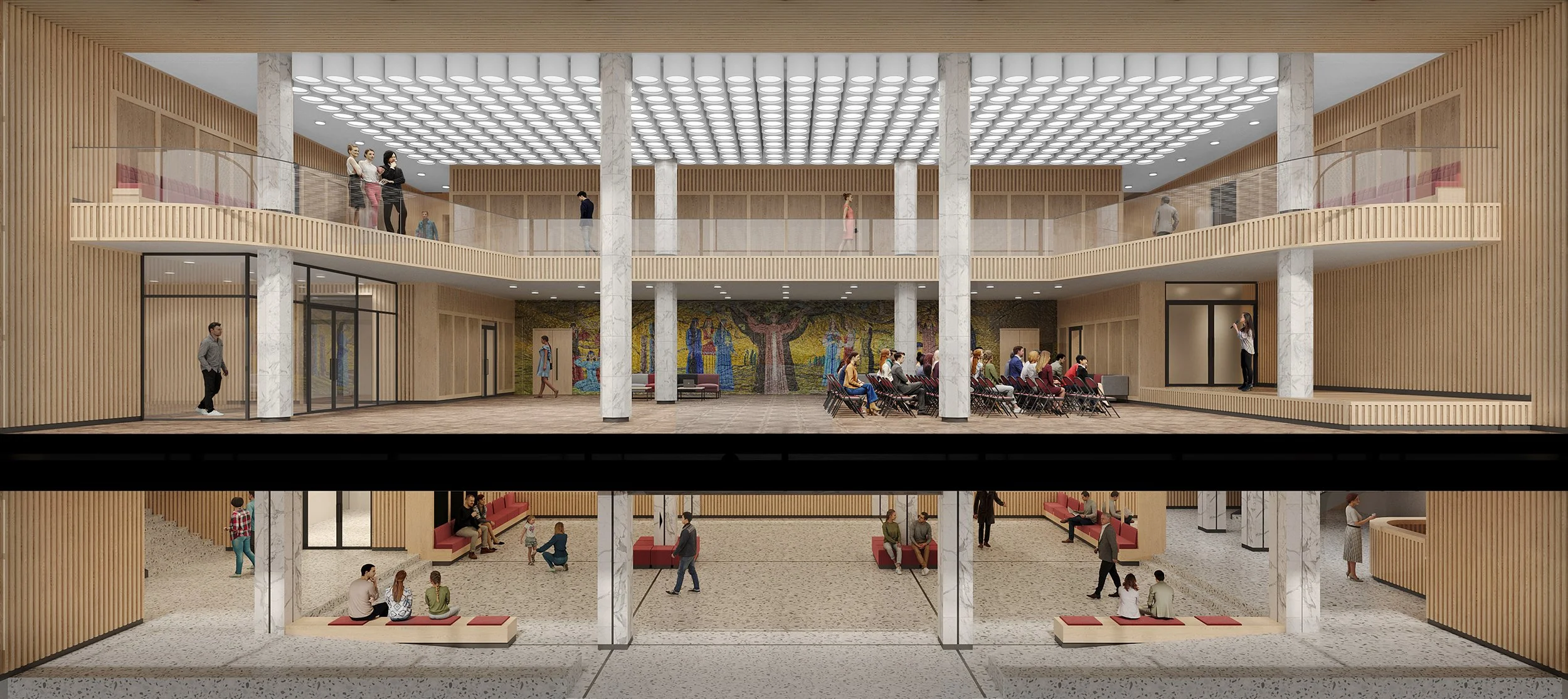
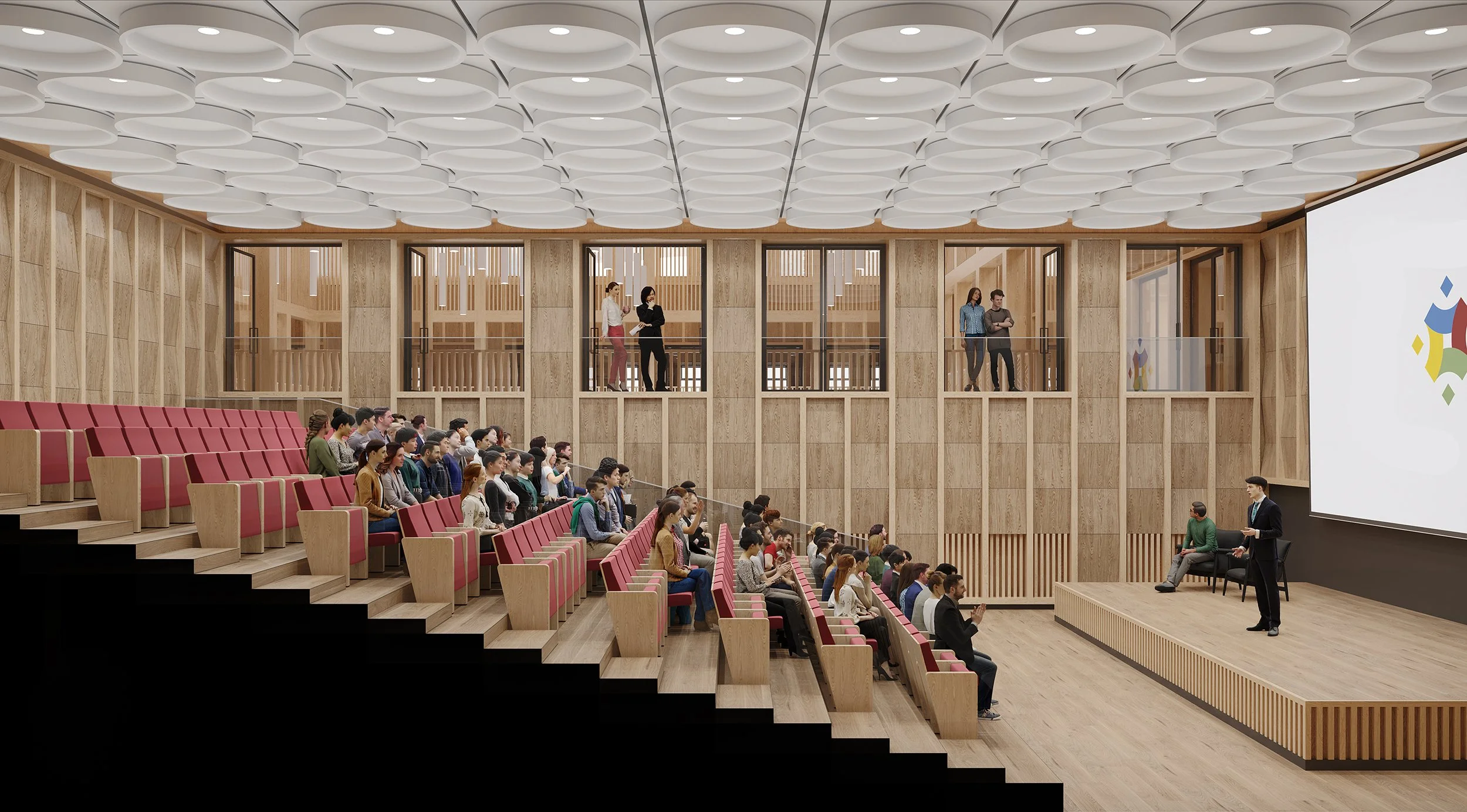
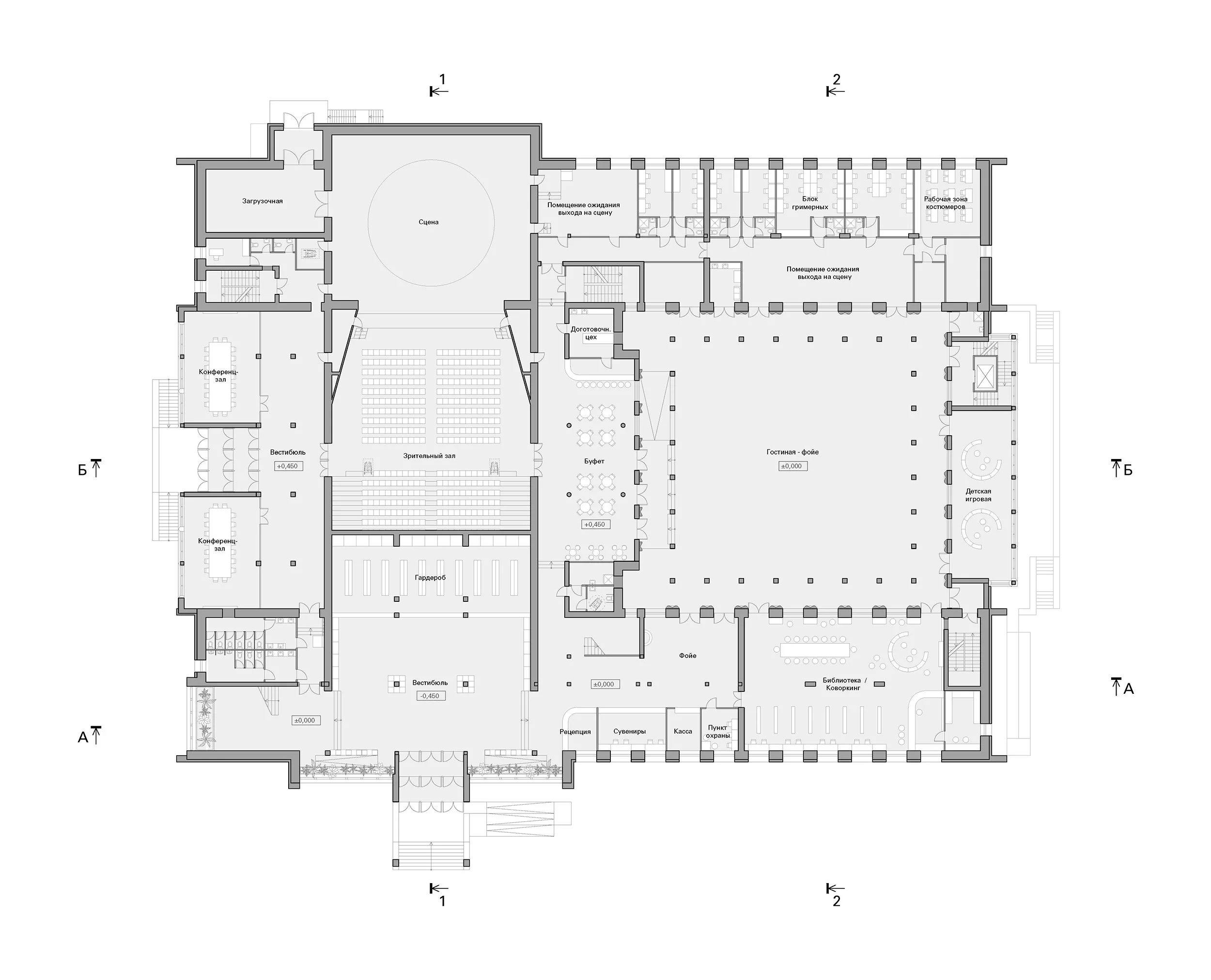
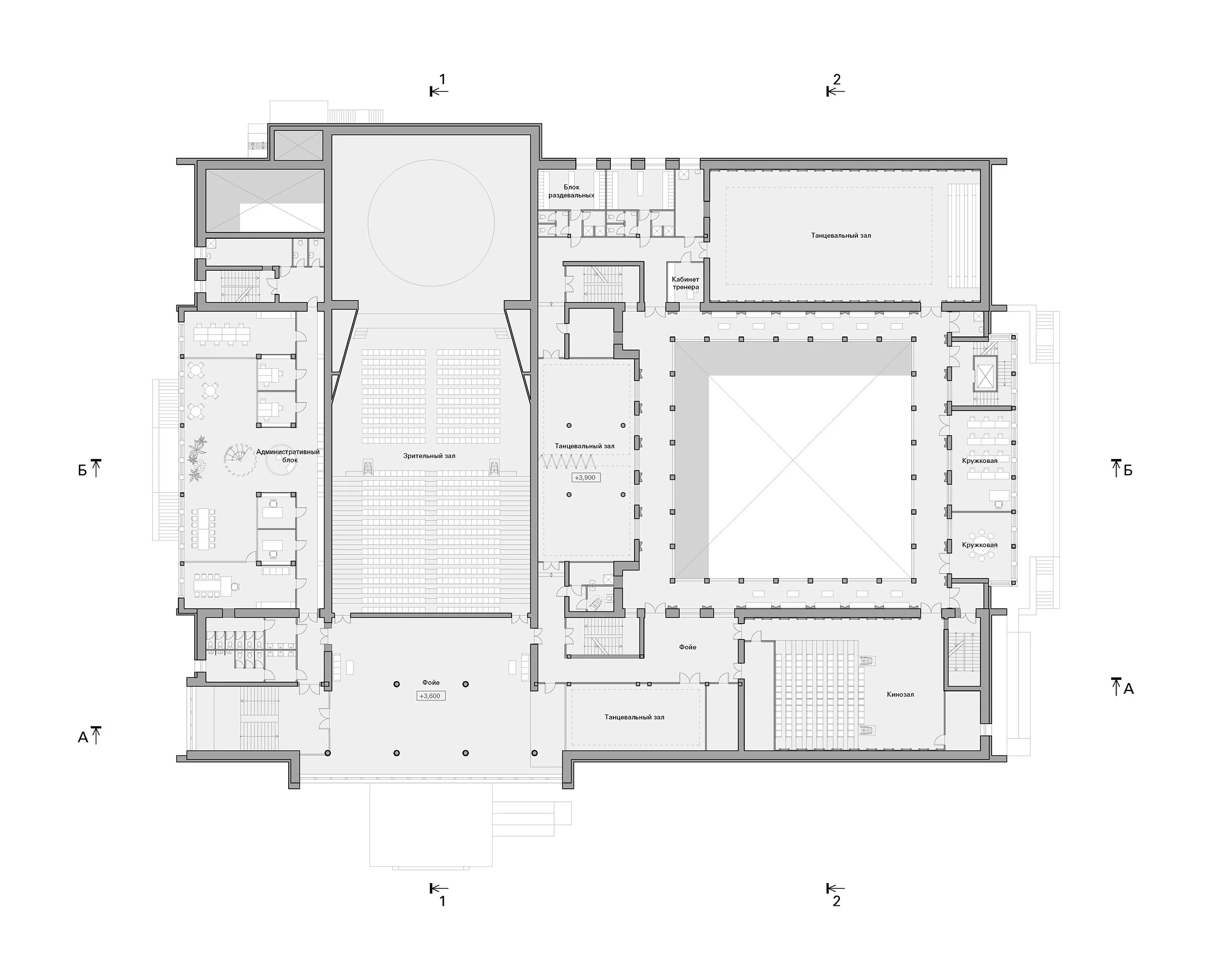
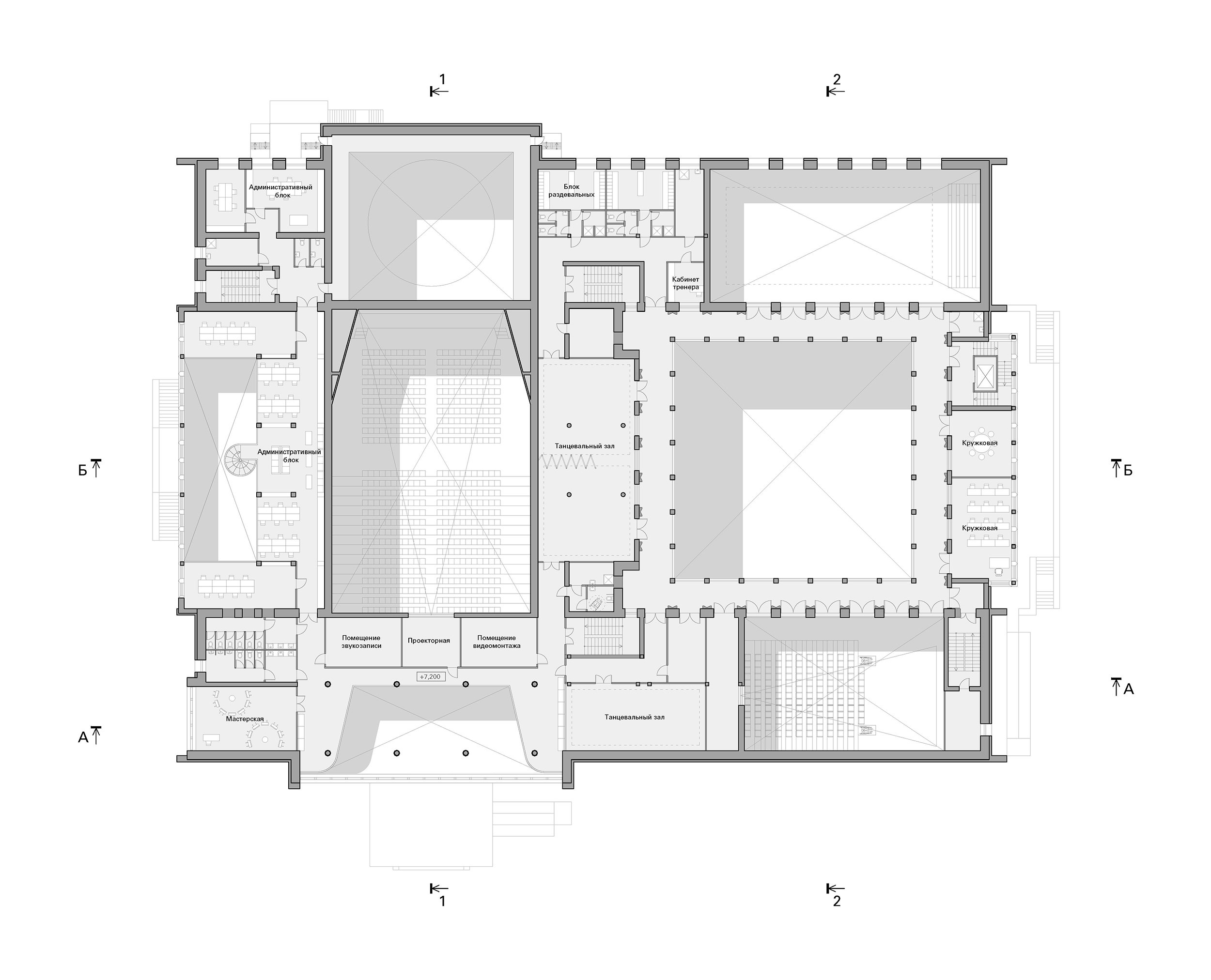
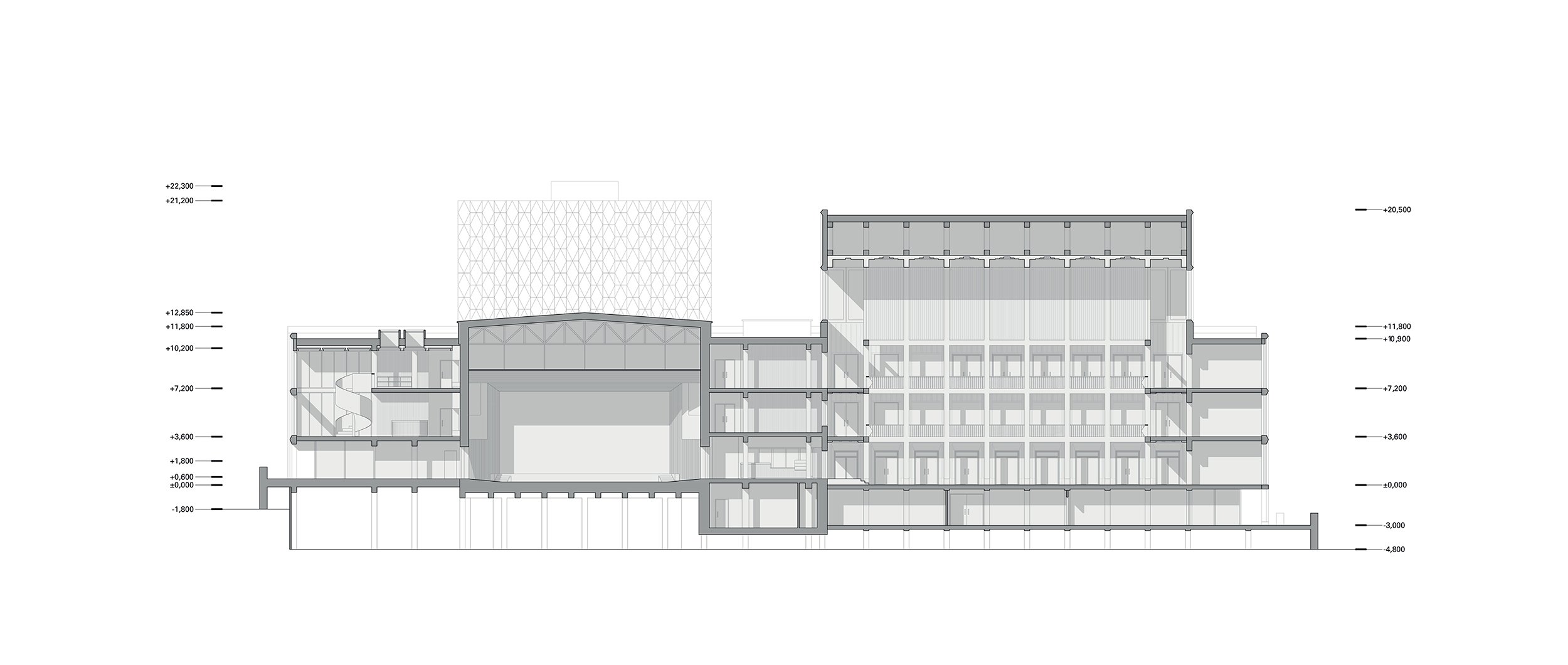
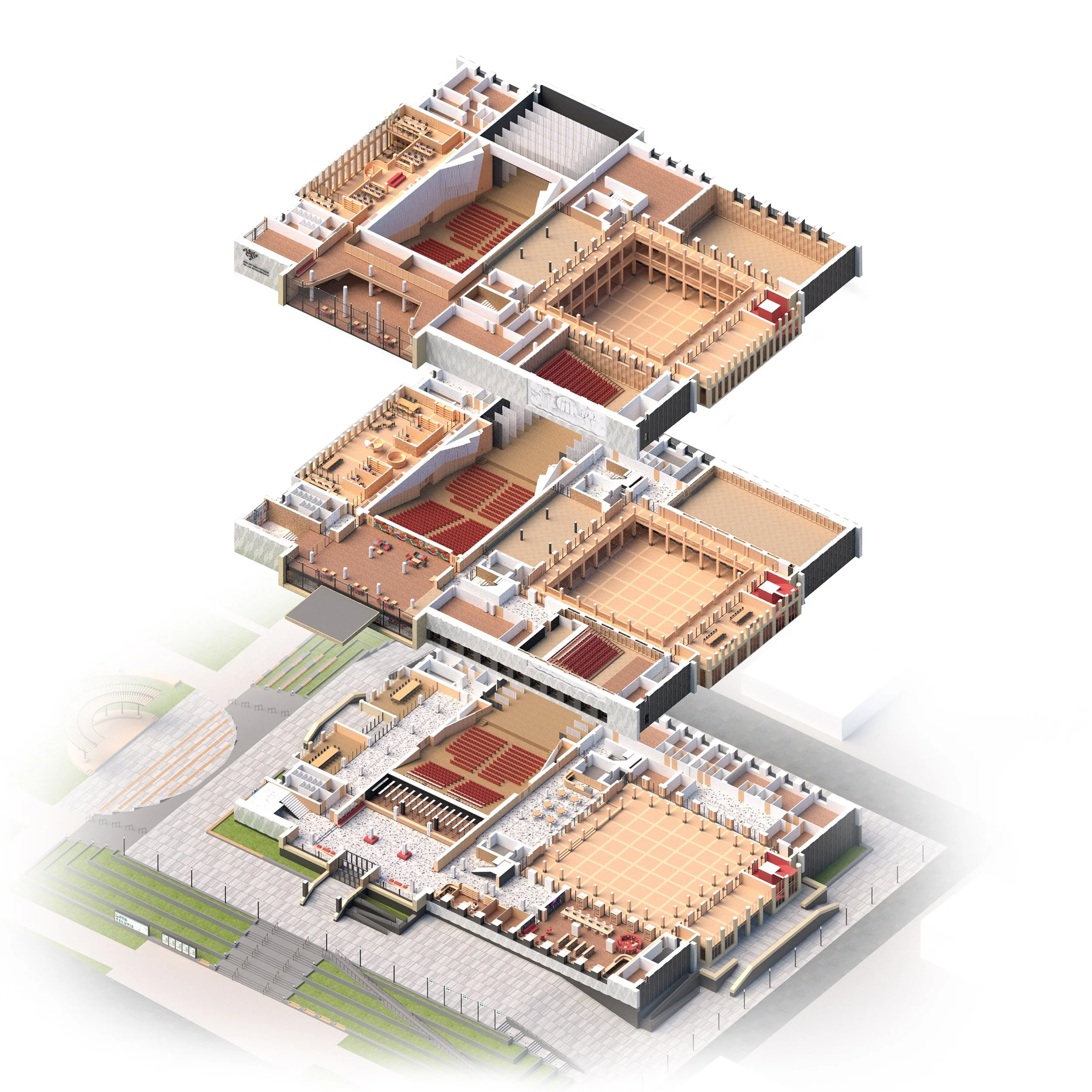
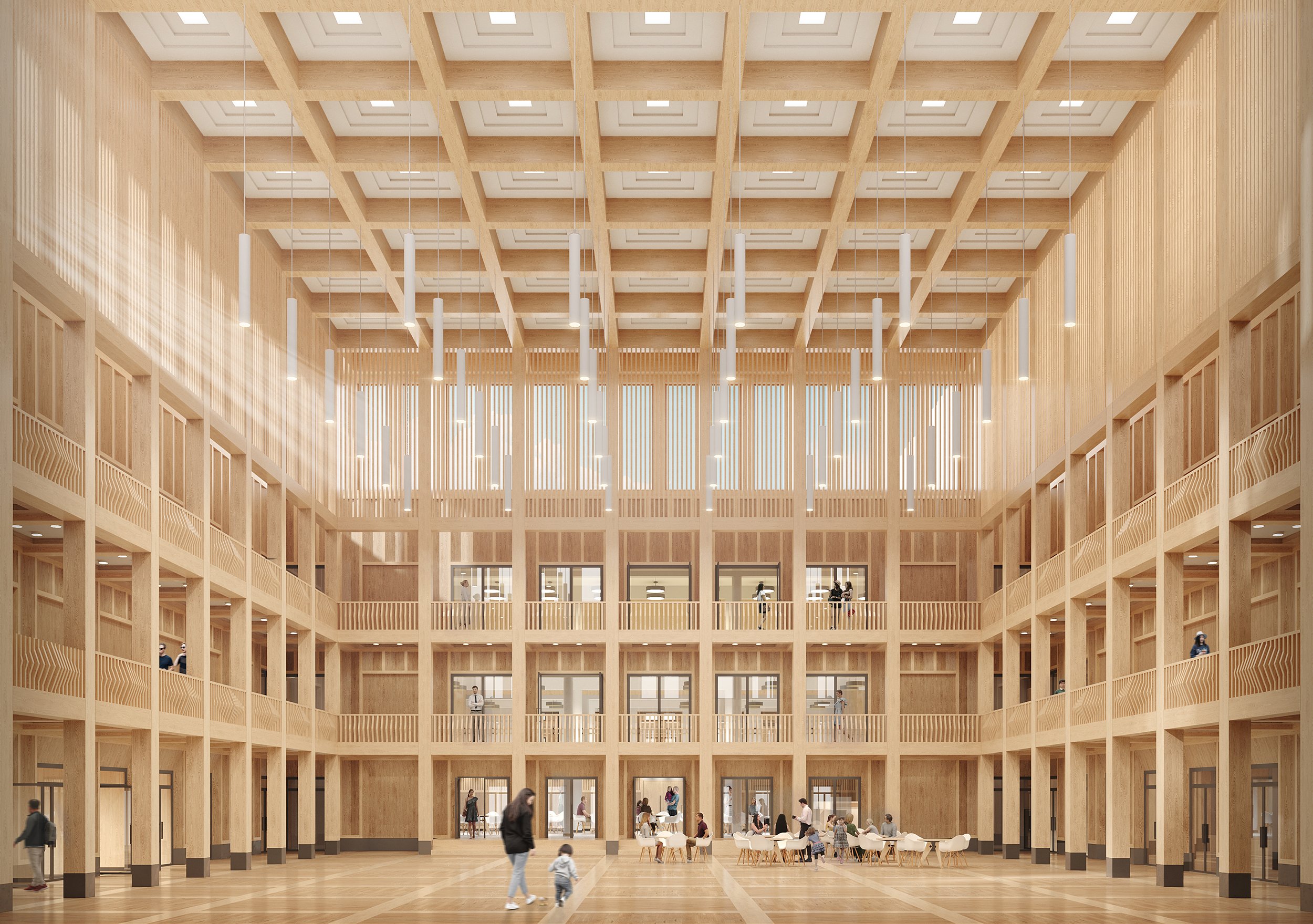
The new concept transforms the semi-open courtyard on the north side of the building into an atrium that connects the two wings and creates a year-round indoor public square. The atrium can function as an additional foyer, with a garderobe and restrooms located next to the new north entrance, or as a dedicated venue for exhibitions, conferences, and other events. Open layouts replace redundant walls, while galleries ensure strong connections between the new cultural, coworking, and educational spaces and the atrium.
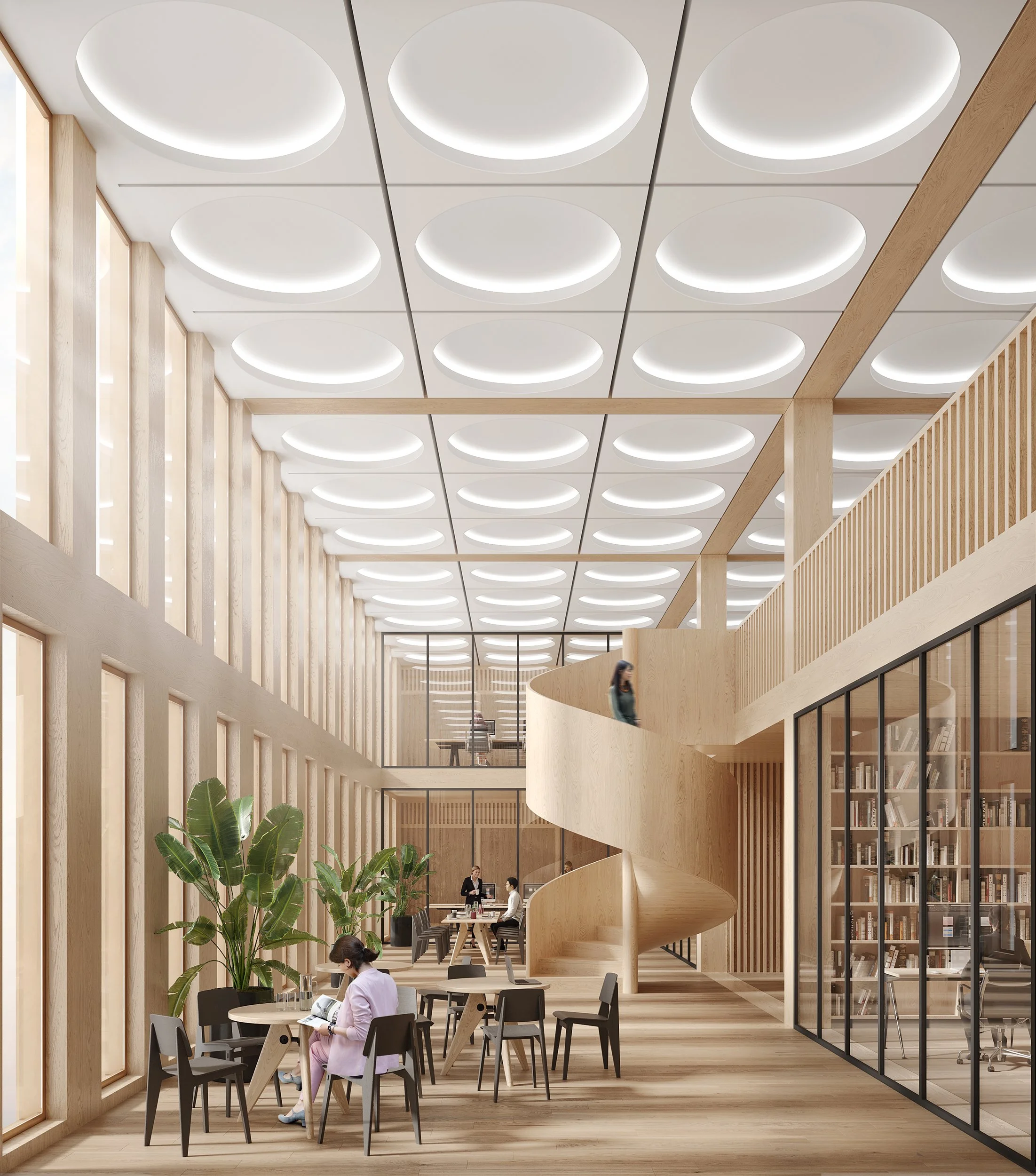
On the south side of the building, administrative spaces are consolidated to form a working gallery with a large glazed facade overlooking the park. This improves the connection between the interior and the outdoor space and brings more natural light into this part of the building.
In other parts of the building, the main goal was to improve accessibility and make spaces more universal by demolishing redundant partitions and introducing flexible, multifunctional spaces in their place. In the interiors, original decorative elements are preserved as much as possible, while new interventions use environmentally responsible solutions that reflect Yakutia’s natural and climatic identity.
Northern atrium
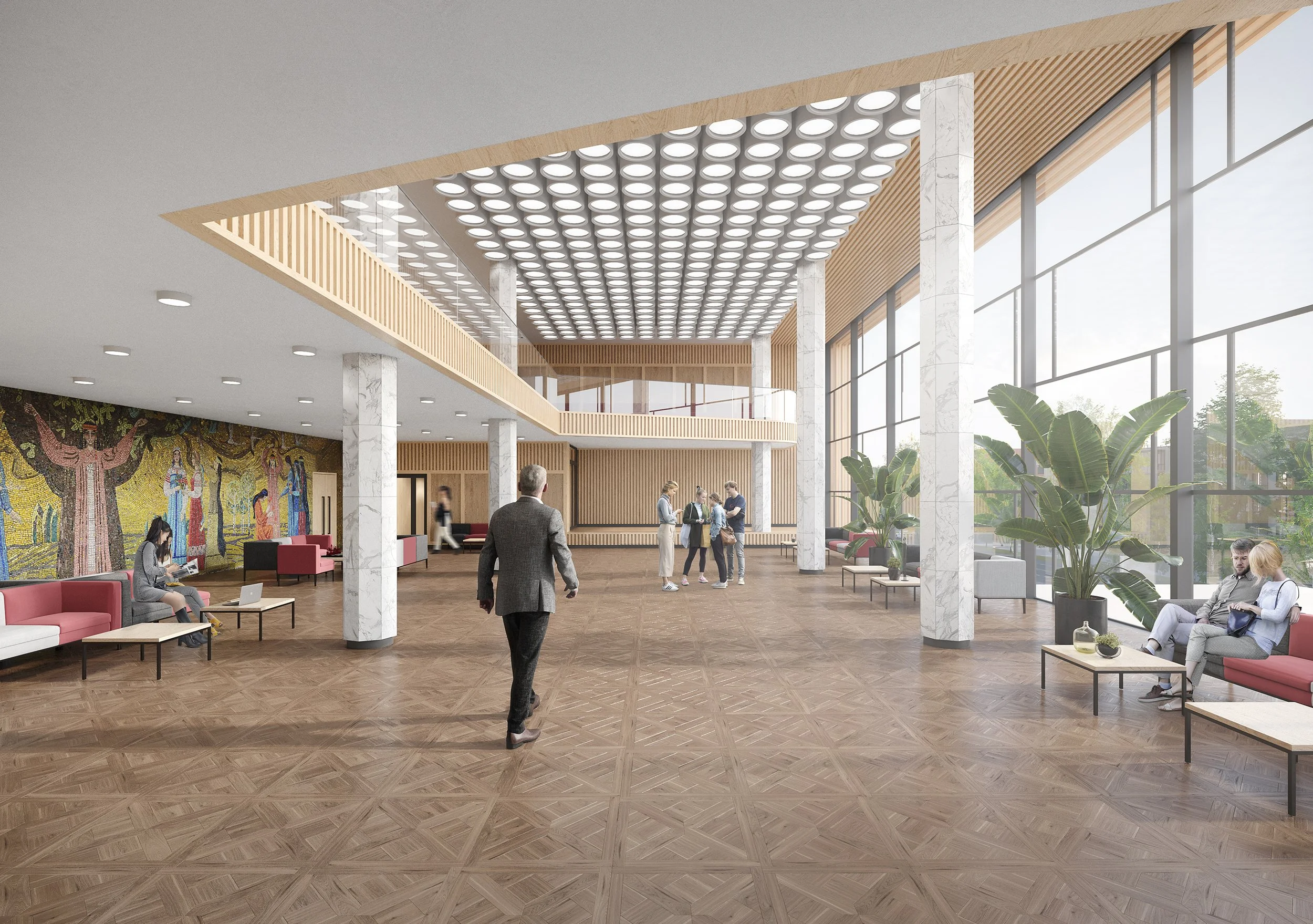
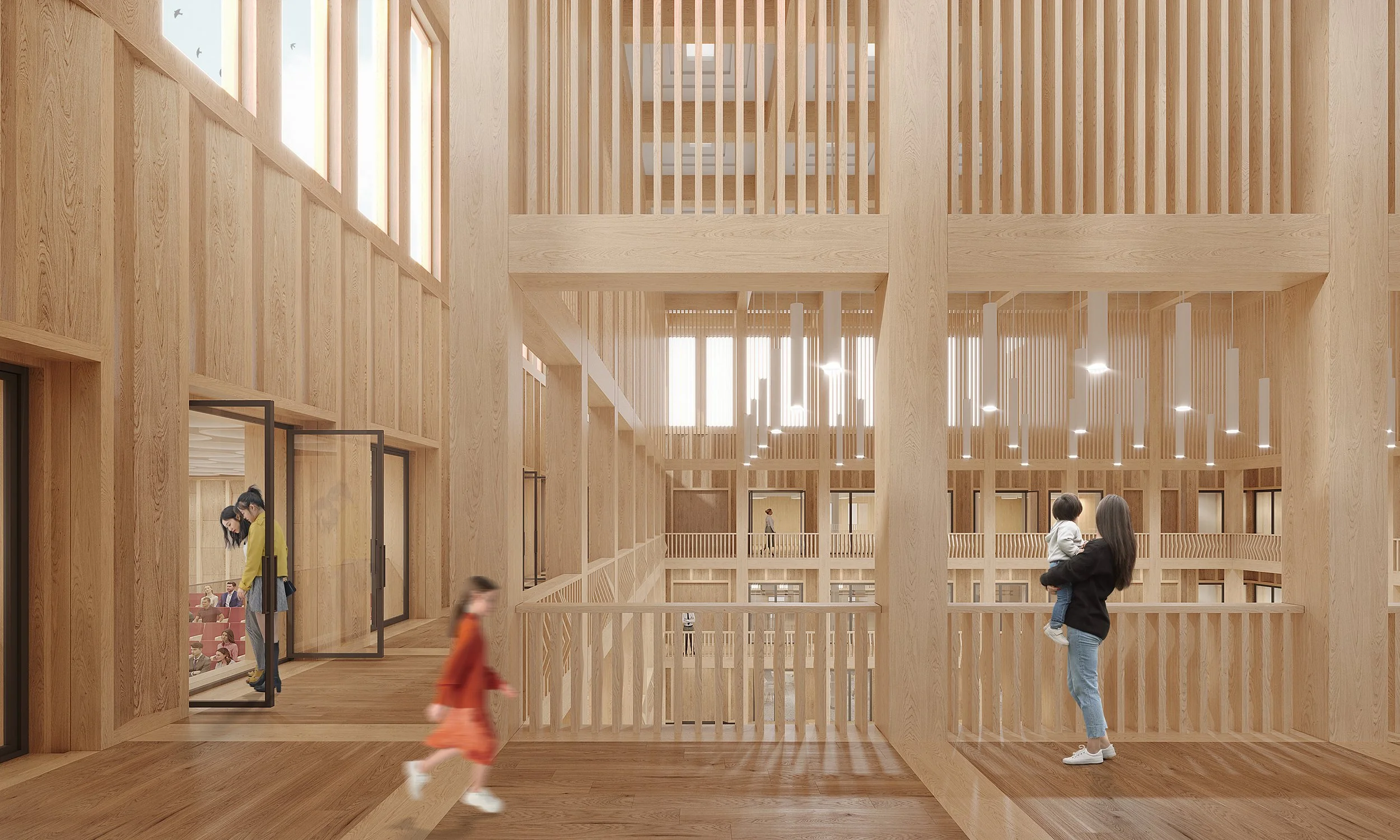
At the core of the House of Peoples’ Friendship lies a new multifunctional atrium — a bright and generous space protected from Yakutia’s extreme climate. Designed as the building’s social and spatial heart, it connects all functions and levels, serving as a year-round public interior for gatherings, performances, and informal meetings. The use of timber as the primary structural and interior material enhances the warmth and openness of the space, transforming the once-empty courtyard into a contemporary symbol of community and cultural exchange.
Working gallery
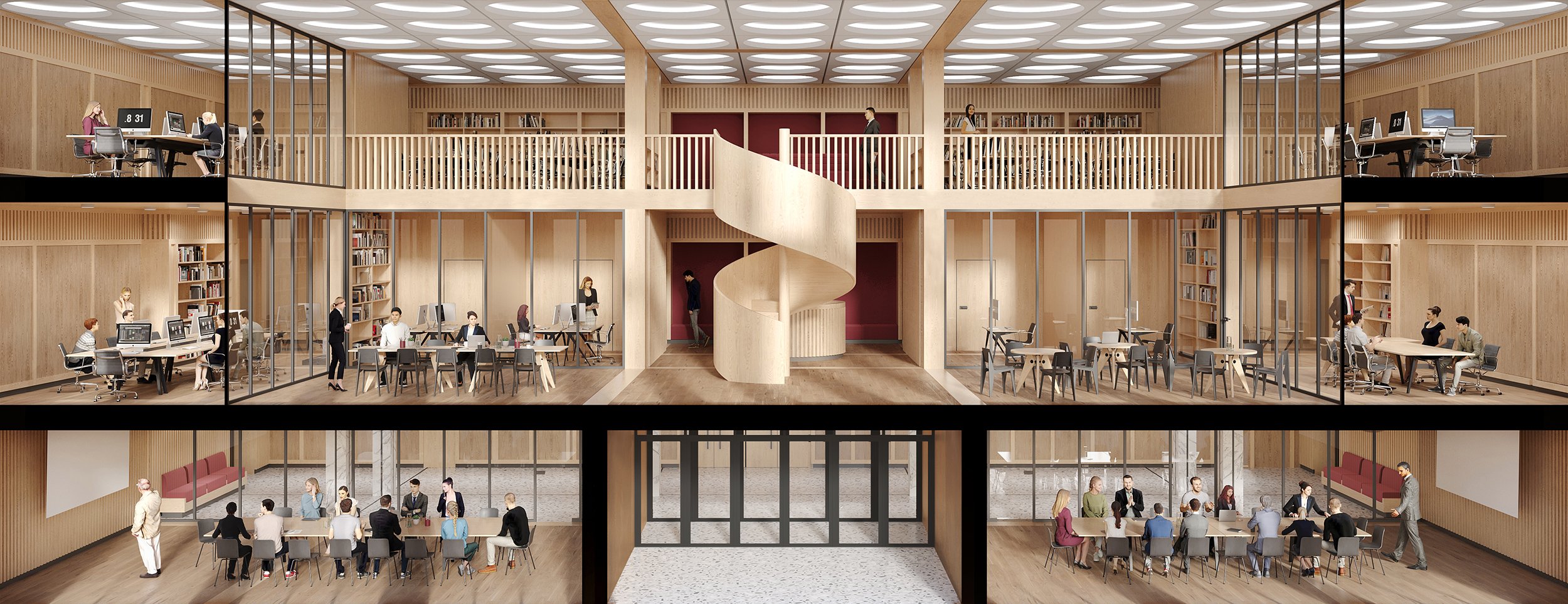
The new administrative wing replaces a series of small, isolated offices with an open two-level workspace overlooking the park. Transparent partitions, shared tables, and a central spiral staircase encourage communication and collaboration among the staff. Natural light and warm materials create a calm and productive atmosphere, turning the once-closed back area into a bright, collective environment that supports teamwork and openness.
Foyer: the city’s living room
The multifunctional foyer preserves and celebrates the identity of the original building while adapting it for contemporary use. The restored mosaic — a vibrant depiction of Yakut traditions and unity — becomes the focal point of the renewed interior, complemented by natural materials and warm light. New wooden finishes and marble columns reinterpret Soviet modernism through a northern lens, connecting past and present. Designed for exhibitions, gatherings, and performances, the foyer serves as a living symbol of cultural continuity and shared memory.