Cultural cluster in Semey
From ruin to a vibrant urban heart
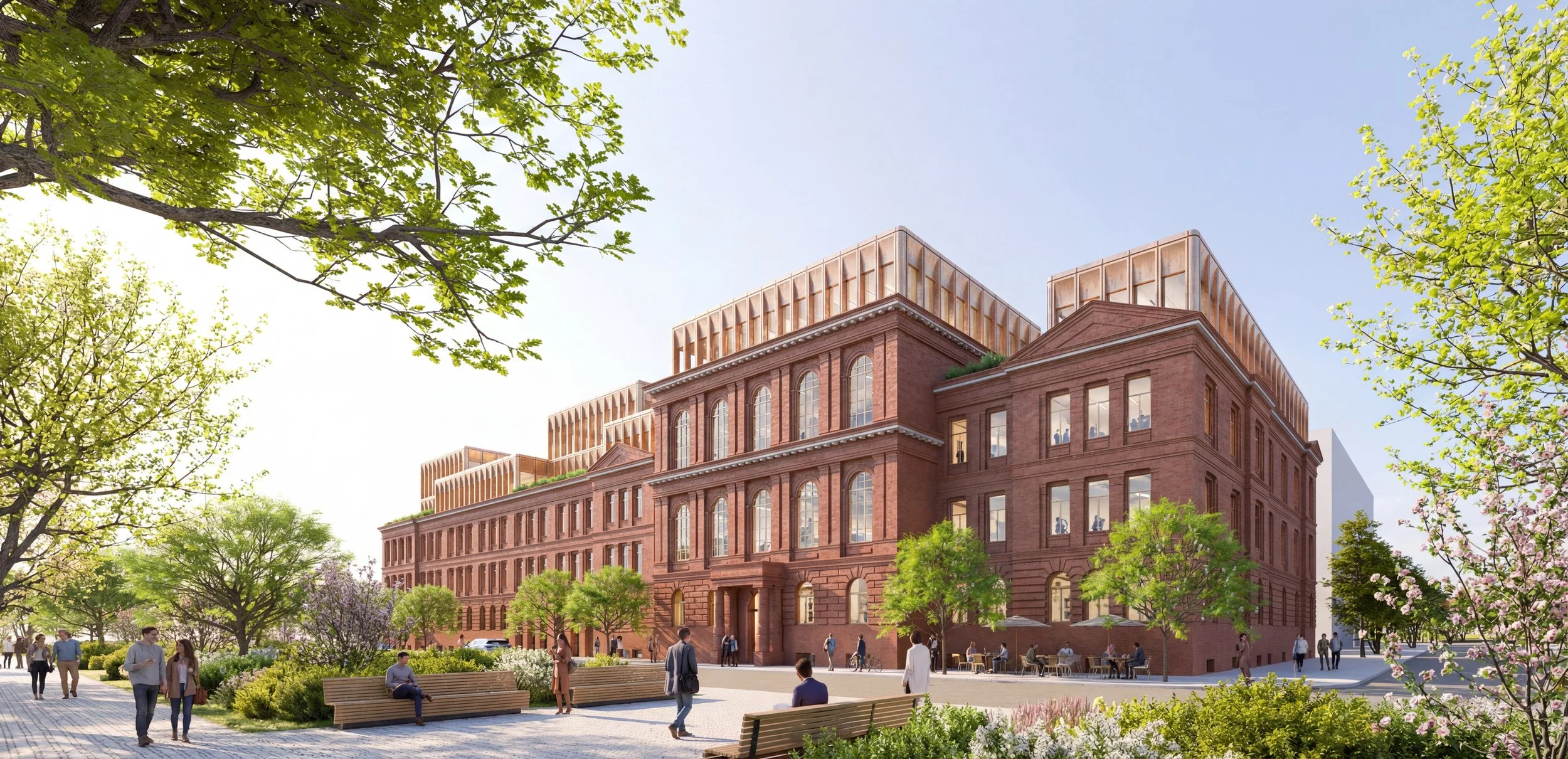
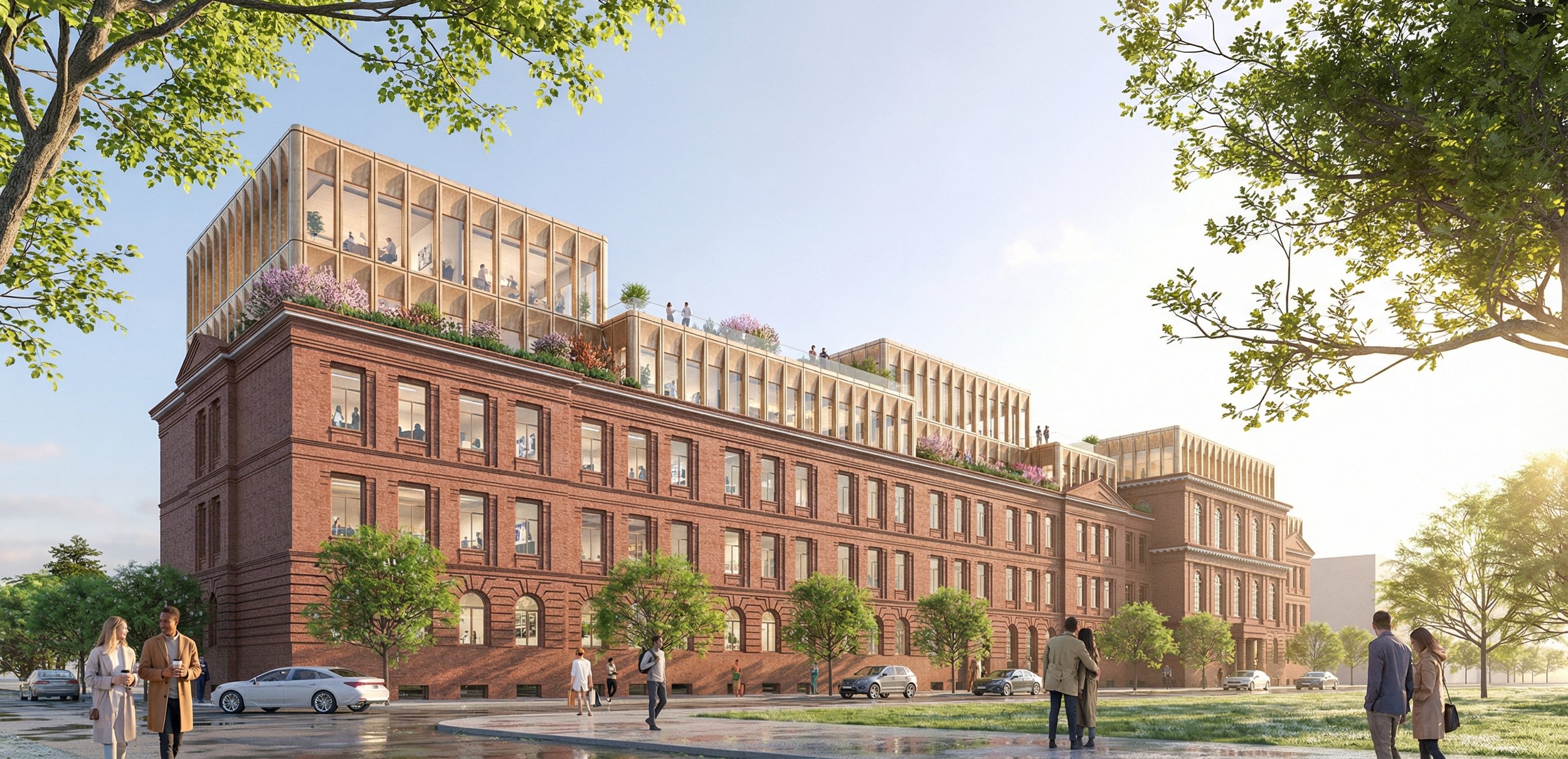
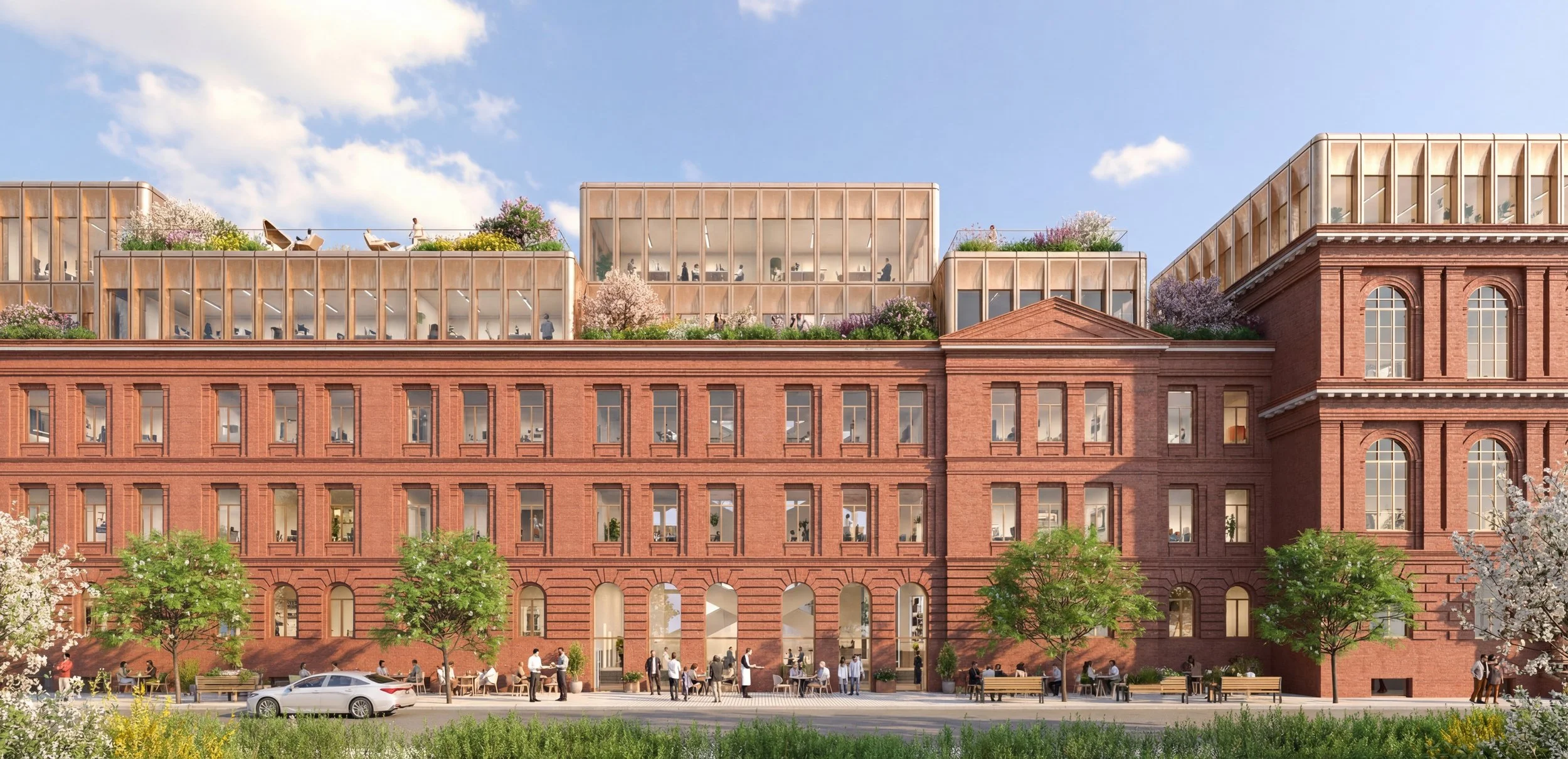
The transformation of the former Women’s Gymnasium in Semey turns a long-abandoned landmark into a dynamic cultural and educational cluster. Built in 1910 and damaged by a devastating fire in 1986, the building stood empty for decades. The project preserves its monumental brick façades while introducing new volumes, creating spaces for education, culture, and entrepreneurship. It offers Semey’s youth opportunities for growth and participation, addressing one of the city’s most pressing challenges — outmigration.
Location: Semey, Kazakhstan
Program: Creative and educational center, public space, hospitality
Surface: 8500 m2
Design period: 2023–2024
Stage: Feasibility study
Building history
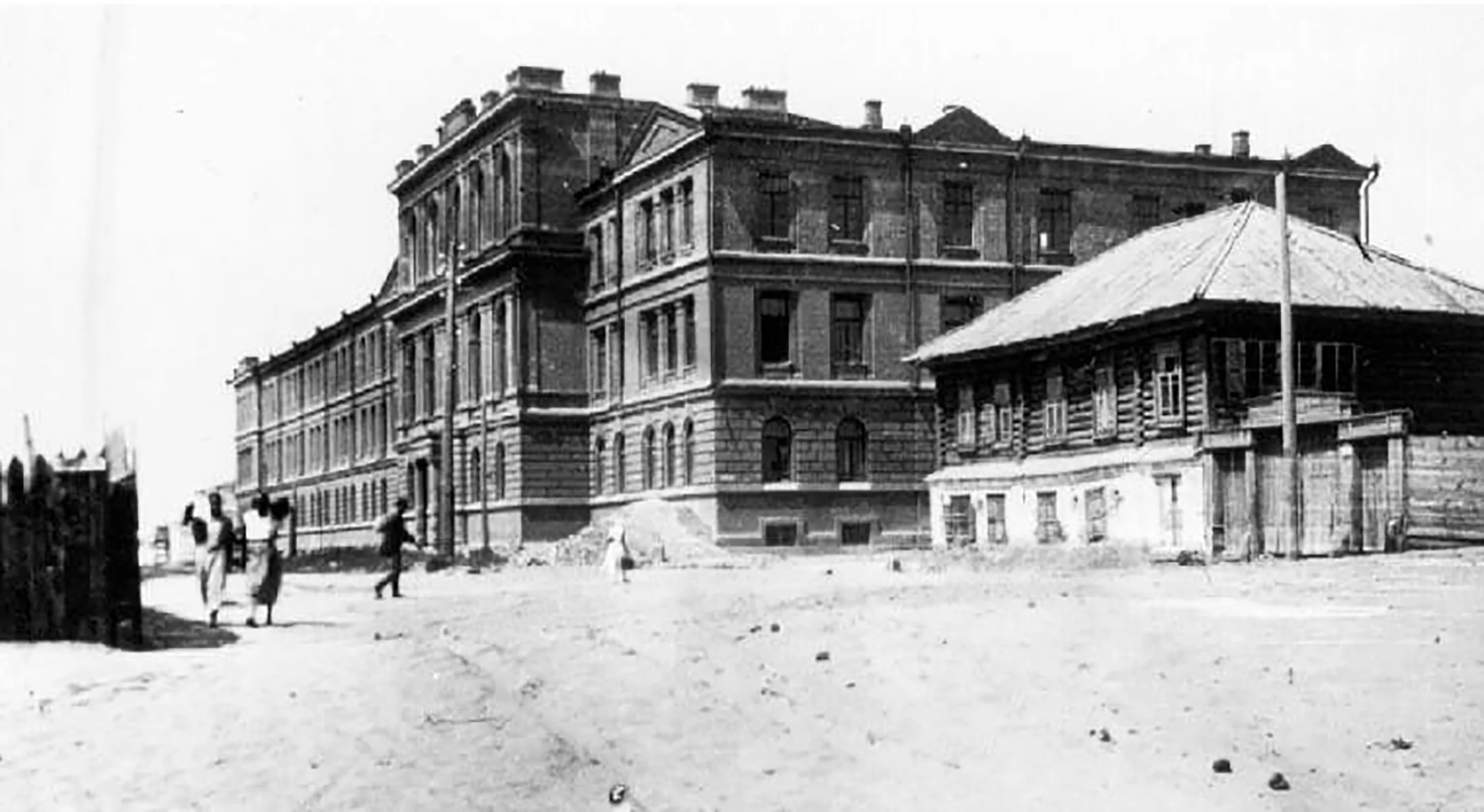
The Women’s Gymnasium was constructed between 1906–1910 on what was then Nikolskaya Square. Over the decades it hosted various institutions: a military headquarters and hospital during the Civil War, an agricultural school in the 1930s, and later the Semipalatinsk Zooveterinary Institute, which educated generations of specialists. In the 1930s a third floor was added, continuing the modernist language of the original building. With more than a century of educational use, the structure remains deeply tied to the city’s civic and cultural identity.
Pre-renovation state
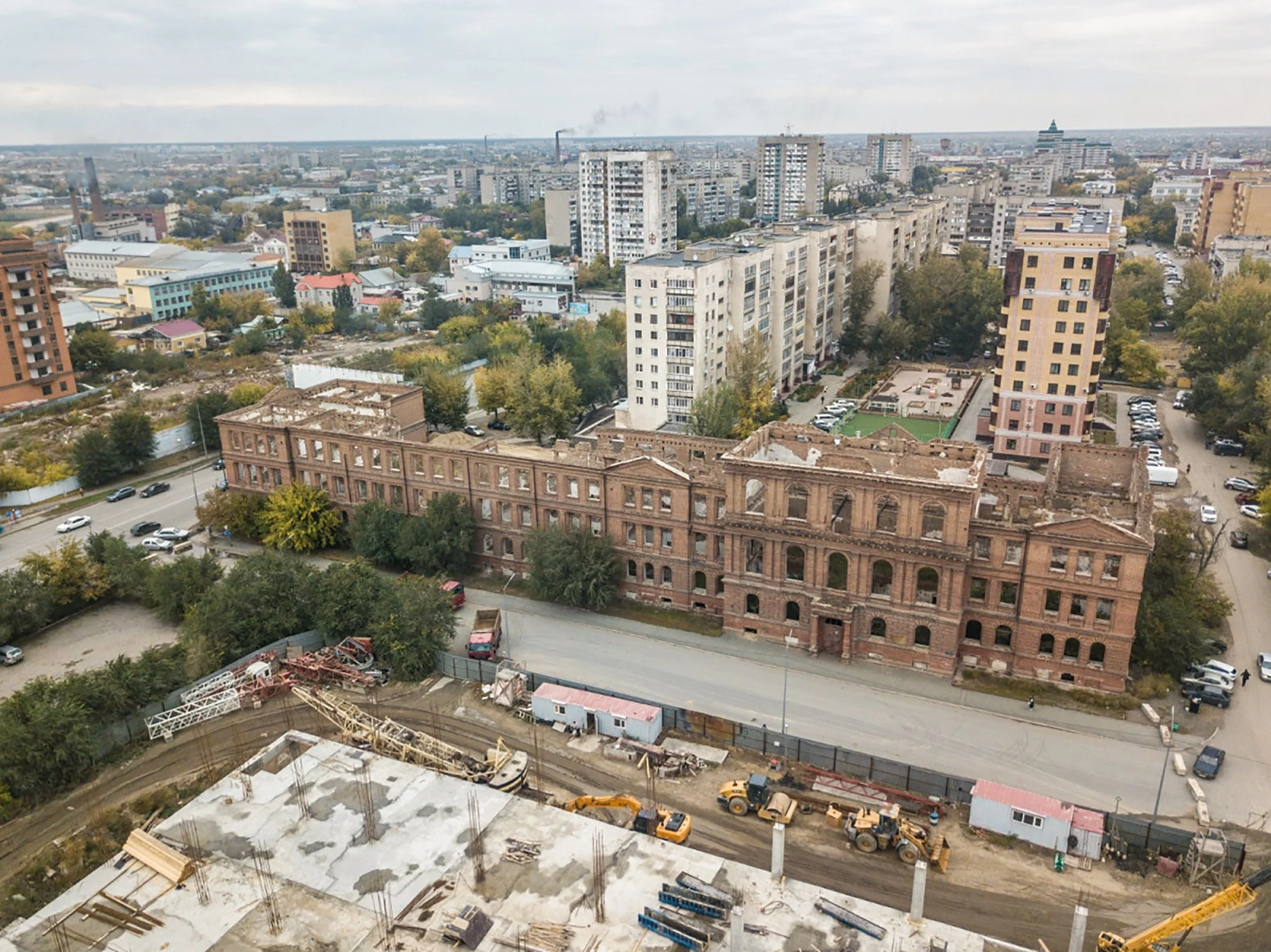
In December 1986, a major fire destroyed the interiors, leaving only the external brick walls. Since then, the building has remained a ruin: floors and staircases are gone, windows stand empty, and façades are cracked. Despite its status as an architectural monument, no restoration had been undertaken, and the structure continued to deteriorate, fenced off and inaccessible.
From abandoned ruins to a new cultural heart
New “heart”
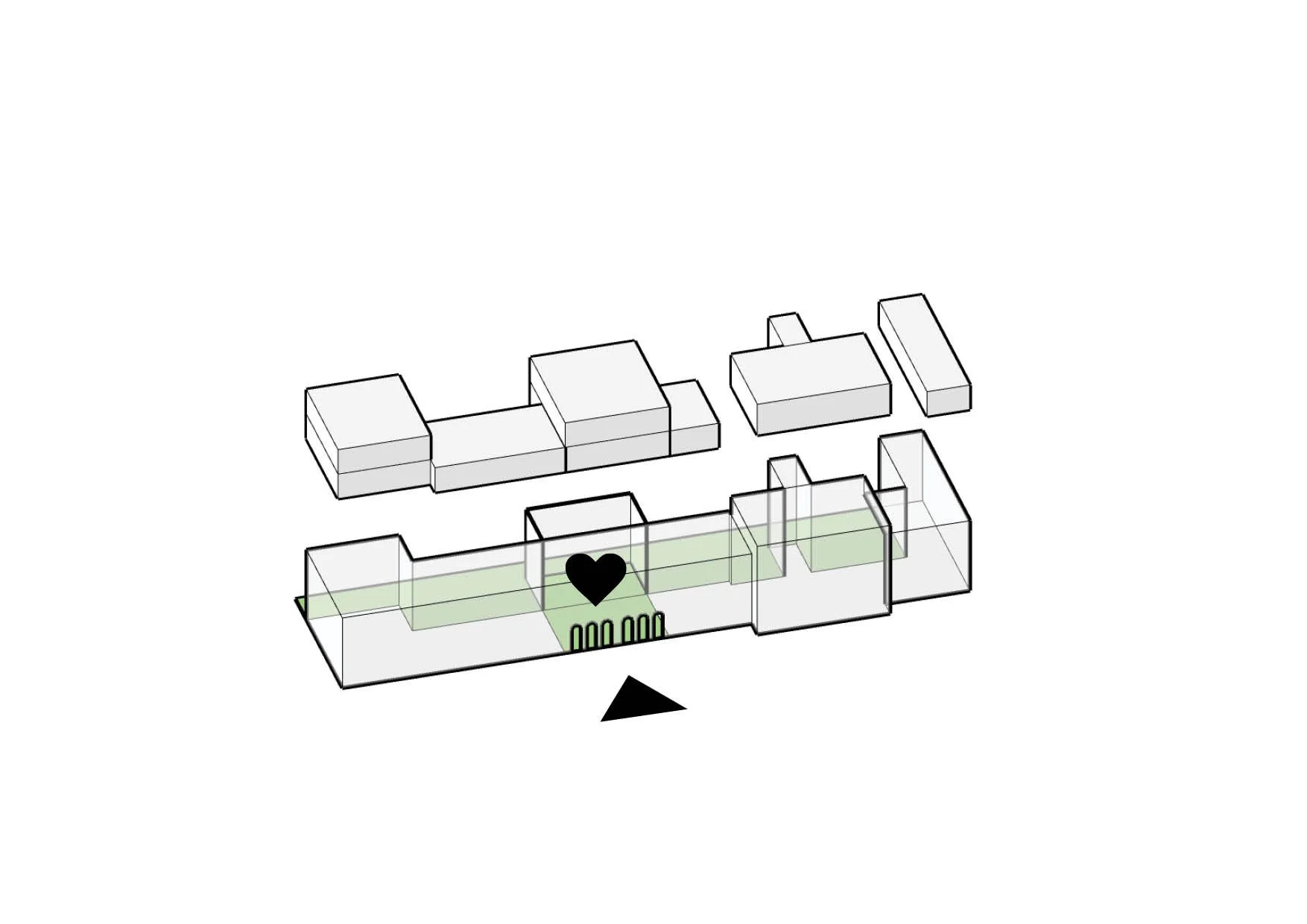
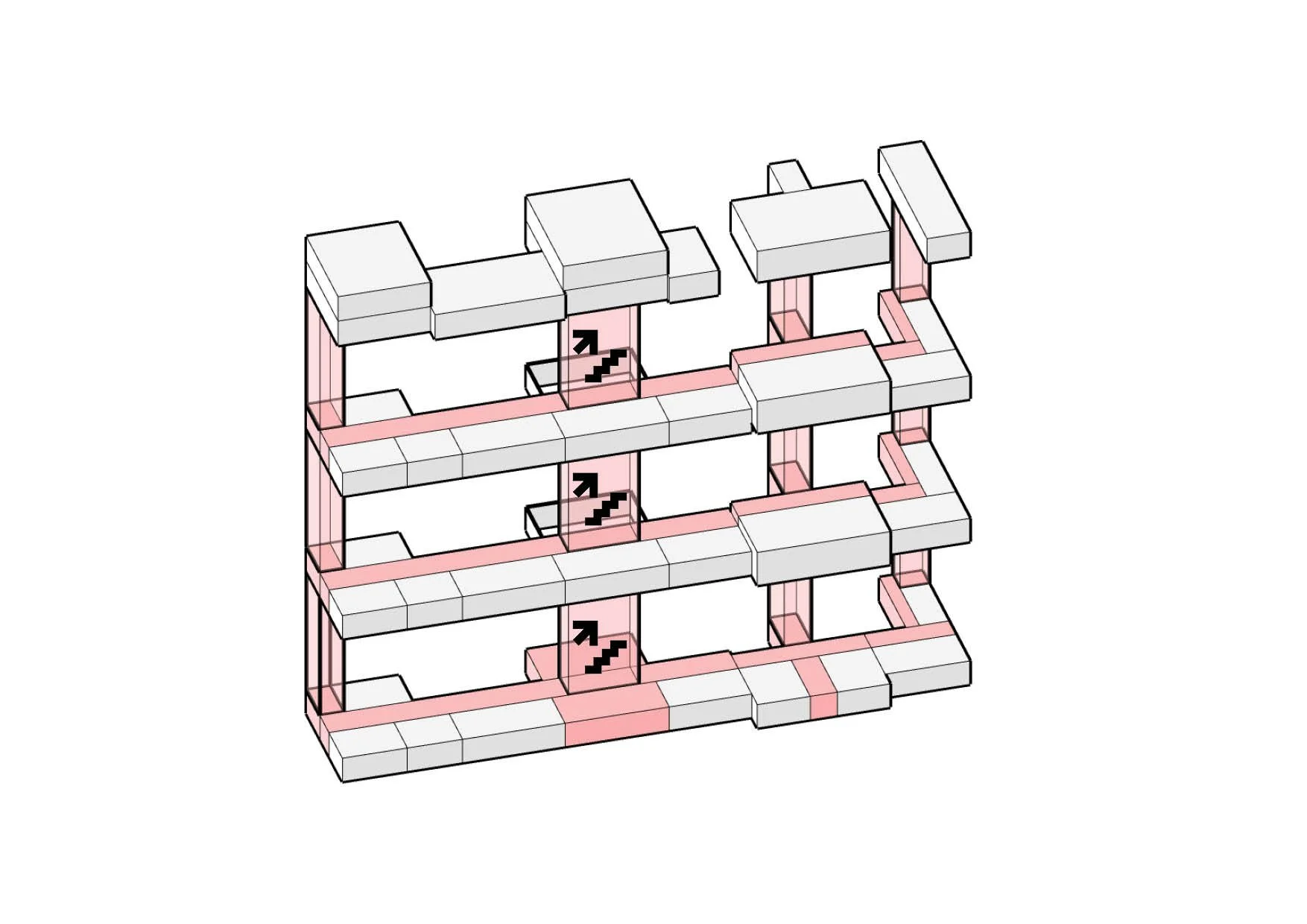
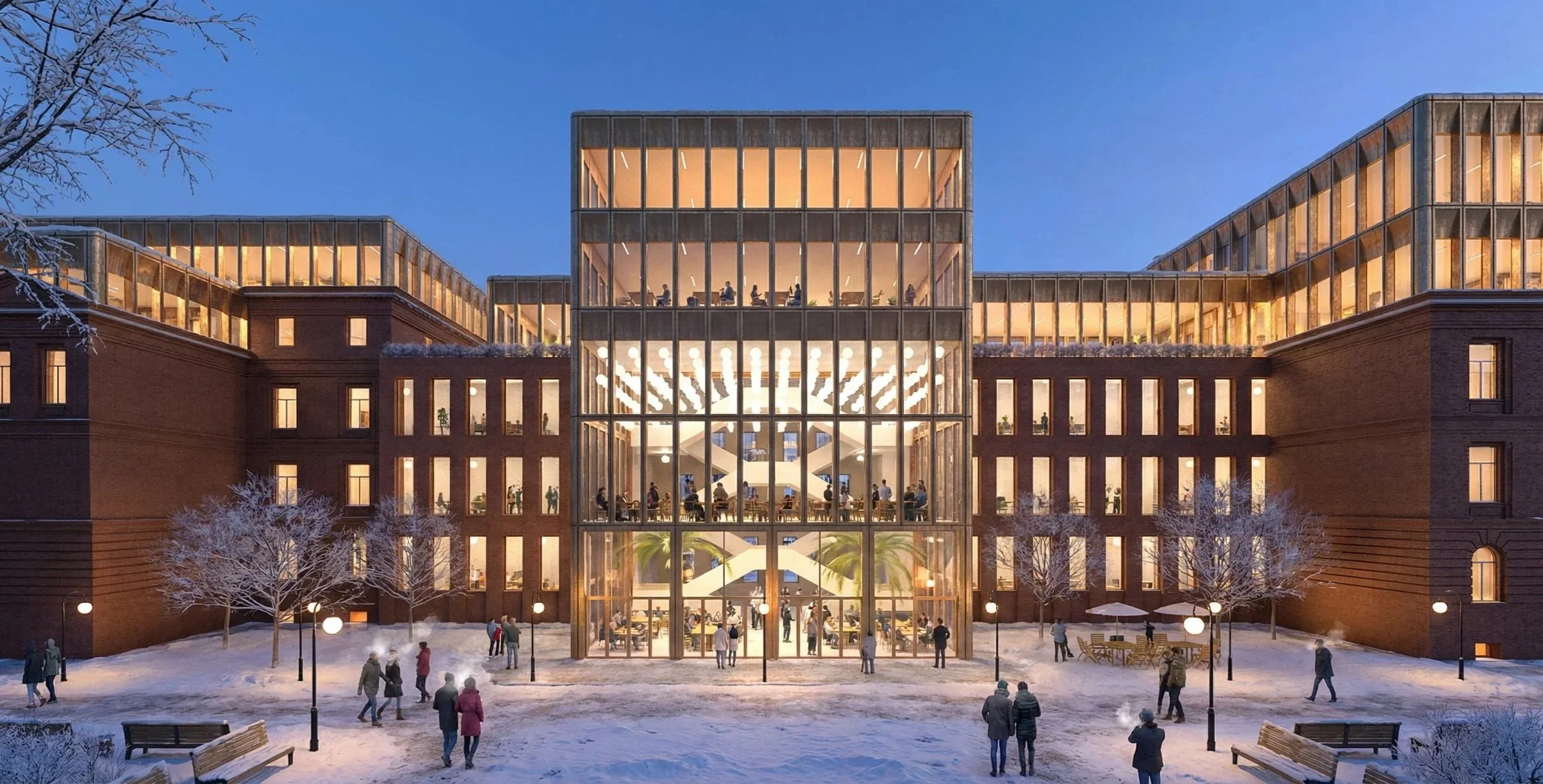
A new volume is proposed at the site of the collapsed wall. It will serve as the central circulation hub, connecting fragmented floors and improving navigation. The integration of a winter garden links the courtyard with the street, creating a welcoming public space and a symbolic “heart” of the future cultural and educational center.
Improved circulation
Currently, the building has only one main entrance, inefficient for its elongated structure. The renovation introduces a new central volume with an additional staircase, enhancing accessibility and spatial connectivity. The winter garden strengthens the building’s interaction with its surroundings, adding comfort and usability.
Implementation phases
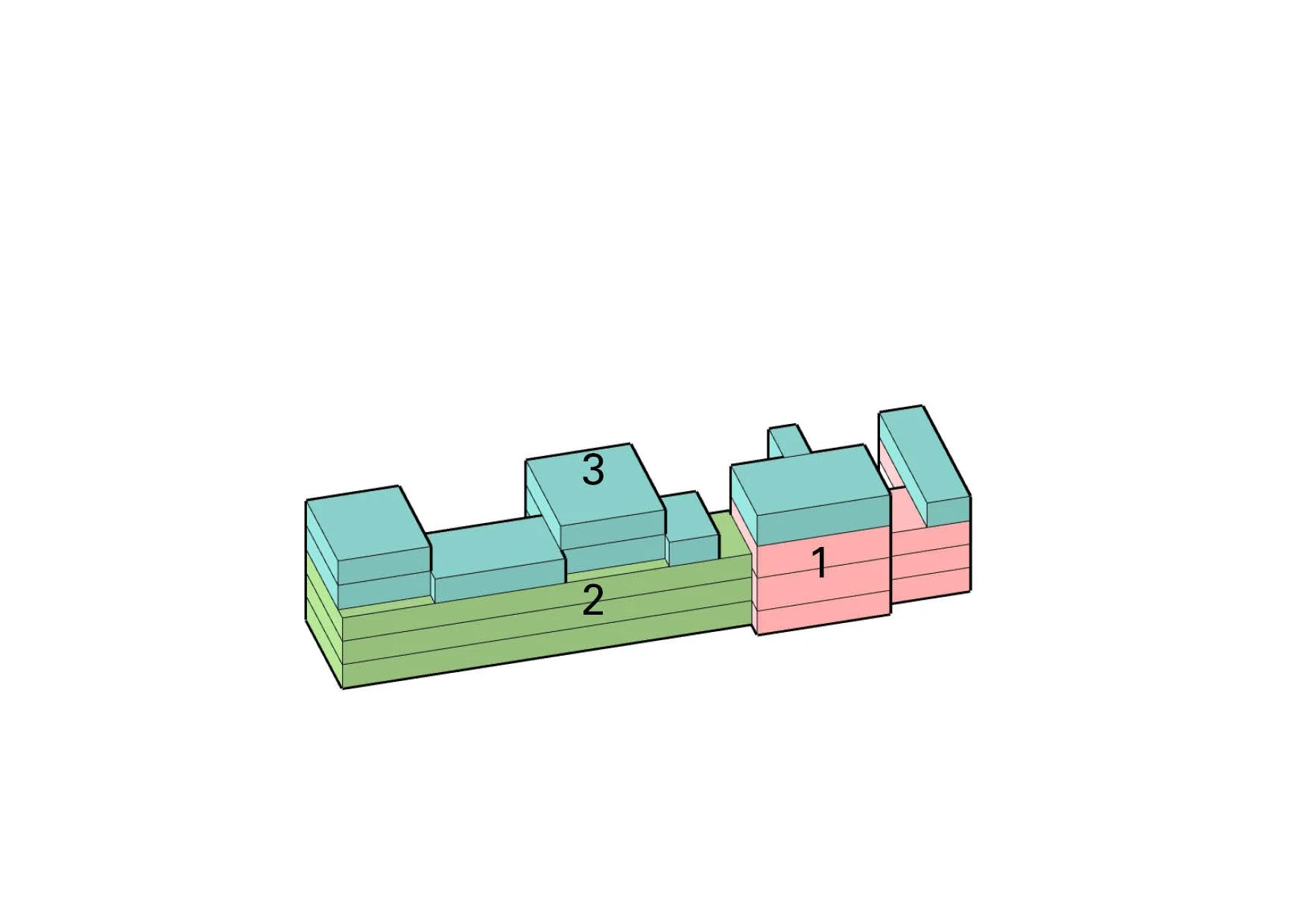
The transformation unfolds in three phases. Phase 1 restores the east wing, while the west remains a stabilized ruin for events. Phase 2 rebuilds the west wing, adding a winter garden and central staircase to improve circulation. Phase 3 adds lightweight prefabricated upper floors, expanding space without stressing the historic structure.
Identity and renewal
The project balances historical preservation with contemporary intervention. The surviving brick façades are carefully restored, while lightweight prefabricated additions provide new floors without overloading the structure. A transparent volume inserted at the site of a collapsed wall forms a winter garden and vertical circulation hub — the symbolic “heart” of the cluster. The program integrates shops, cafés, a library, event halls, creative studios, and offices, ensuring constant activity and economic sustainability. This approach reinforces Semey’s identity as a historic center of education while shaping a new future as a cultural and innovation hub.