Gyumri Market & Culinary School
Rejuvenation of a historic market site.
Food plays a major role in Armenian culture. The diversity of products, flavors, and traditional cooking techniques makes Armenian cuisine rich and unique. The new food hub in Gyumri will celebrate these traditional food practices and contribute to sustaining them for future generations.
This project is an entry for an international design competition organized by the TUMO Center for Creative Technologies. In partnership with Institut Lyfe in Lyon, TUMO is working towards creating a culinary ecosystem in Gyumri, seeking ways to integrate local identity with contemporary technologies. The historic market area is envisioned as a pioneering space, driving further development in the city.
Location: Gyumri, Armenia
Program: culinary school, market, restaurants, stores, car parking.
Surface: 7500 m2
Design period: July 2024
Stage: Competition
Market history and current condition
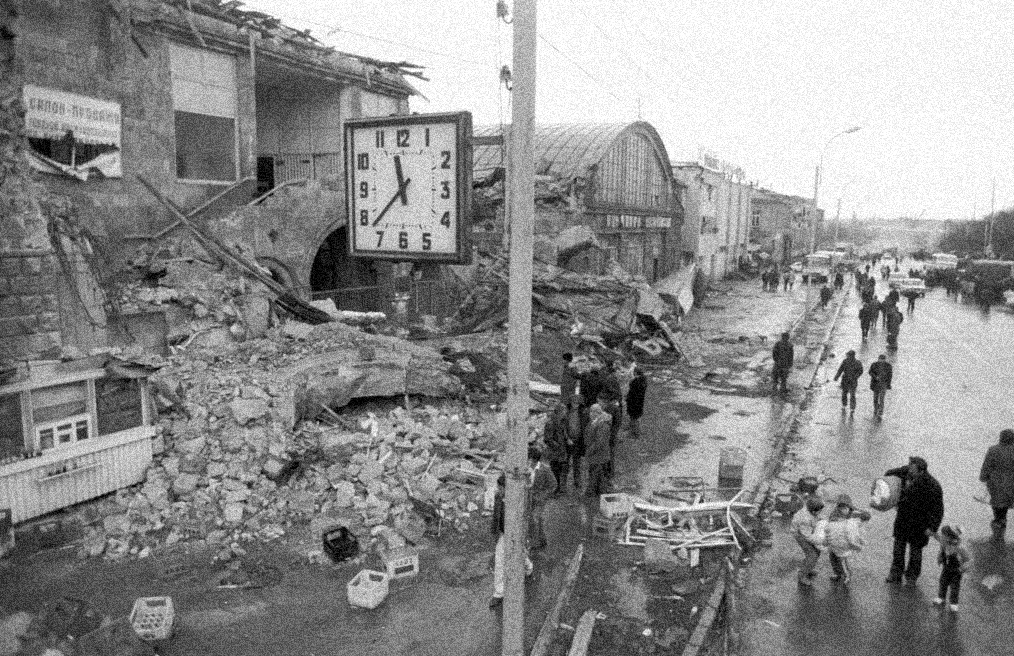
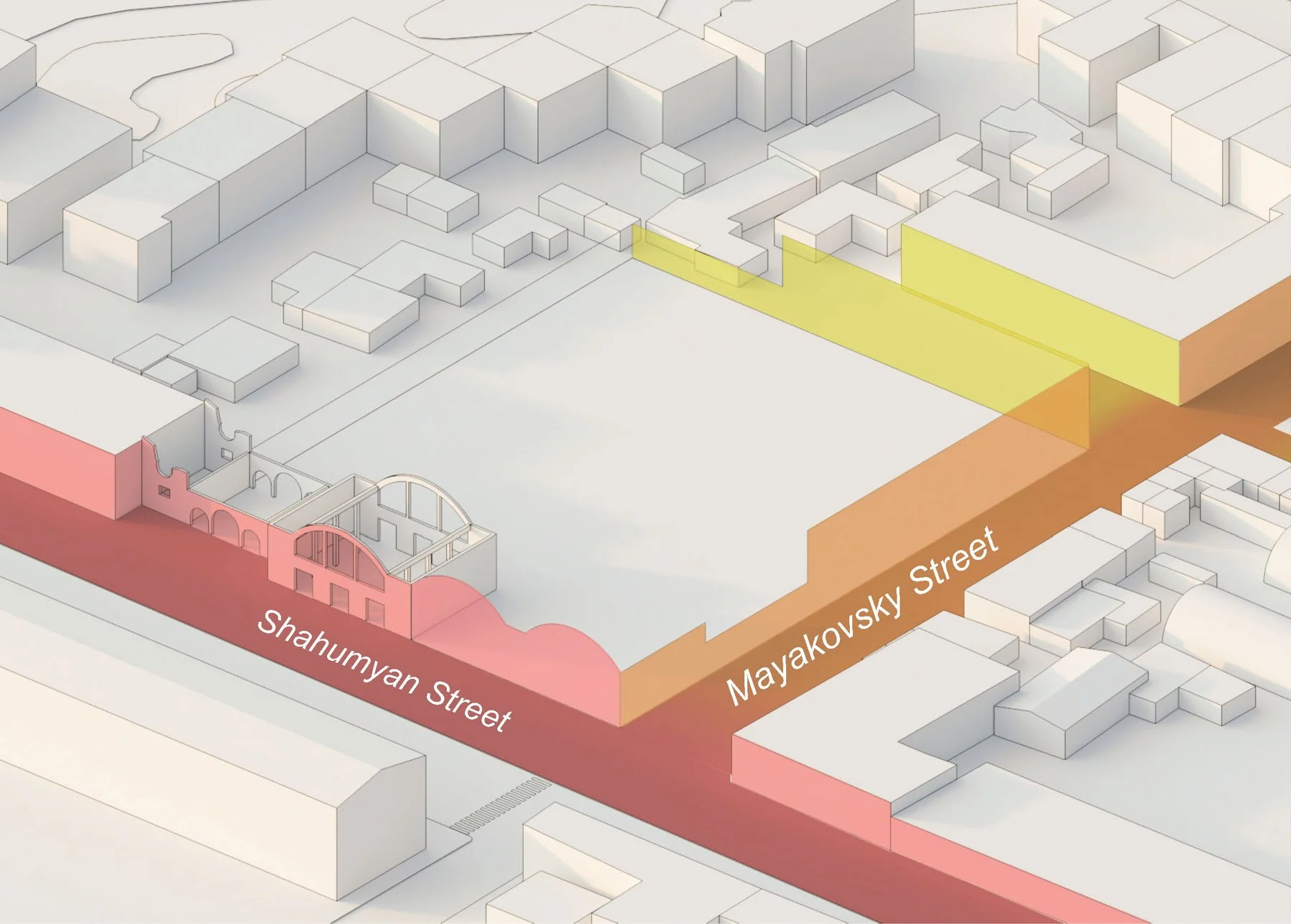
Gyumri’s historic central market, once a major civic and commercial hub, was devastated by the 1988 Spitak earthquake. Most of the structure collapsed and was later demolished, leaving only fragments of the original arcades. Vendors moved into the surrounding streets, where an informal market culture still thrives.
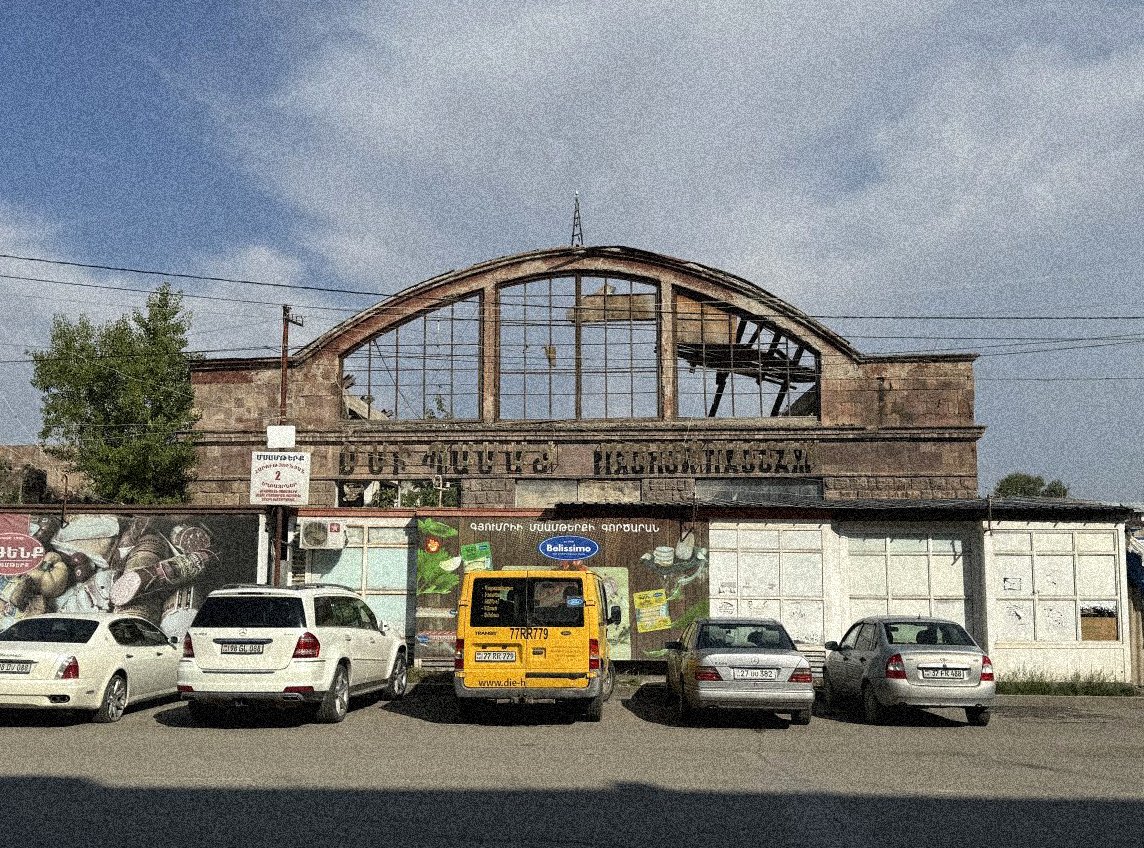
Today, the site is mostly closed off and inaccessible, with deteriorating remnants of the old market. Along Shahumyan and Mayakovsky Streets, informal stalls and lightweight metal structures sell everything from produce to household goods. The parcel itself is underused, but the active street market around it makes the area both an urban void and a strong opportunity for regeneration.
From abandoned ruins to a new culinary heart
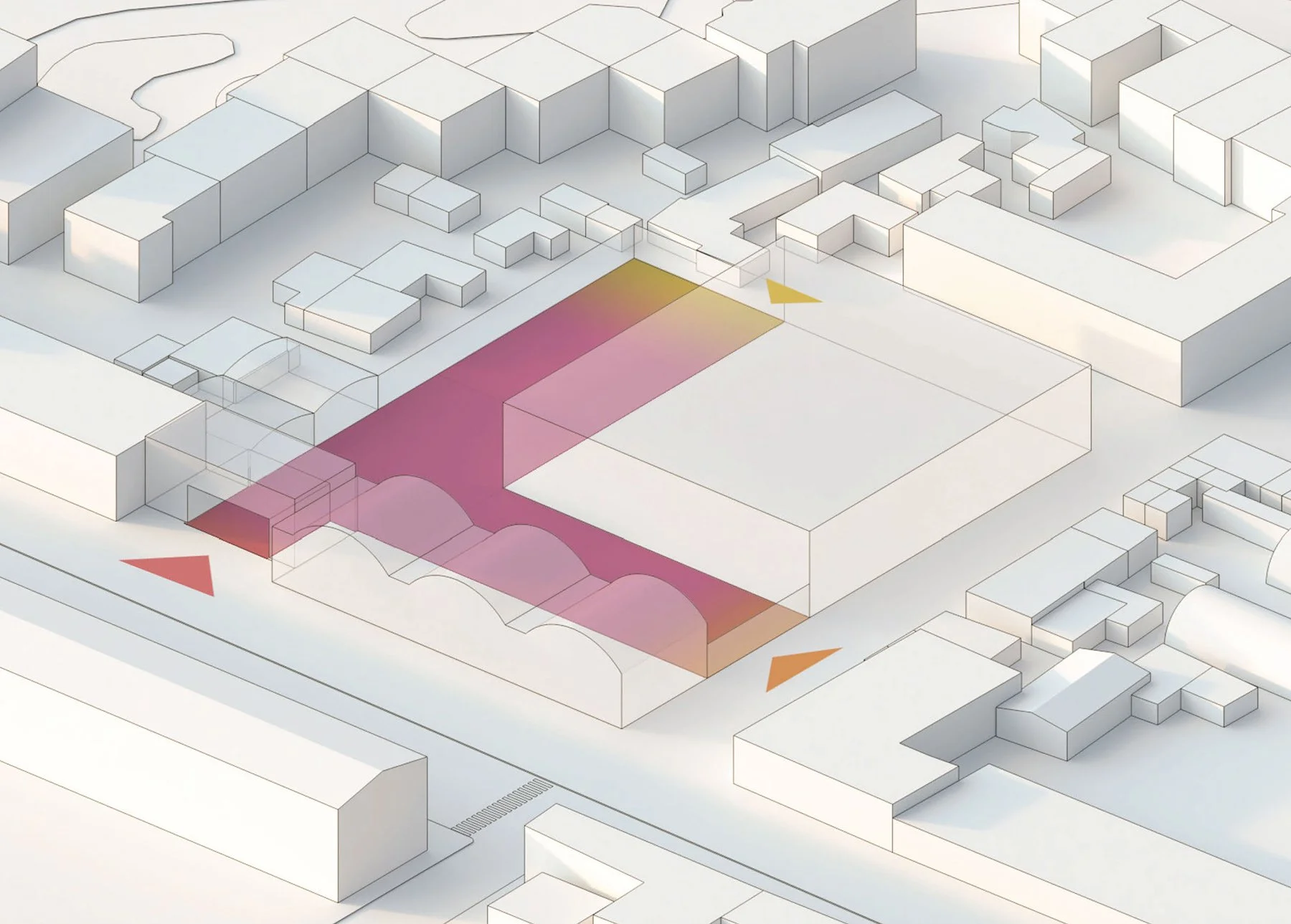
Activating street fronts
Designing in an existing urban context requires sensitivity to local conditions. Each surrounding street plays a distinct role that informs the design of adjacent facades. Shahumyan Street serves as the main axis, with active frontages and primary entrances, shaped by the ruins of the former market. Mayakovsky Street connects to the nearby metro and defines the new architectural identity. The Tsulukidze Street dead-end offers a quieter, more intimate edge with small-scale architecture and a discreet entrance to the market plaza — a hidden gem within the area.
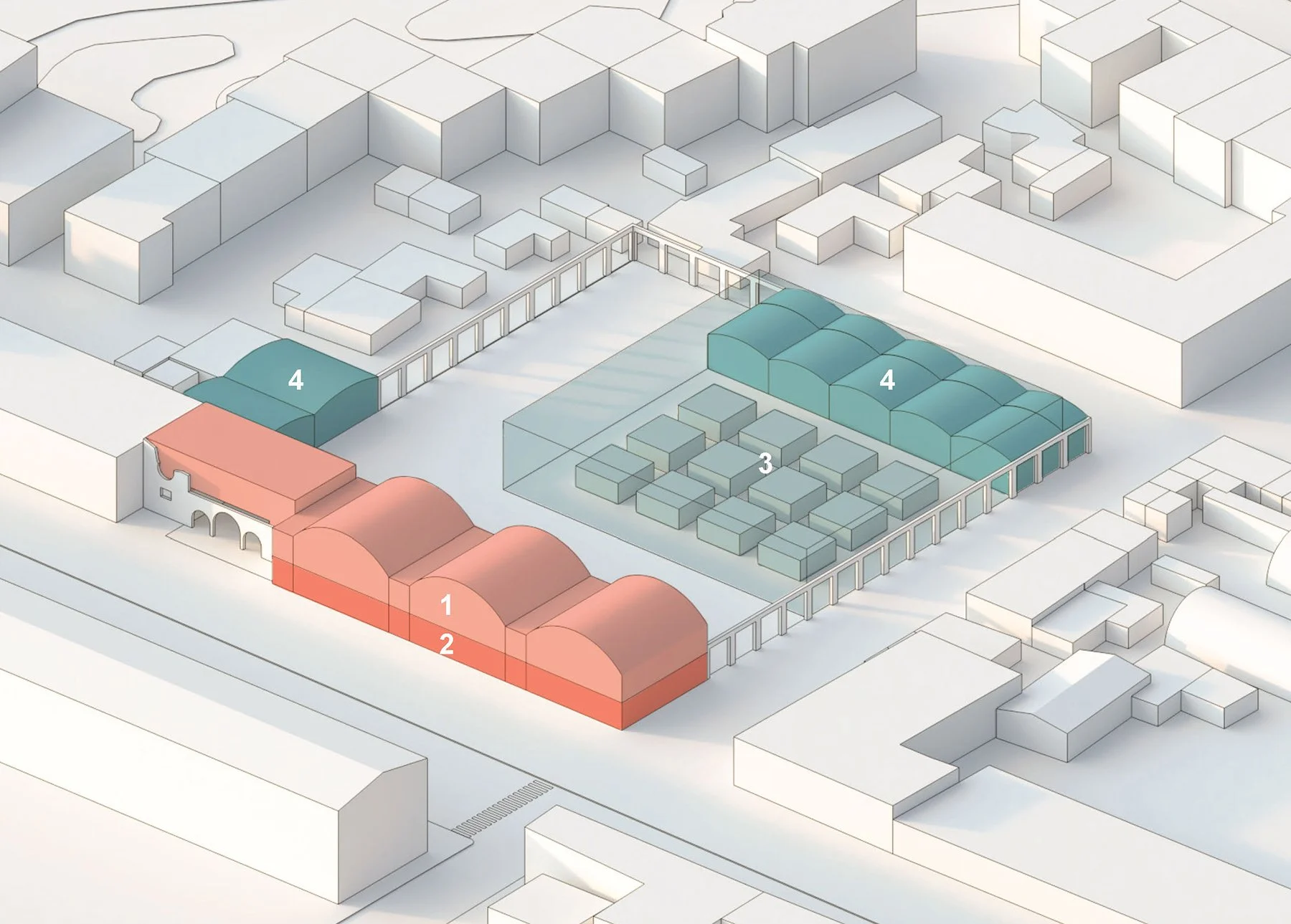
Program and architecture
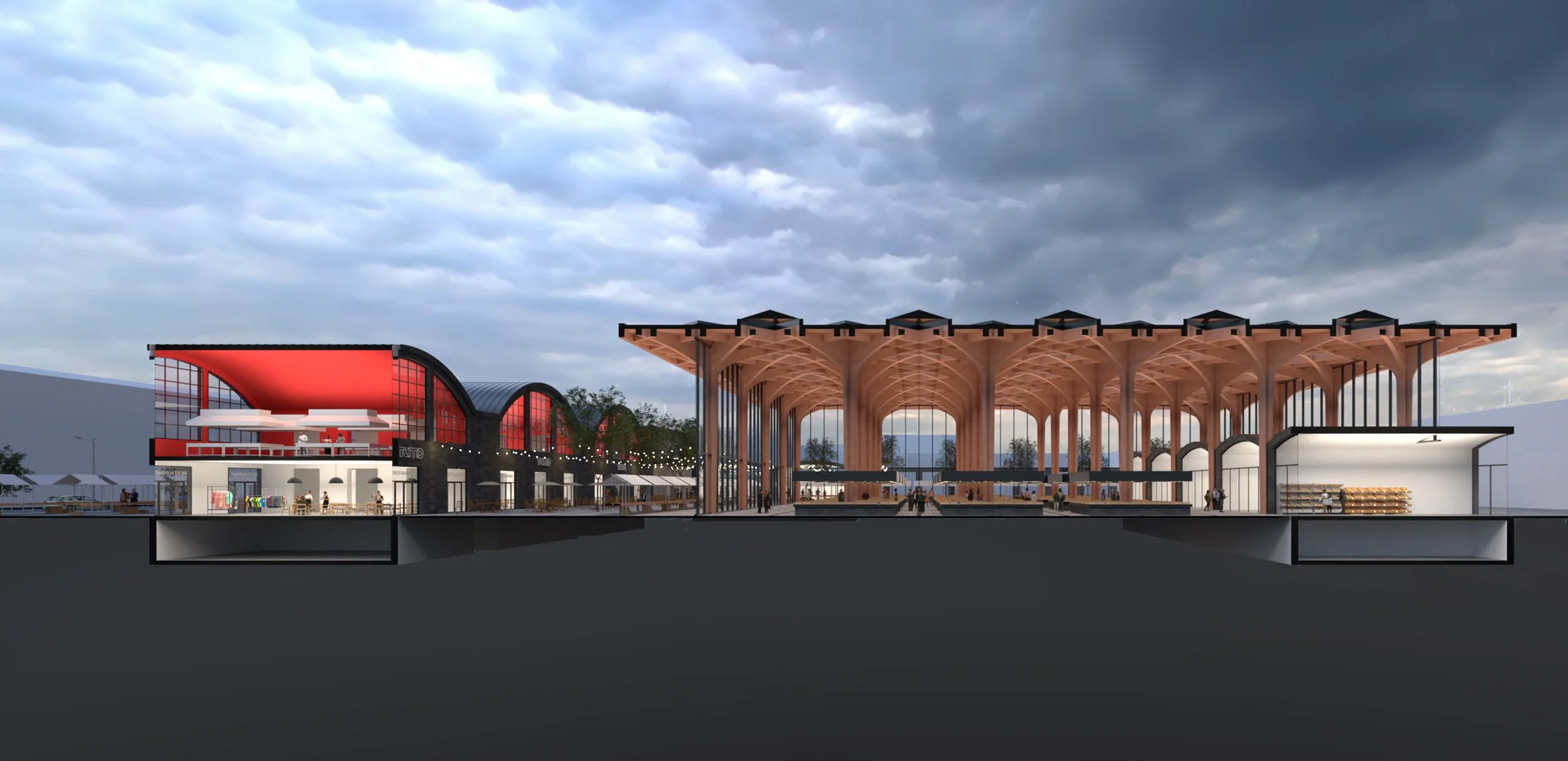
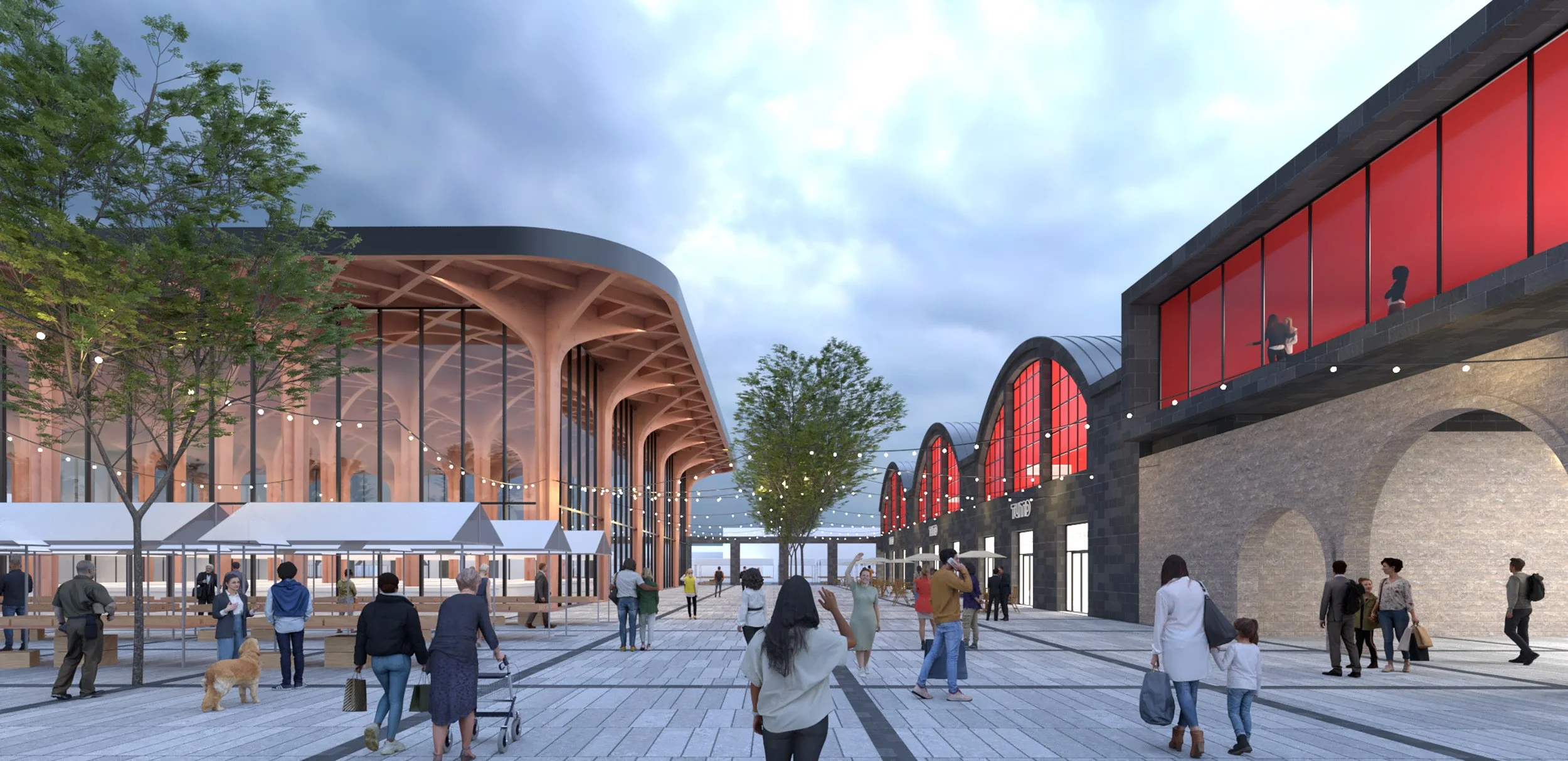
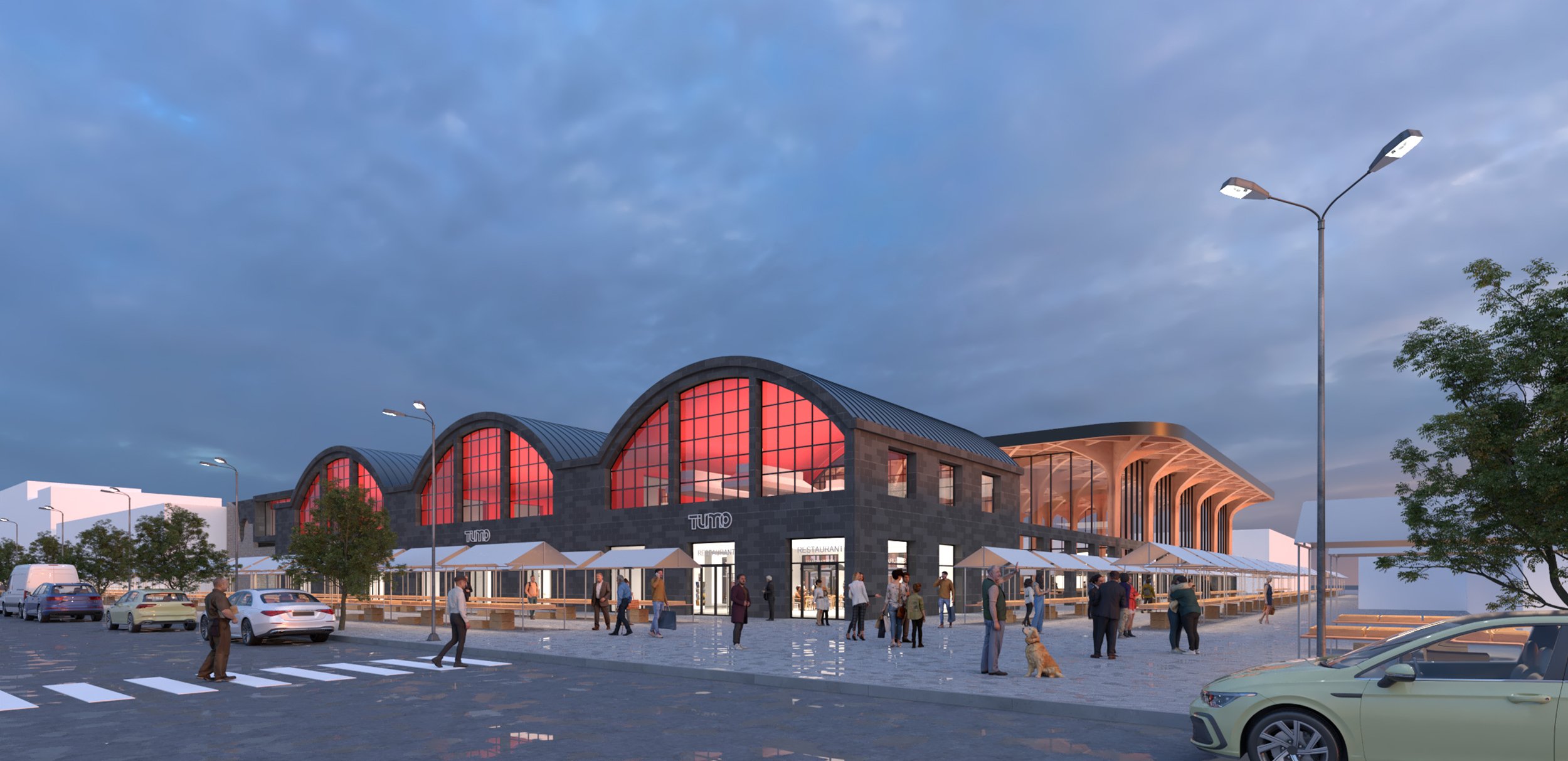
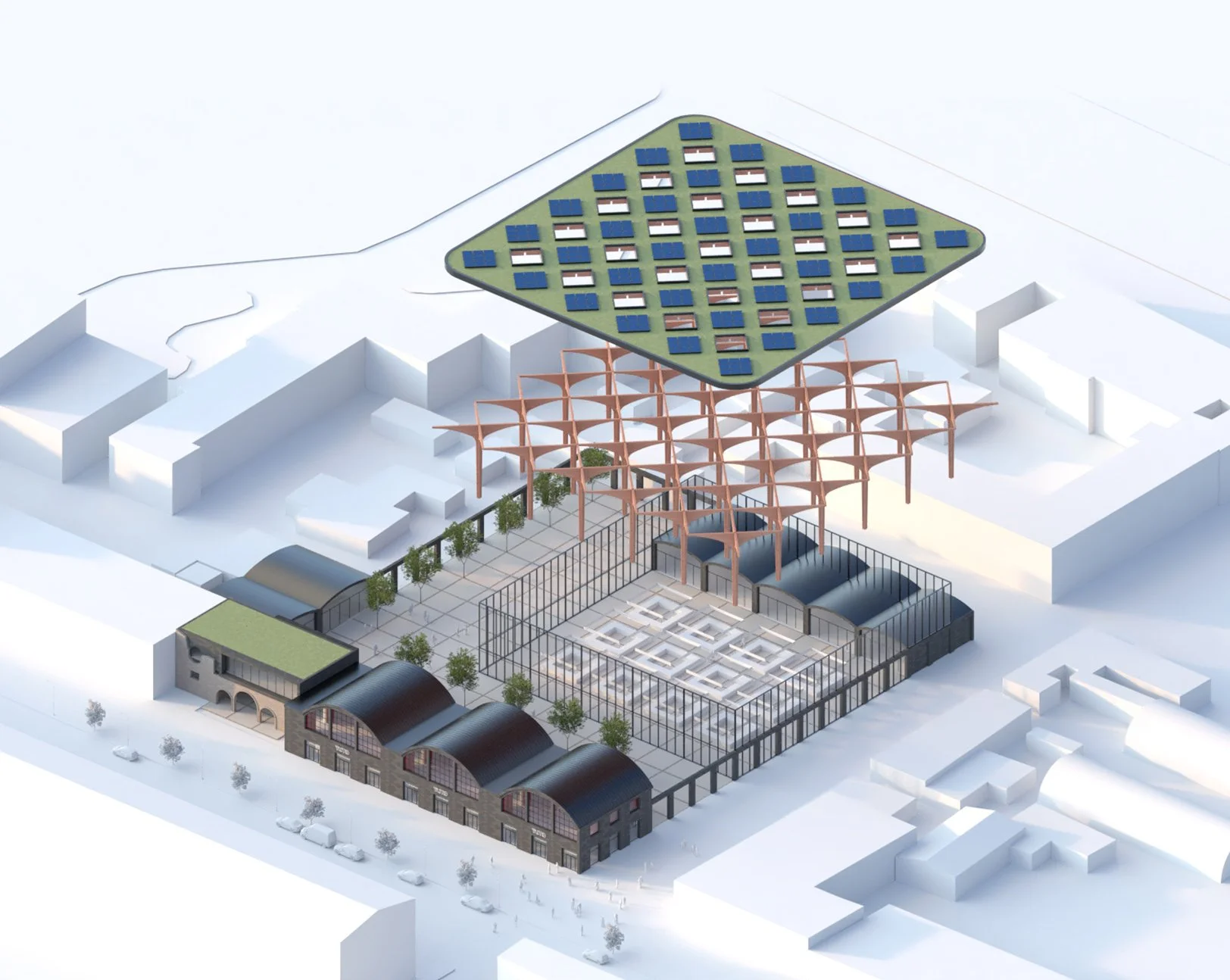
The remaining market ruins will be integrated into the culinary school and restaurant. The northwest arches serve as the main entrance. A nearby rounded-roof building will be reinterpreted to reflect local identity with a contemporary twist, housing the school (1) and restaurant (2). The semi-open market (3) with fixed stalls is transparent and accessible from all sides, activating surrounding streets and inner public space. Smaller shops and cafes (4) near the entrance and along Tsulukidze Street follow the local scale, creating a cozy, informal atmosphere that draws people in.
Public space and accessibility
The open public space is a key element of the new Gyumri culinary hub. Connected to surrounding streets, it ensures a smooth visitor flow. Its polygonal layout with three intersecting paths supports multifunctional use. For example, the space between the culinary school and market can host events, while the area near the entrances can serve as a pop-up market. Together, the flexible open space and expressive architecture with active street fronts form a welcoming image that invites diverse visitors and celebrates local food culture.
Identity and sustainability
Preserving the former market arches and integrating them into the culinary hub's architecture as the main entrance reflects respect for local history and connects it to the place’s future. The architectural identity of the culinary school and restaurant is shaped by multiplying the round-roofed form of the former market building and using local black tufa stone for the walls. This approach sustains the local identity.
The contemporary identity of the market is defined by an impressive wooden structure that reinterprets the use of arches in traditional architecture. Simple and repetitive, this structure also supports the overall sustainability of the design.
The large roof of the market serves multiple purposes: it provides shading and is partially covered with solar panels that will generate energy for lighting, cooling, and other electrical needs. The rest of the roof collects and purifies rainwater, which is stored in underground reservoirs for cleaning, watering, and cooling purposes. Roof hatches allow for natural ventilation.
To ensure more sustainable waste management, an underground zone for collecting recyclable waste will be created, addressing the large amount of waste typically produced by food markets.