The Modular Cultural Center proposes a new, scalable model for cultural infrastructure. Developed within Identity in Typical, it rethinks the traditional House of Culture as a flexible modular system that adapts to local contexts—from large regional hubs to small rural towns. By combining identity-driven design, prefabrication, and social innovation, the project envisions a sustainable network of cultural spaces capable of renewing civic life nationwide.
Modular cultural center
Prototype for identity-driven cultural infrastructure
Location: Karachay-Cherkess Republic, Russia
Program: Cultural and educational center, public space
Surface: 6000m²
Design period: 2021–2022
Status: Research and prototyping
Identity in modular
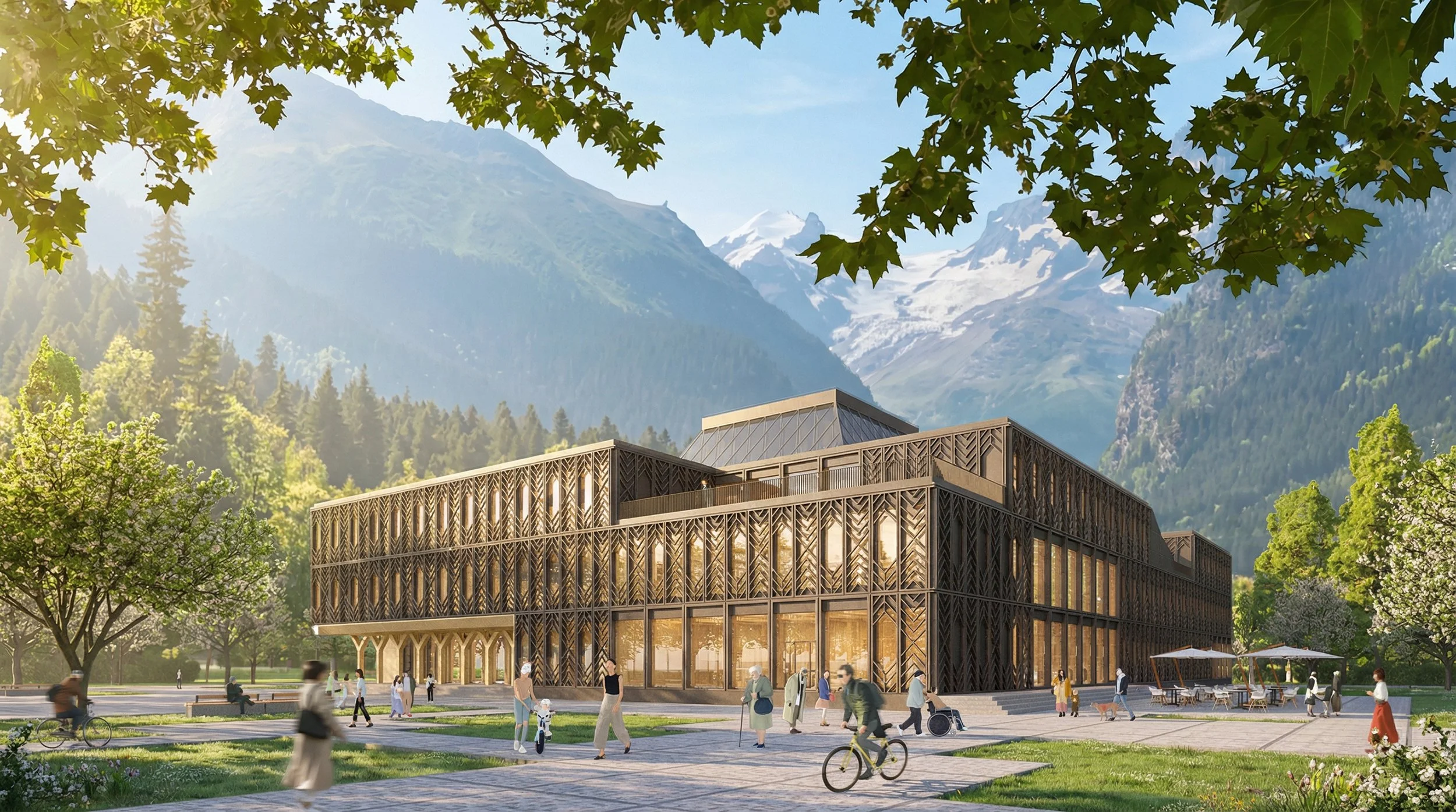
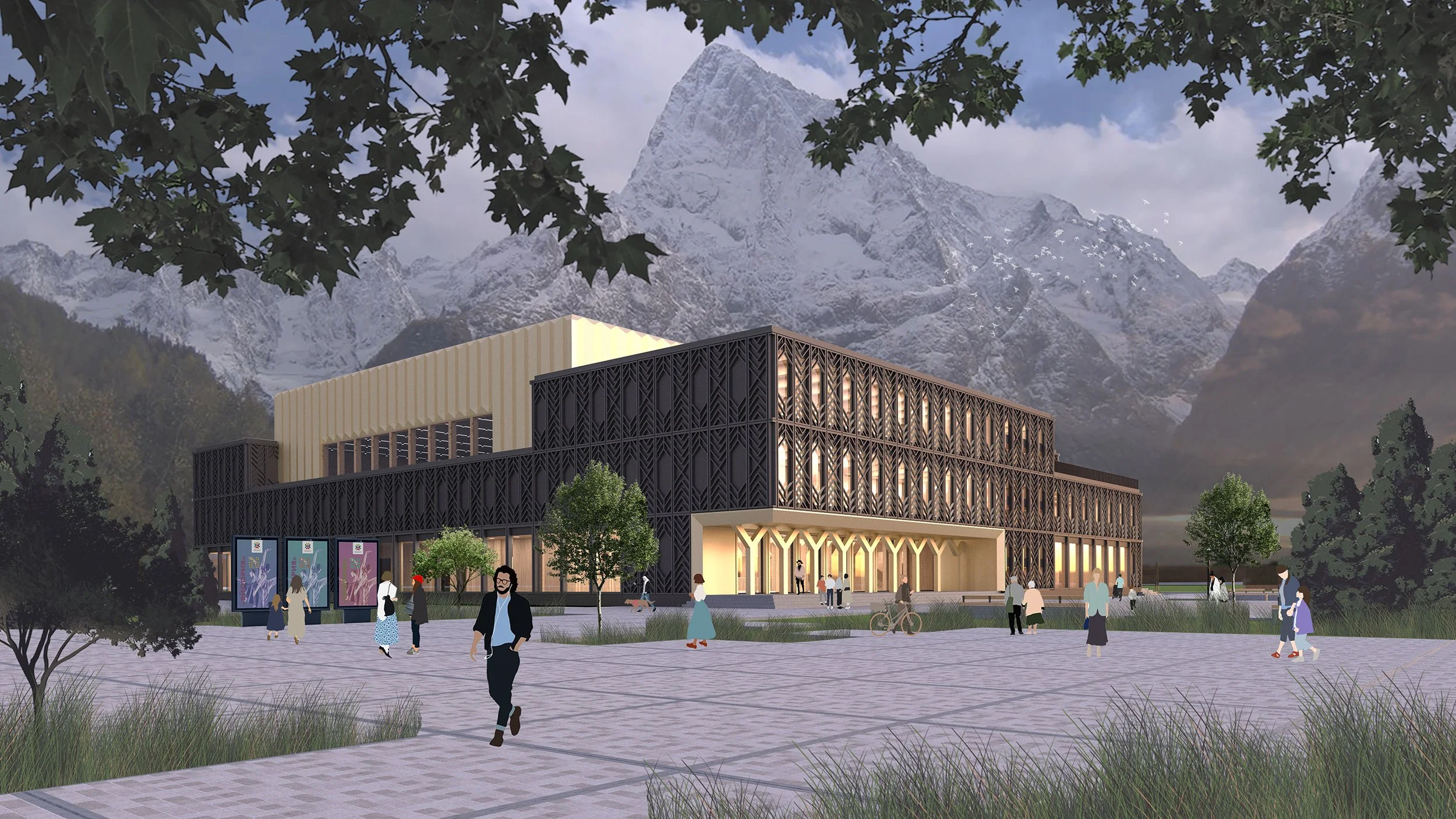
The Modular Cultural Center merges contemporary modular design with the visual language of the North Caucasus. Its façades combine anodized aluminum panels with ornamental louvers that provide both rhythmic expression and solar protection. An expressive roofline reinterprets traditional forms through modern fabrication, giving the building a clear identity rooted in local culture.
Modular system
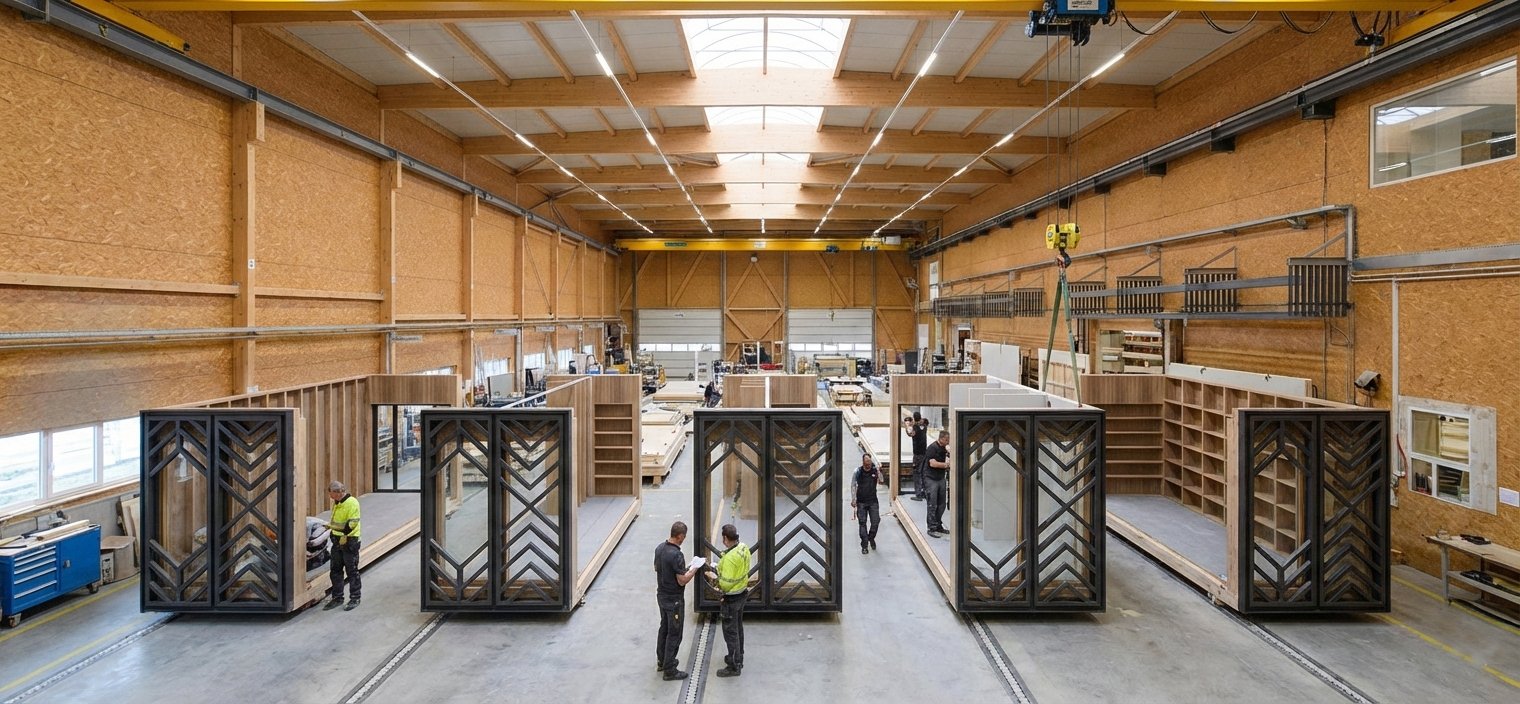
Modular industry
The modular system is built in local factories, with each unit fully assembled before arriving on site. This ensures quality, speeds up construction, and reduces environmental impact. By connecting design and production, the project retools industry as a driver of cultural renewal.
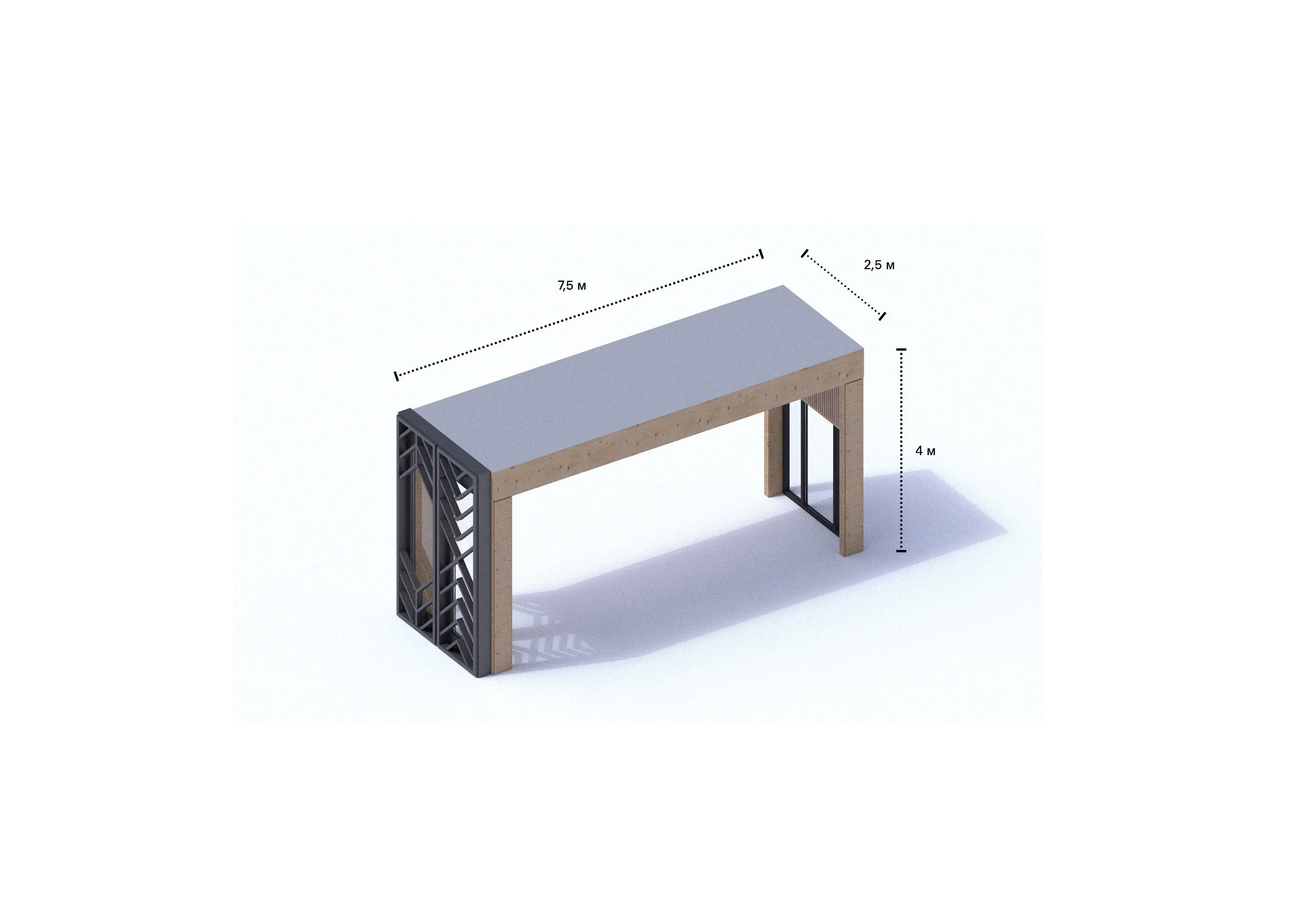
Module prototype
Each module measures 2.5 × 7.5 × 4 meters — a universal structural unit designed for easy transportation and on-site assembly. The combination of a lightweight frame and decorative façade panels reflects a careful balance between industrial logic and local identity.
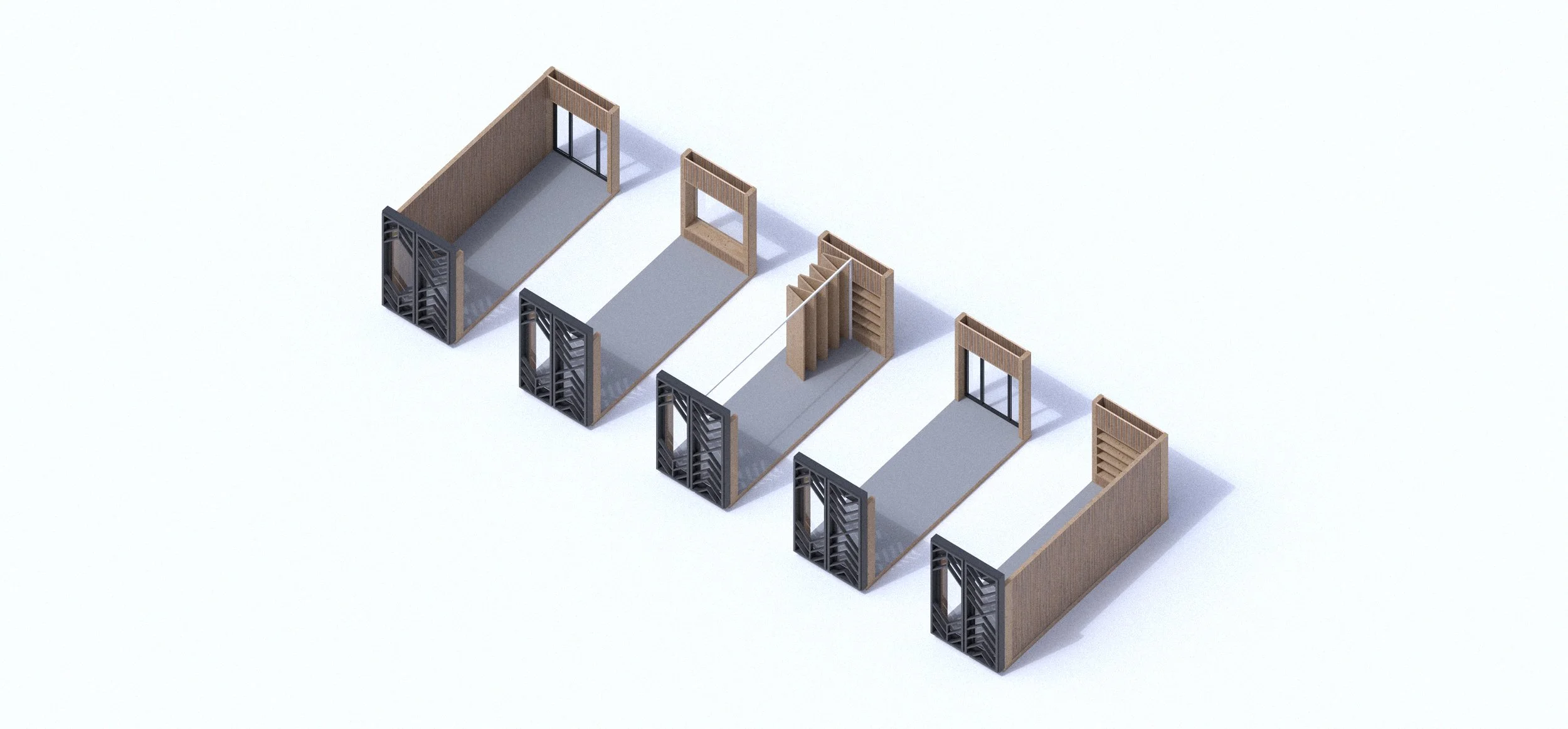
Modular variations
Modules can be joined, mirrored, or opened to create different spatial typologies. This flexibility allows each cultural center to adapt its scale and function to local needs, creating a variety of spaces — from classrooms and studios to auditoriums and larger public foyers.
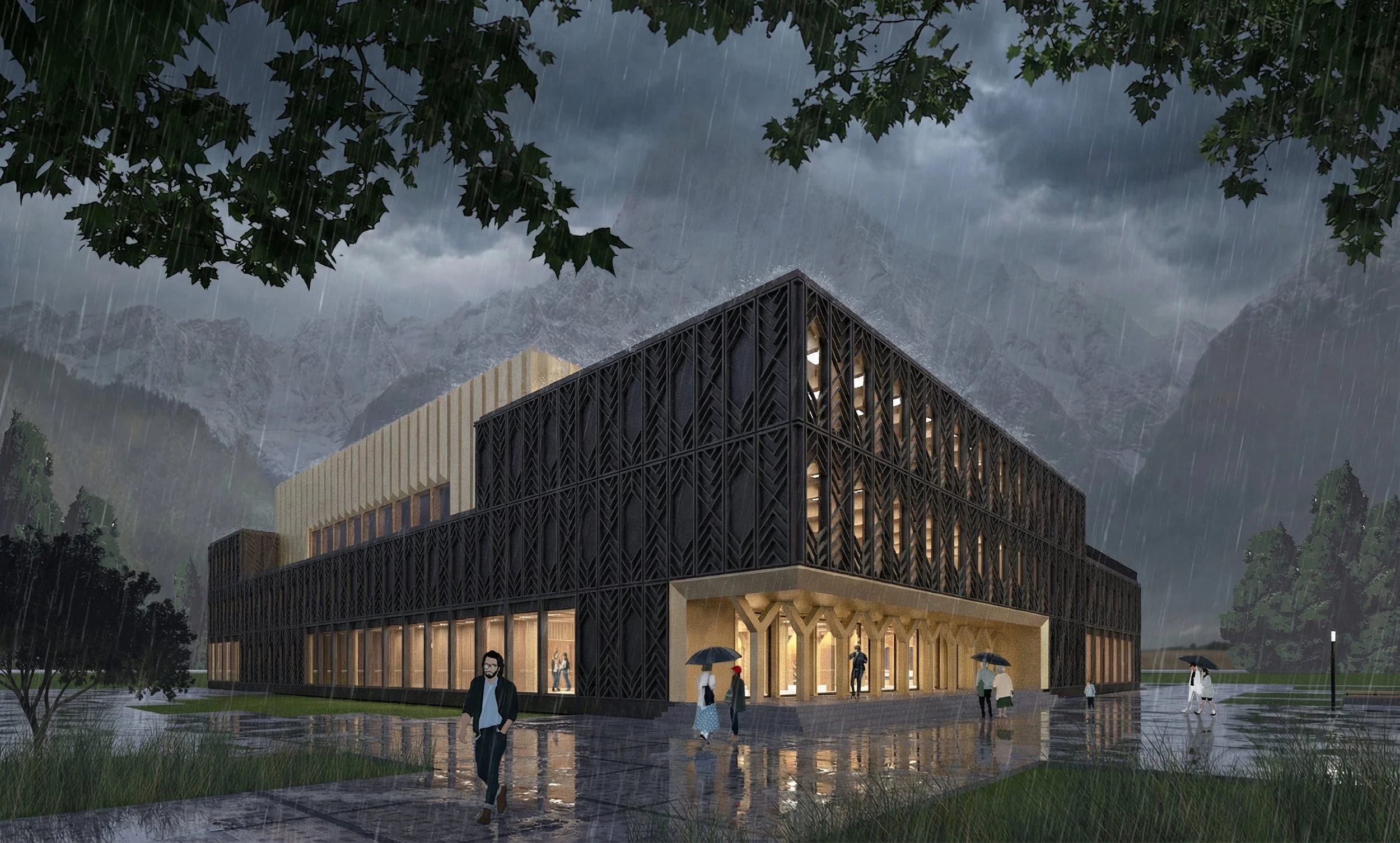
Spatial organization
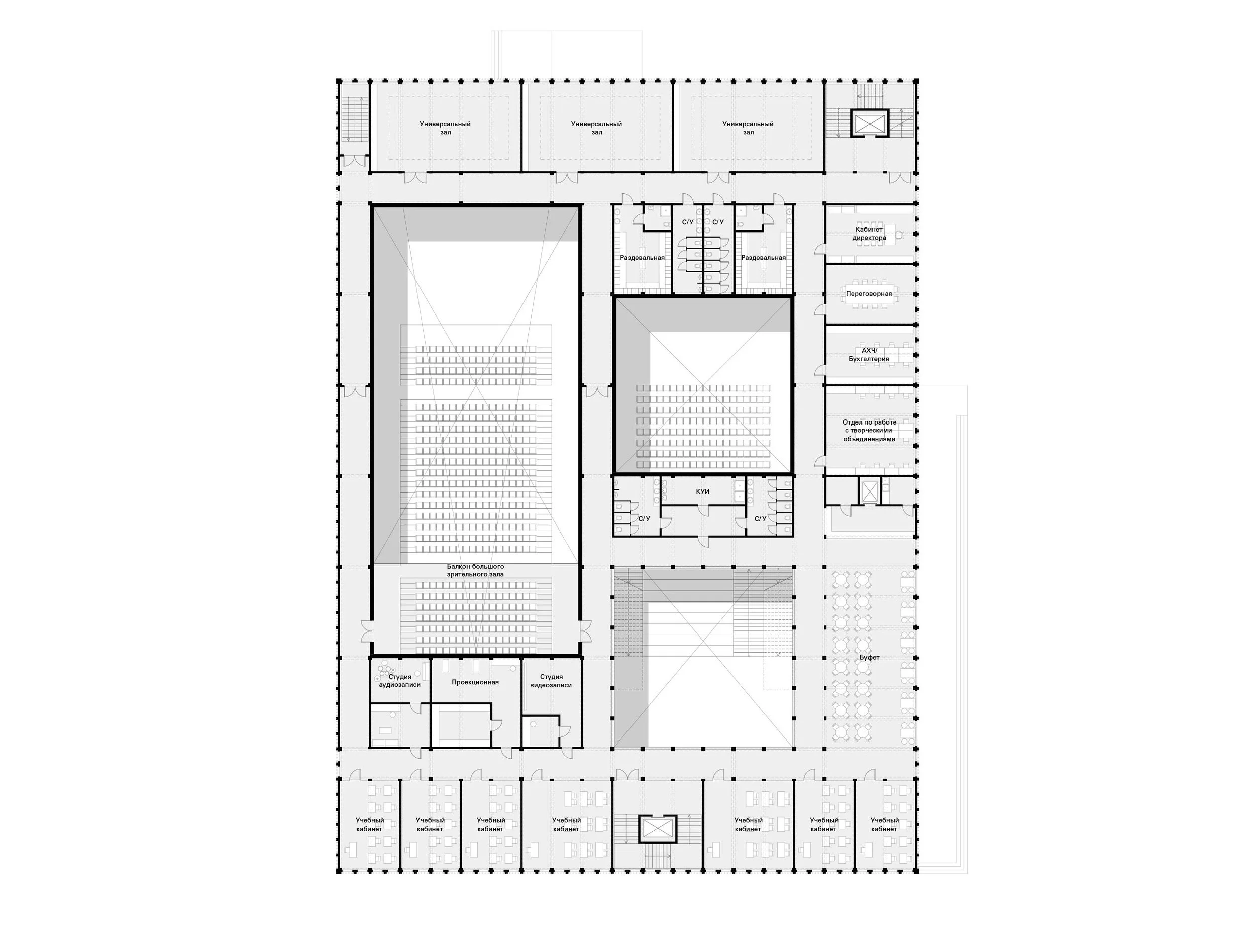
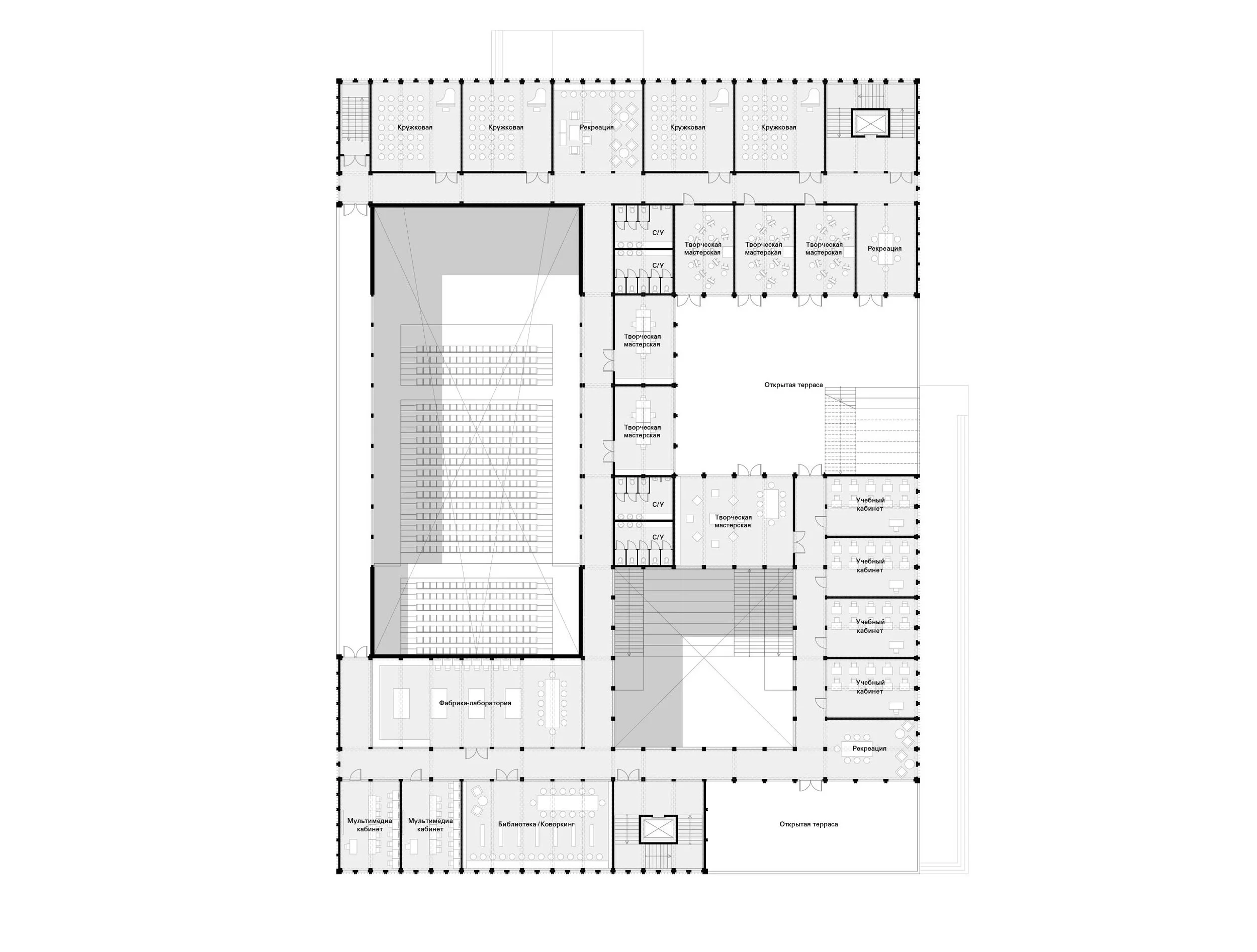
The building evolves from a compact modular volume into an open, dynamic cultural space. Green terraces and the main entrance carve into the mass, drawing the public inside. Large-span halls and foyers, formed through modular combinations, create flexible interiors for performances and everyday activities. Roof openings and skylights complete the composition, bringing in natural light and reinforcing a distinct architectural identity.
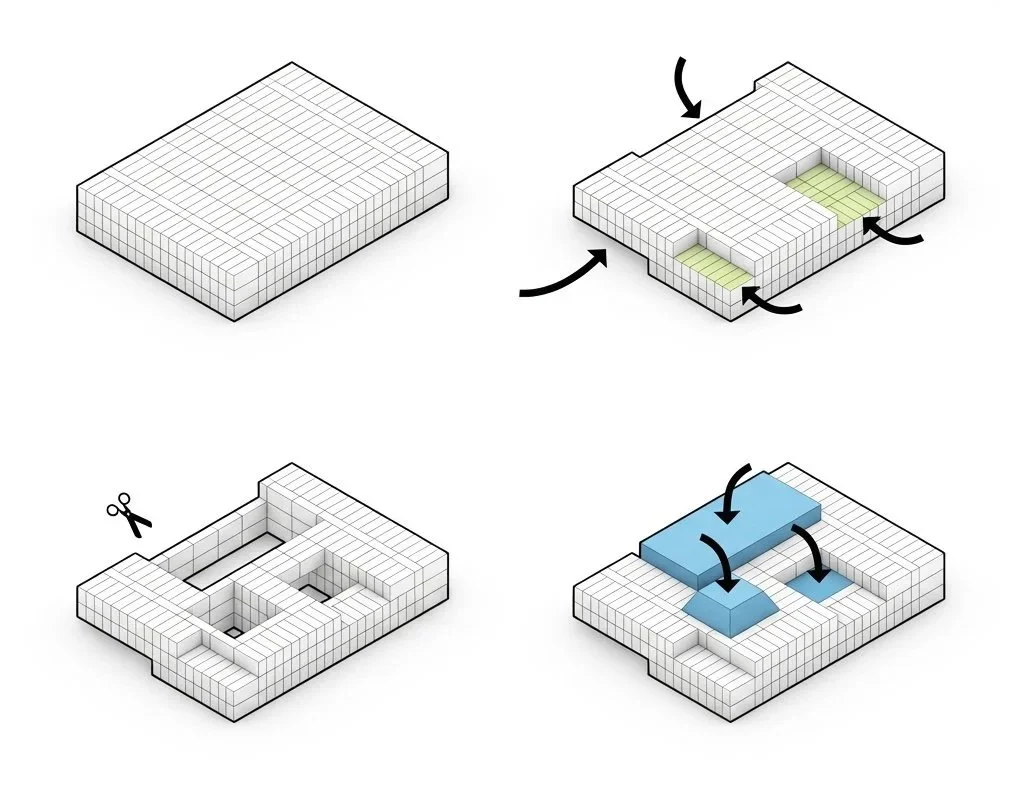
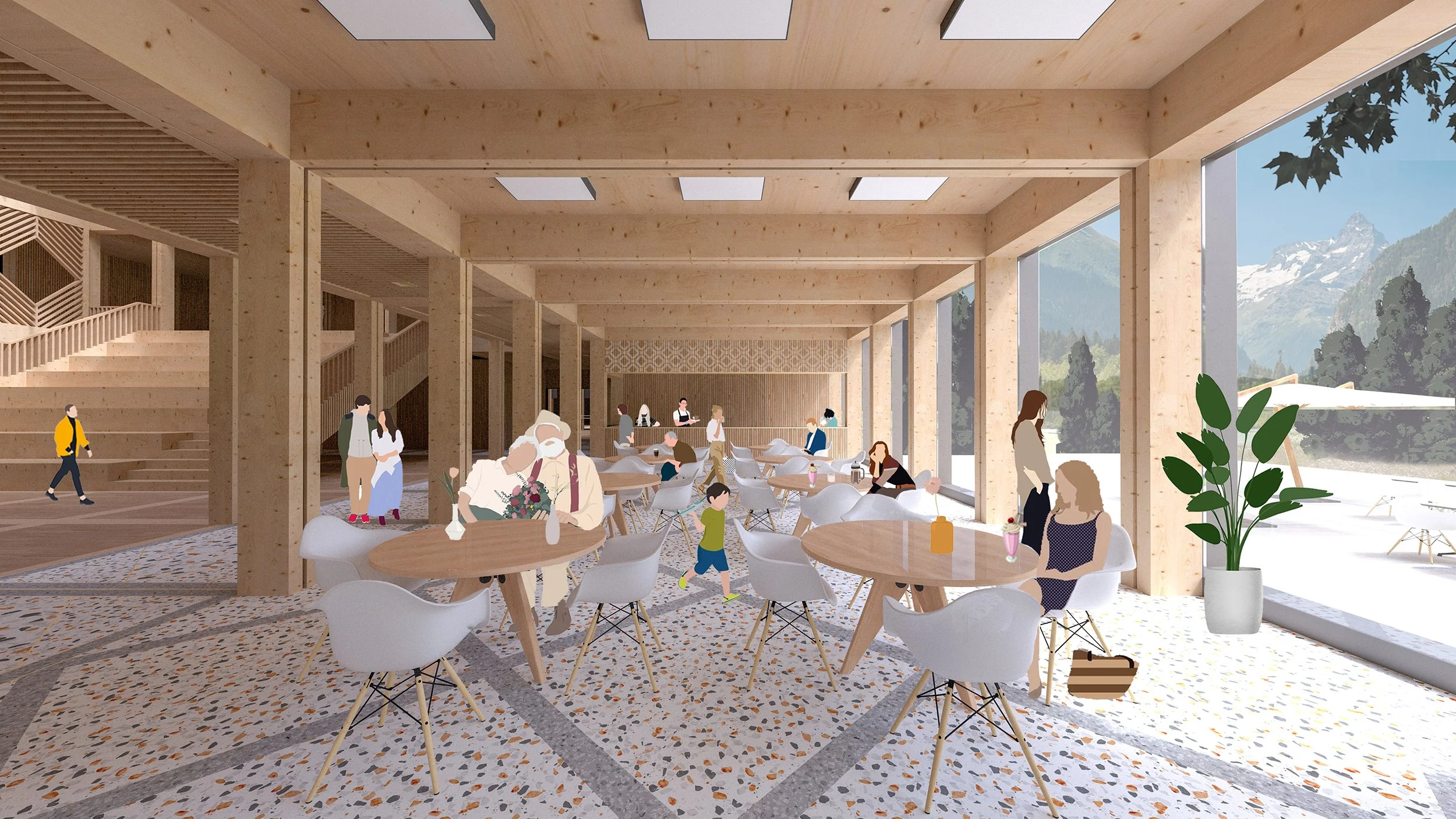
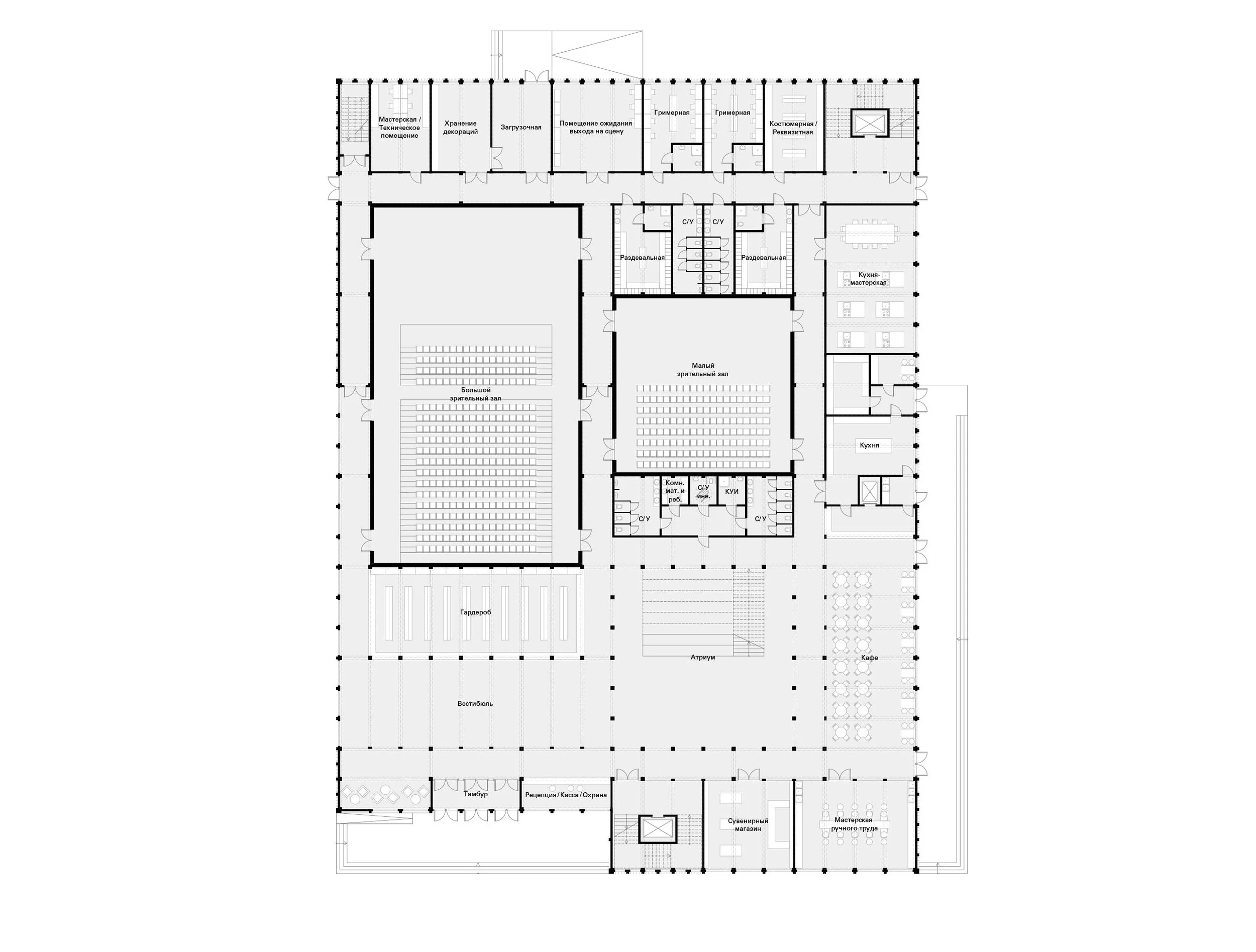
The building is organized as a clear, adaptable spatial system where public, cultural, and educational functions interlock vertically. The ground floor forms an open civic base with a transformable hall, foyer, and café — spaces that activate the surrounding public realm. Upper levels accommodate studios, rehearsal rooms, and administrative areas, connected by open circulation and shared light wells. Each level can operate independently, yet together they form a unified multifunctional environment where transparency and flexibility define the experience of the modular structure.
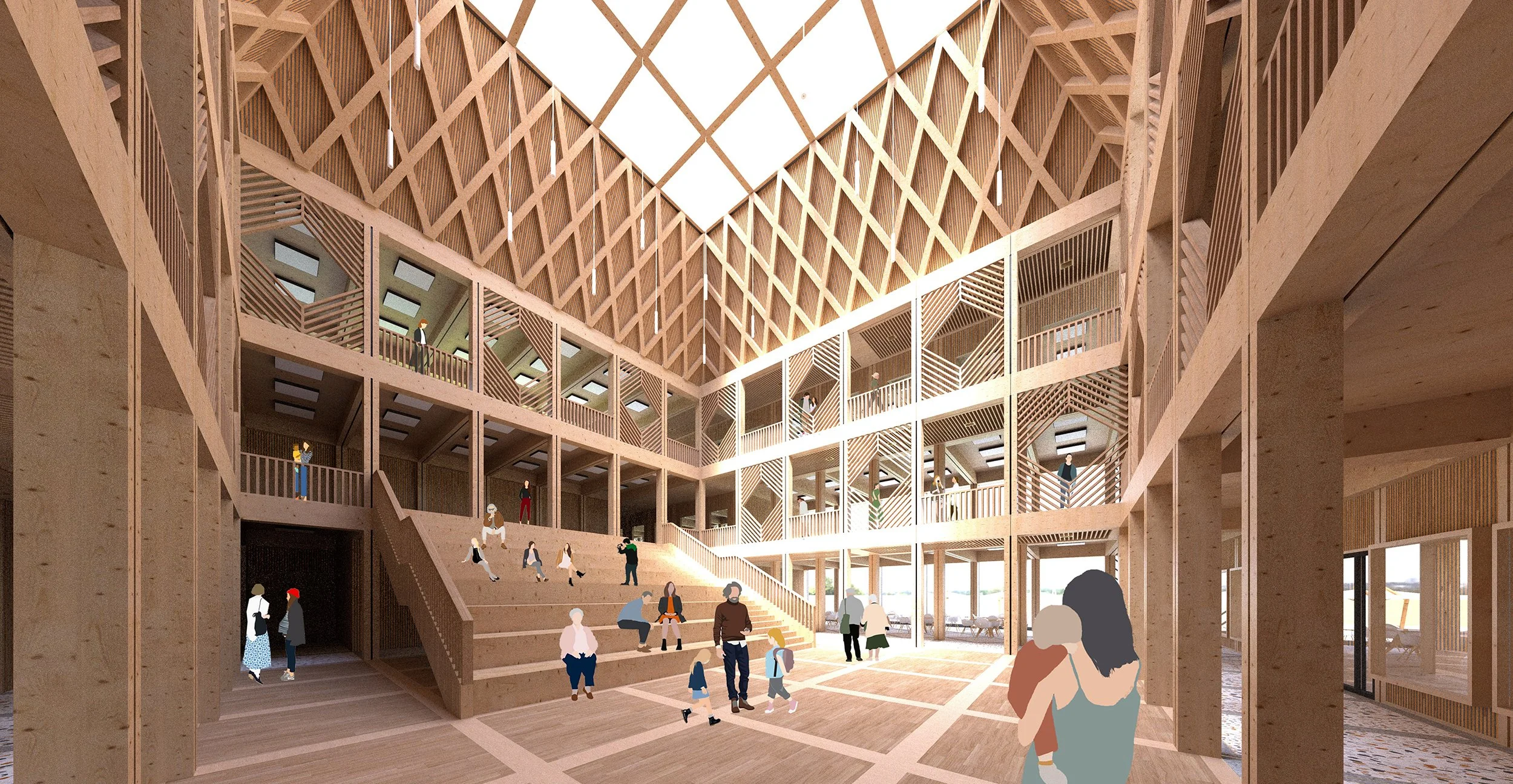
Cultural heart
At the core of the Modular Cultural Center is a tall, light-filled atrium —the symbolic heart of the building. Framed by open galleries and flexible spaces, it connects all levels both visually and socially. A timber structure with a diagonal lattice evokes traditional craftsmanship while shaping a warm, contemporary interior. Stepped seating invites gathering, events, and everyday encounters, turning the atrium into a vibrant communal forum at the center of the cultural center.
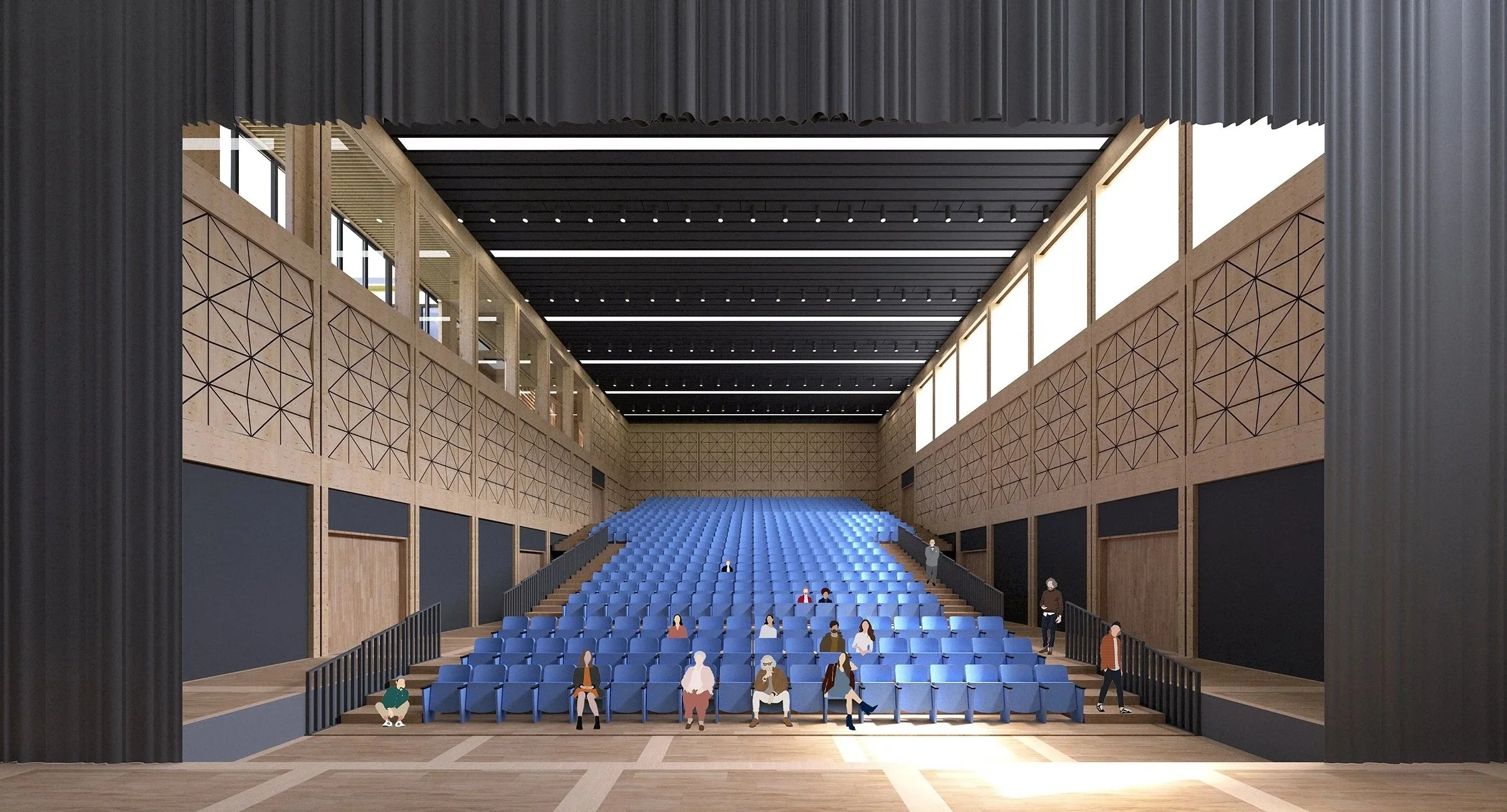
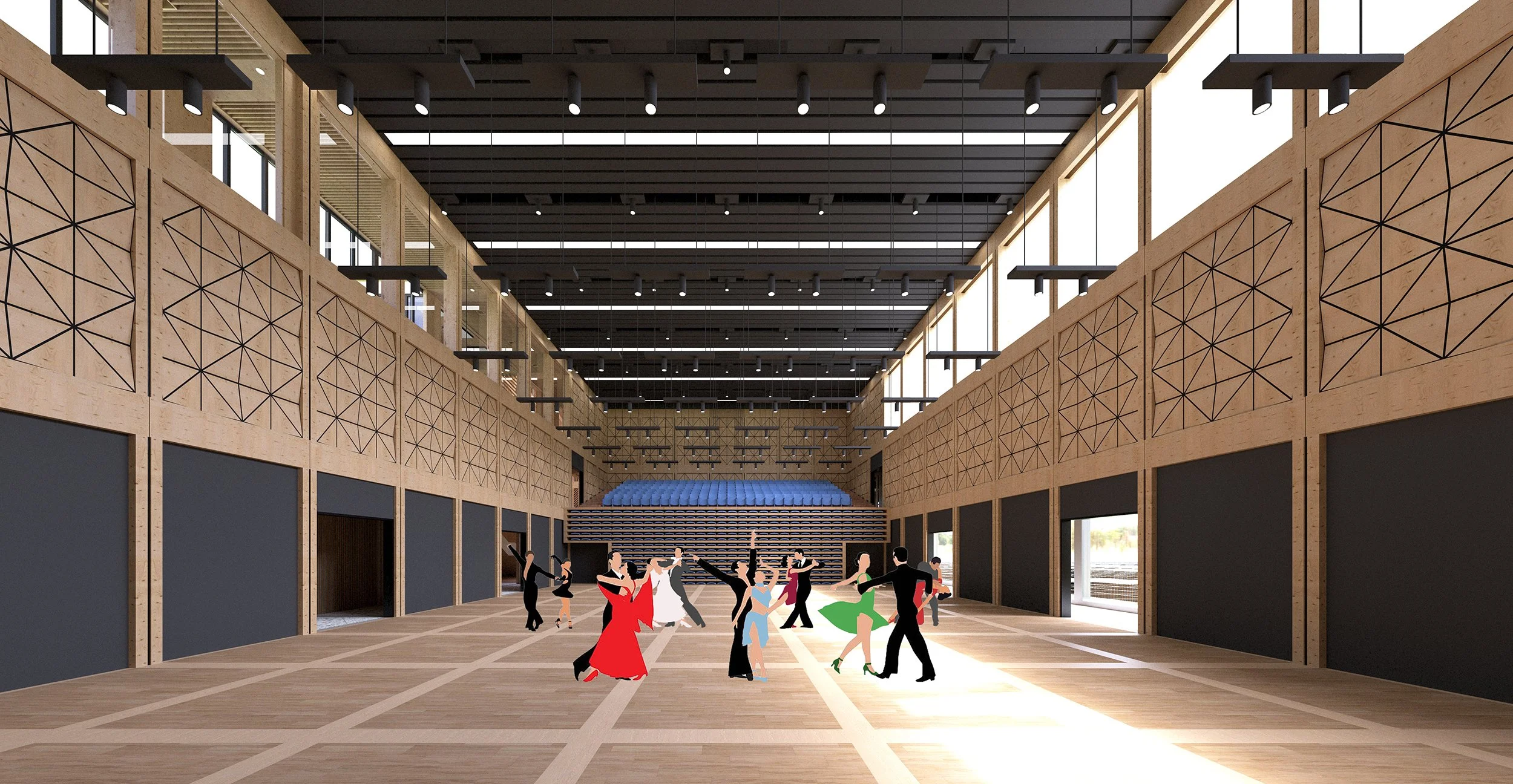
Transformable hall
The main transformable hall is the multifunctional core of the Cultural Center. Designed with modular logic, it adapts easily to concerts, theatre, sports, and community events. Retractable seating and acoustic panels allow quick reconfiguration, while high-level windows bring in natural light and maintain a sense of openness. A timber structure with geometric patterning continues the building’s architectural language, combining warmth, clarity, and flexibility within a single space.
Educational and creative spaces
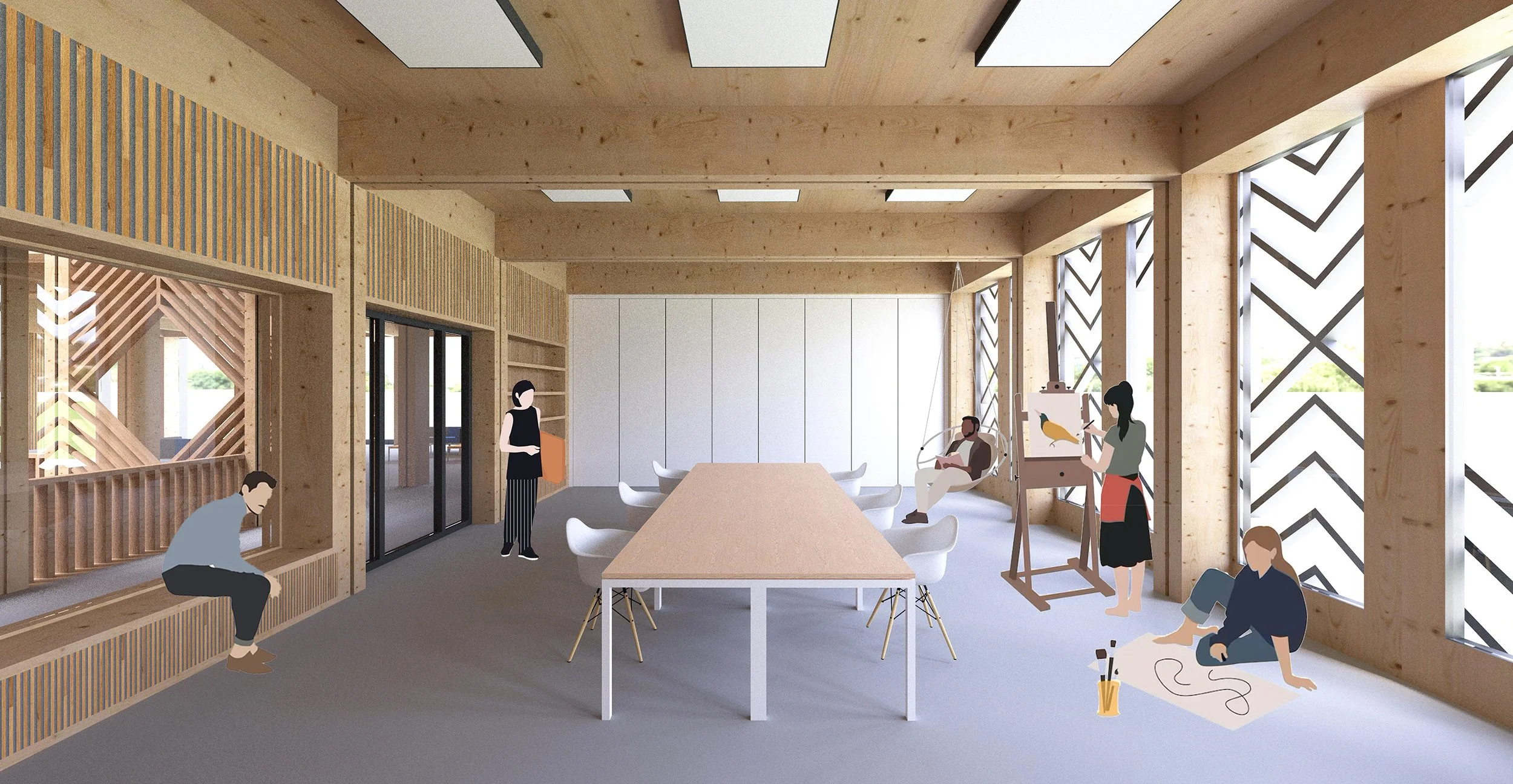
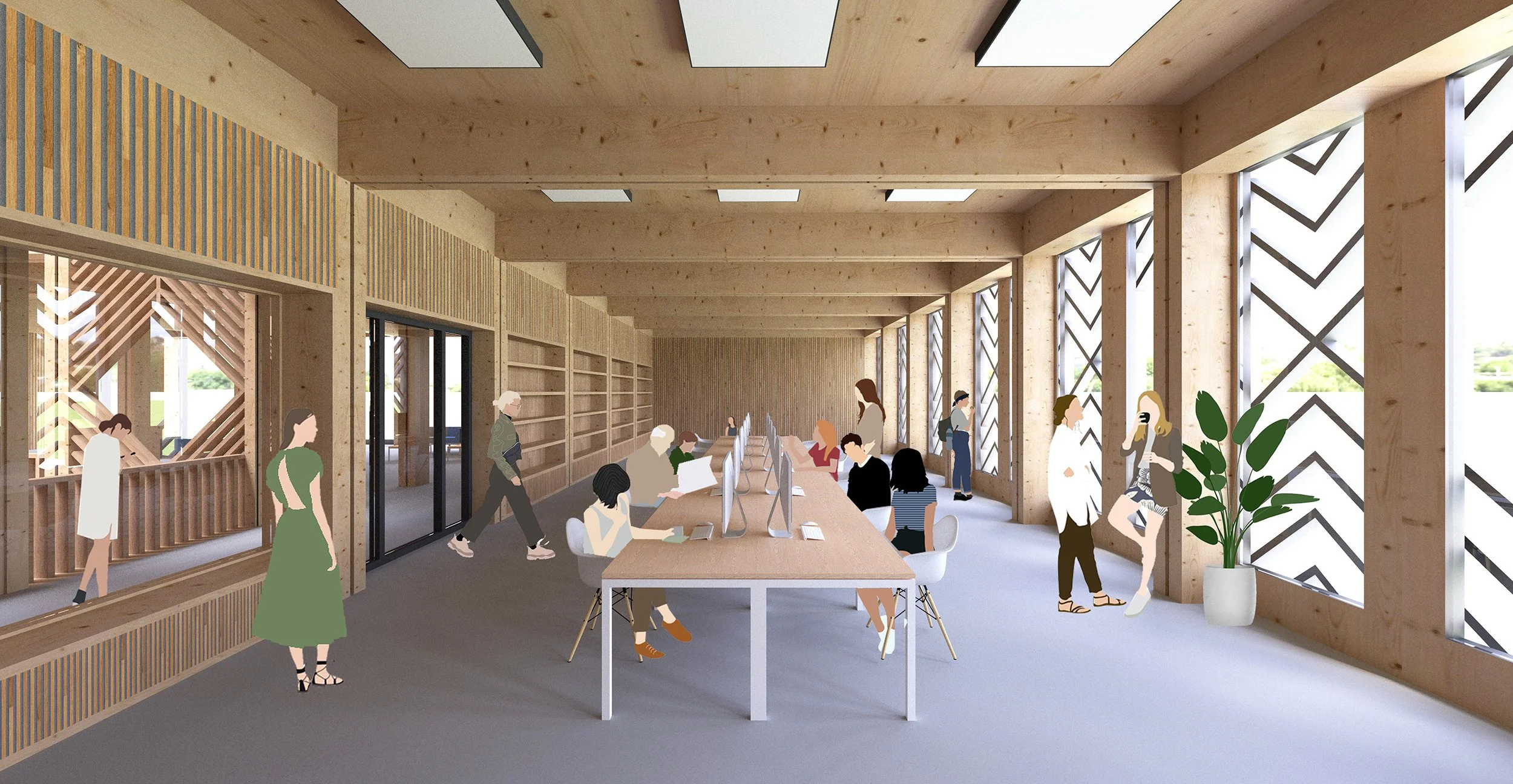
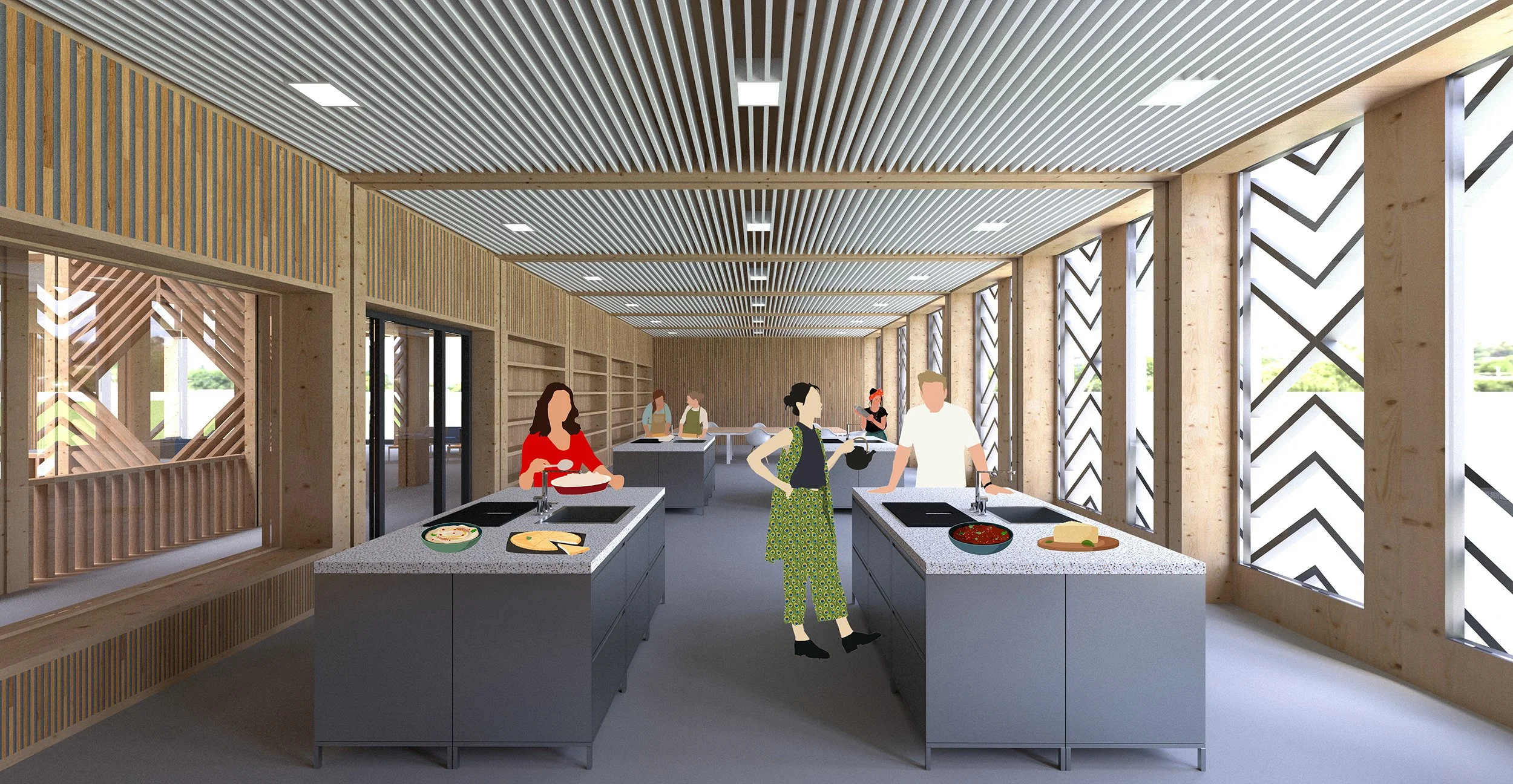
The upper floors host flexible studios and classrooms for learning, creativity, and collaboration. Spaces for art, dance, digital media, and culinary workshops are unified by a consistent wooden structure and natural light filtering through patterned louvers. The interiors are open, adaptable, and warm — encouraging experimentation, exchange, and everyday community life.